Post-Workout Recovery Blend
Made-to-formula recovery powder pairing fast carbohydrate with whey protein, BCAA 2:1:1, L-glutamine, creatine monohydrate and electrolytes. Milk allergen; vegan build available.
Specifications
| Product type | Compounded dry blend of carbohydrate, protein, free amino acids and electrolytes, made to the buyer's formula. No single CAS applies to the finished blend. |
| Carbohydrate:protein ratio | Typically 3:1 to 4:1 by weight; also supplied protein-forward at 1:1 or as a carbohydrate-only glycogen base. Set at formulation stage. |
| Carbohydrate system | Maltodextrin at dextrose equivalent below 20, dextrose monohydrate, waxy maize starch, or isomaltulose where a lower-glycaemic profile is wanted. |
| Protein component | WPC 80 (protein 80-82%) or WPI 90 (protein 90% minimum, dry basis), optionally with whey hydrolysate or micellar casein for an overnight variant. |
| Free amino component | Instantised BCAA 2:1:1 - L-leucine 61-90-5, L-isoleucine 73-32-5, L-valine 72-18-4, each C6H13NO2/C5H11NO2 - plus L-glutamine 56-85-9. |
| Creatine monohydrate | CAS 6020-87-7, MW 149.15. Purity criteria: creatinine <=100 mg/kg, dicyandiamide <=50 mg/kg, dihydrotriazine below LOD, per EFSA and US GRAS practice. |
| Electrolytes | Sodium chloride 7647-14-5, potassium chloride 7447-40-7, trisodium citrate dihydrate 6132-04-3, magnesium and calcium salts to the buyer's target. |
| Appearance and solubility | Free-flowing agglomerated powder; disperses in 300-500 mL water. Instantised so the protein wets out without lumping in a shaker. |
| Moisture and heavy metals | Loss on drying <=5.0%. Lead <=0.5, arsenic <=0.5, cadmium <=0.3, mercury <=0.1 mg/kg by ICP-MS, or tighter to destination limits. |
| Microbiology | Total plate count <=10,000 cfu/g; yeast and mould <=100 cfu/g; coliforms <10 cfu/g; E. coli absent/g; Salmonella and Listeria absent/25 g. |
| Allergen status | Contains MILK in any whey or casein build. SOY declared where soya-lecithin-instantised whey is used - sunflower lecithin available. No egg, fish, crustacean or nut. |
| Gluten and diet status | Gluten-free unless a barley or oat carbohydrate is specified. Whey builds are bovine dairy, not vegan; vegetarian only with microbial-rennet whey. Vegan pea/rice build available. |
| Regulatory notes | Where creatine is dosed at 3 g/day the EU claim authorised by Reg 432/2012 becomes available to the brand owner, subject to its conditions of use. |
| Shelf life | 18-24 months from manufacture, unopened, below 25 C and 60% RH. |
| HS code | 2106 90 99 |
Applications
Available grades
Food/supplement grade. Standard whey-based build; whey hydrolysate build for faster dispersion; casein or blended-protein overnight variant; dairy-free vegan build on pea and rice protein. Unflavoured base or fully flavoured and sweetened consumer blend. Creatine-inclusive or creatine-free. Kosher, Halal, non-GMO and vegan documentation, and independent banned-substance batch screening, on request.
Related products
Pre-Workout Blend
Compounded pre-workout powder base built to your formula from beta-alanine, L-citrulline DL-malate, caffeine anhydrous, taurine, betaine and L-tyrosine. Vegan, dairy-free, flavoured or neutral.
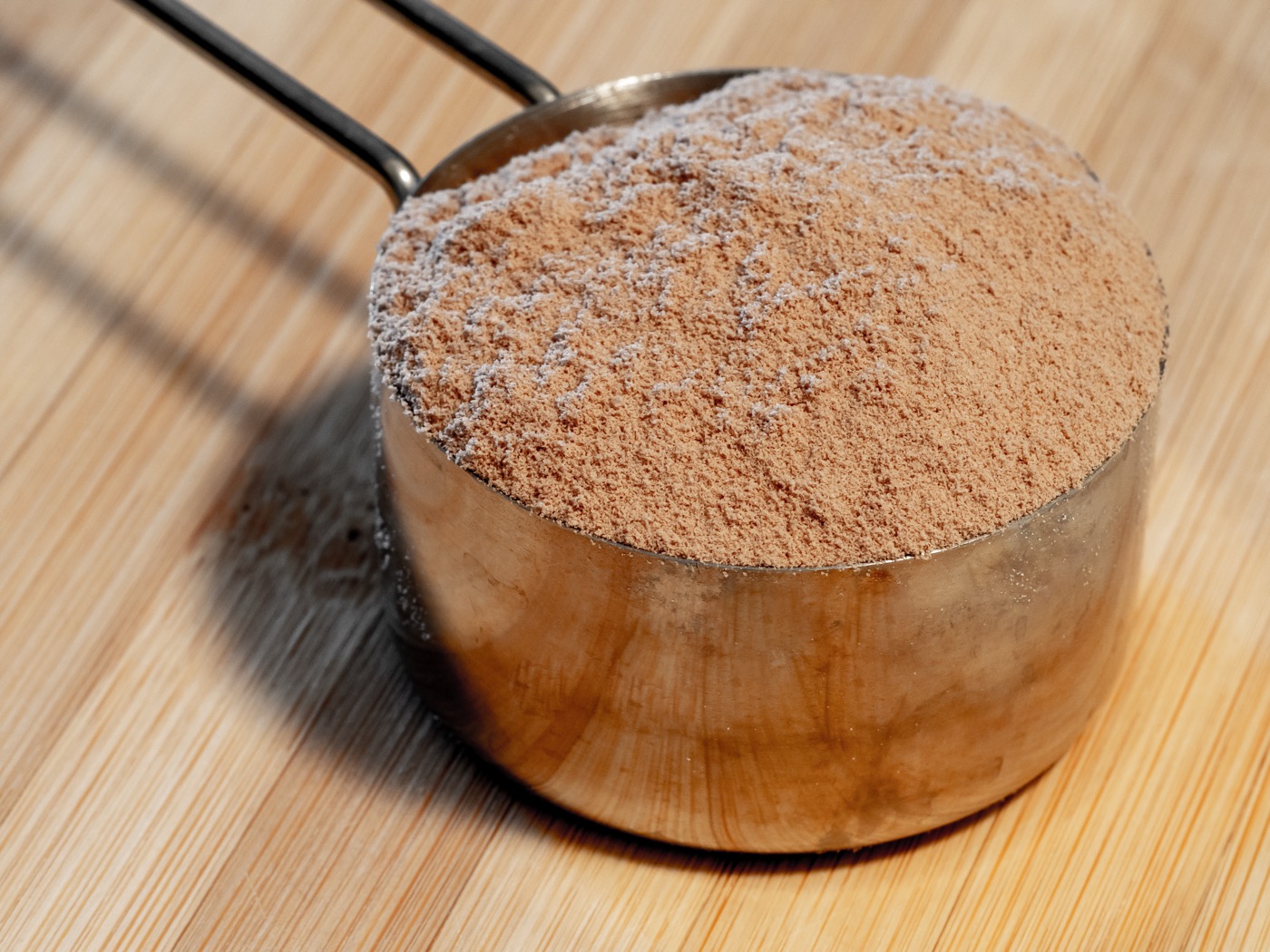
Whey Protein (Sports Grade)
Sports-grade bovine whey protein as WPC 80 (80-82% protein) or WPI 90 (90% min, dry basis). Instantised, high leucine and BCAA, full amino profile. Contains MILK; soy if lecithinated.
Mass gainer
Bulk mass gainer base built carbohydrate-first at a 3:1 carb-to-protein ratio, roughly 370-400 kcal per 100 g. Dairy or vegan protein system, supplied unflavoured for the buyer to flavour and pack.