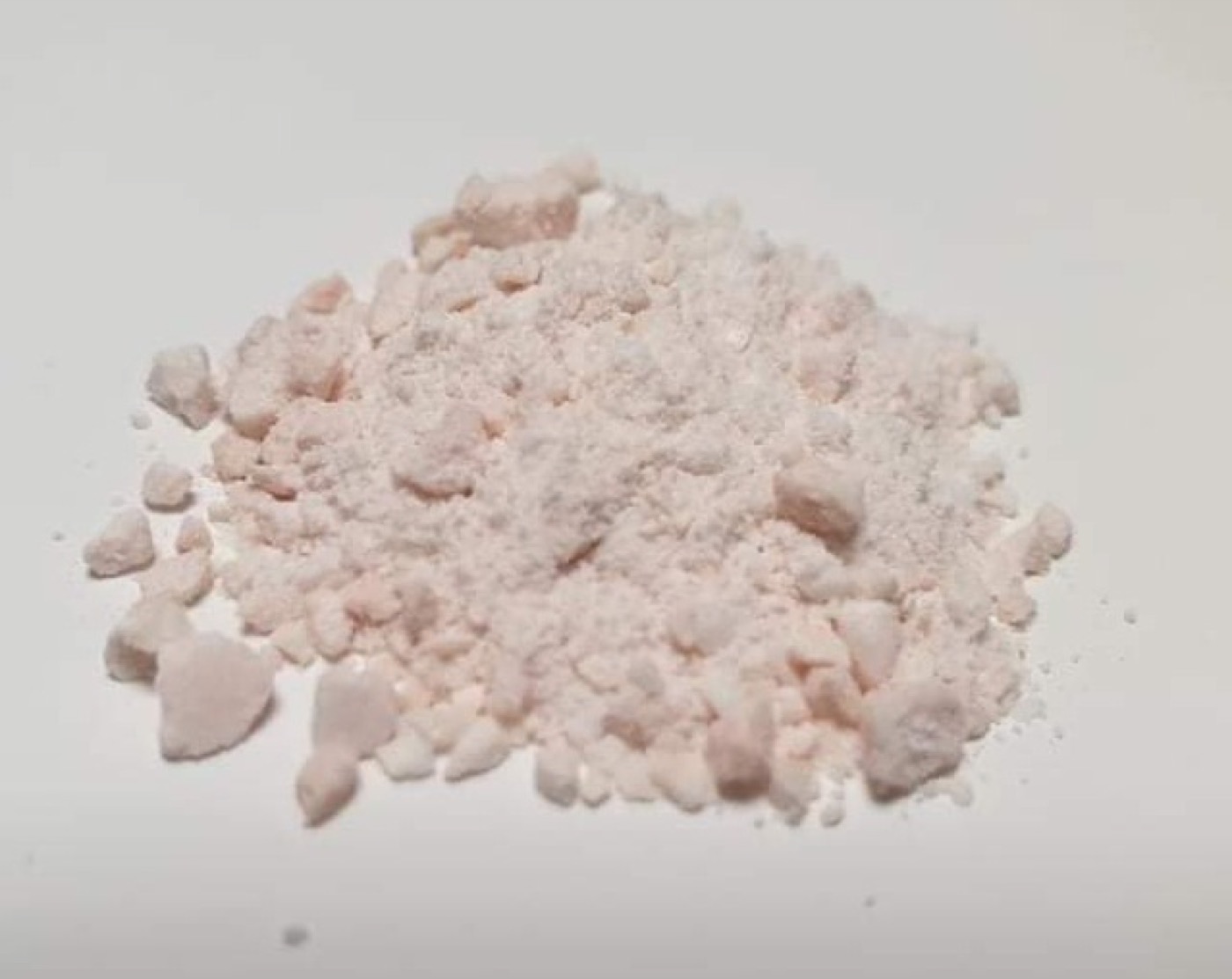
Selenium (Sodium Selenite)
Bulk sodium selenite powder supplying a minimum 45% elemental selenium — the inorganic selenium source used in mineral premixes, tablets, clinical nutrition and feed. Ph. Eur. 1677 assay method.
Specifications
| Chemical name | Sodium selenite (disodium selenite) |
| CAS number | 10102-18-8 (anhydrous); 26970-82-1 (pentahydrate) |
| EINECS number | 233-267-9 |
| Molecular formula | Na2SeO3 (anhydrous); Na2SeO3·5H2O (pentahydrate) |
| Molecular weight | 172.95 (anhydrous); 263.03 (pentahydrate) |
| Elemental selenium | 45% min., anhydrous (theoretical 45.7%); pentahydrate approx. 30.0% — by titrimetry per Ph. Eur. 01/2008:1677 or ICP-OES |
| Appearance | White crystalline powder; white tetragonal crystals; hygroscopic |
| Solubility | Freely soluble in water, approx. 85 g/100 mL at 20 degrees C; insoluble in ethanol |
| Decomposition temperature | 710 degrees C |
| Particle size | Crystalline and milled powder grades; screen specification set to order |
| Heavy metals and microbiology | Lead, arsenic, cadmium and mercury plus microbiological limits certified per batch to buyer or pharmacopoeial specification |
| Shelf life | 36 months from manufacture, unopened, stored cool, dry and away from light |
| HS code | 2842.90 — India ITC-HS 28429090 |
Applications
Available grades
Ph. Eur. (sodium selenite pentahydrate, monograph 01/2008:1677), food and supplement grade, EU feed additive grade (3b801), cell-culture and analytical grade
Related products
Calcium Carbonate
Bulk precipitated calcium carbonate carrying 40.0% elemental calcium, the densest calcium carrier among the common salts. Supplied to USP, EP, IP and FCC grades in light, heavy and directly compressible forms.
Calcium Citrate (Tetrahydrate)
Tricalcium citrate tetrahydrate for calcium fortification, assaying not less than 97.5% and carrying 21.1% elemental calcium. Free-flowing white powder in USP and FCC grades, milled to your mesh.
Calcium Citrate Malate (CCM)
Water-soluble mixed calcium salt of citric and malic acid, carrying 21.4% elemental calcium at the USP 6:2:3 hexahydrate stoichiometry. Suited to beverages and effervescent formats.