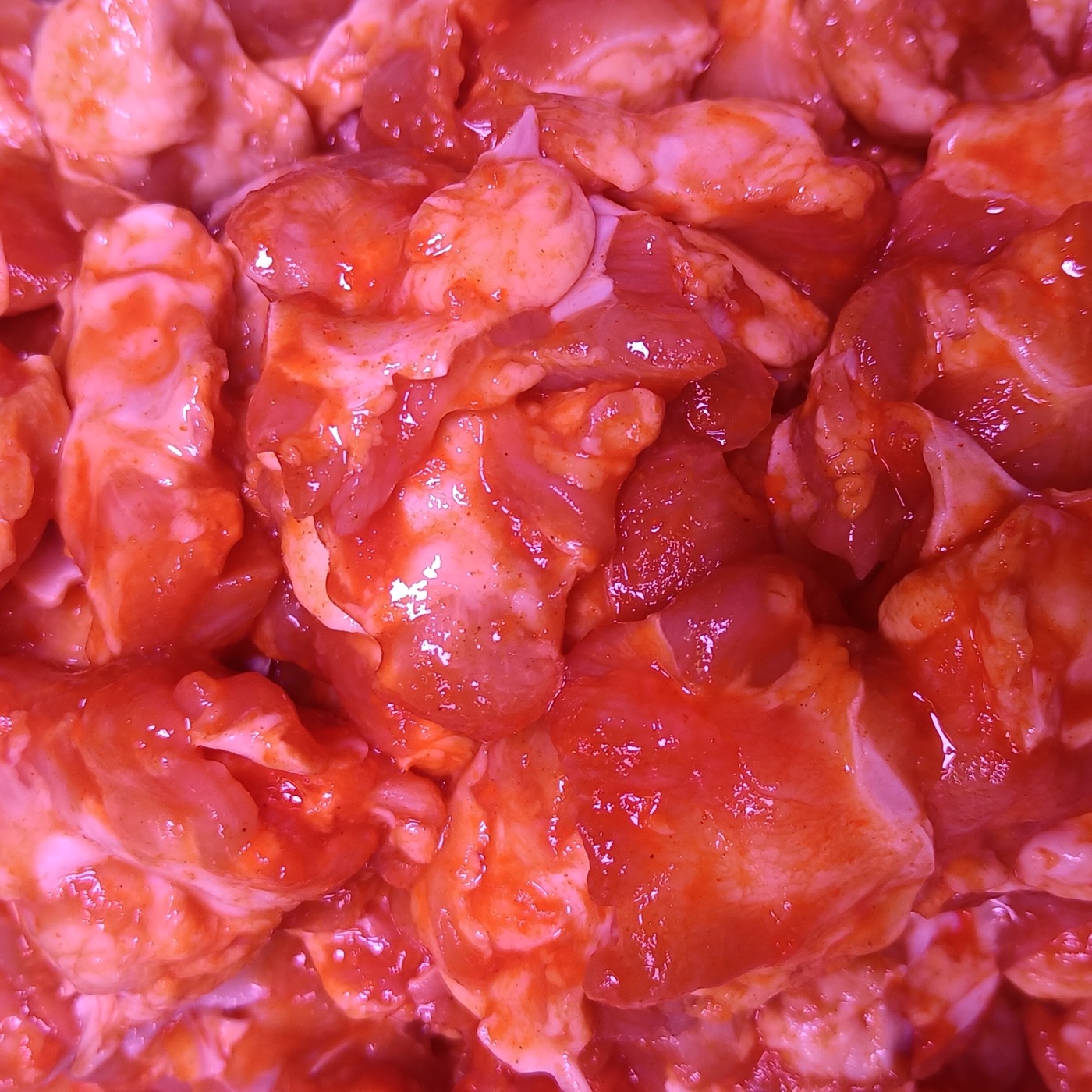
Chicken Collagen (Type II)
Type II collagen from chicken sternal cartilage, offered as low-temperature native undenatured powder and as enzymatically hydrolysed peptides, with cartilage-matrix grades carrying chondroitin sulfate.
Specifications
| Identity | Type II collagen from chicken (Gallus gallus domesticus) sternal (keel) cartilage; supplied as native undenatured powder or enzymatically hydrolysed peptide powder |
| CAS No. | 9007-34-5 (collagen). Hydrolysed peptide grade is also traded under CAS 9015-54-7 (collagen hydrolysate) |
| Molecular form | Homotrimer of three identical alpha-1(II) chains, [α1(II)]3, gene COL2A1; reported chain sizes for chicken sternal cartilage collagen α1 ~130 kDa, β ~270 kDa |
| Appearance | Off-white to pale beige or light tan free-flowing powder; faint characteristic odour, bland to slightly savoury taste |
| Native (undenatured) grade | Undenatured type II collagen typically 10-25% by ELISA against the native type II epitope; total protein typically 50-70% (Kjeldahl, N x 6.25) |
| Hydrolysed grade | Protein typically 60-70% (Kjeldahl, N x 6.25); enzymatic hydrolysis to low-molecular-weight peptides, average molecular weight commonly between about 2 kDa and 10 kDa |
| Glycosaminoglycan fraction | Cartilage-matrix grades carry co-extracted chondroitin sulfate, typically 10-25%, predominantly chondroitin-4-sulfate, plus hyaluronic acid, typically 1-10% |
| Solubility | Hydrolysed grade fully soluble in cold and warm water; native grade disperses rather than dissolves and is dosed as a suspension or in capsules and tablets |
| Purity limits (typical) | Moisture ≤ 8.0%; ash ≤ 8.0%; pH (1% solution) 5.5-7.5; lead ≤ 0.5 ppm; arsenic ≤ 0.5 ppm; cadmium ≤ 0.5 ppm; mercury ≤ 0.1 ppm |
| Microbiology (typical) | Total plate count ≤ 10,000 cfu/g; yeast and mould ≤ 100 cfu/g; E. coli, Salmonella and Staphylococcus aureus absent in the stated sample size |
| Thermal handling limit | Isolated chicken sternal cartilage type II collagen is reported to denature near 34-36 °C in solution; keep native grade off hot-fill, extrusion and high-heat drying |
| Allergen and dietary status | Poultry-derived: not vegan, not vegetarian, not bovine, porcine, marine or fish. Free from milk, egg, soy, wheat gluten, fish, crustacean, peanut, tree nut and sesame |
| Shelf life and storage | 24 months from manufacture in unopened original packing; store below 25 °C in a dry place away from direct sunlight and strong odours; reseal promptly after part use |
| HS code | 35040099 (India ITC-HS). See classification note; the sheet's 29329990 is a Chapter 29 organic-chemical line and does not apply |
Applications
Available grades
Native (undenatured) grade: low-temperature processed, ELISA-assayed for the intact type II epitope, formulated at roughly 40 mg per daily serving. Hydrolysed peptide grade: enzymatically cleaved, cold-water soluble, formulated at 500-1,500 mg per serving. Cartilage-matrix grade: standardised on co-extracted chondroitin sulfate and hyaluronic acid alongside the collagen. Food and nutraceutical grade plus companion-animal feed grade. Halal and kosher documentation depends on the slaughter and processing chain and should be confirmed at enquiry.
Related products
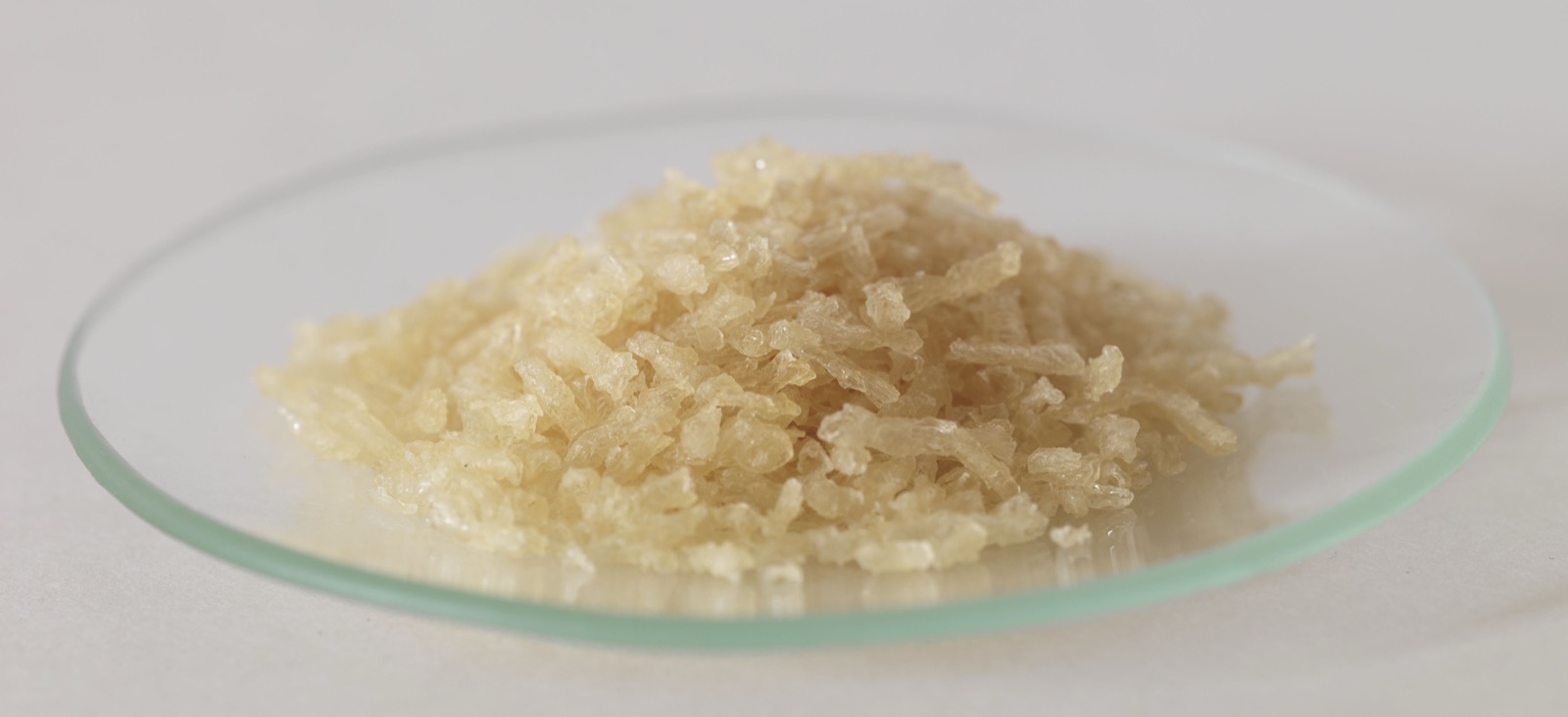
Glucosamine Sulphate (Potassium Chloride Salt)
Stabilised glucosamine sulphate potassium chloride double salt, (C6H14NO5)2SO4·2KCl, assayed 98.0-102.0% to the USP monograph. Shellfish-derived or non-animal fermentation grades, 25 kg drums, ex-India.
Glucosamine Hydrochloride
D-Glucosamine hydrochloride, CAS 66-84-2, USP assay 98.0-102.0% on the dried basis - the highest glucosamine base loading of the common salts at 83.1%. Crustacean or vegan fermentation grades, 25 kg drums.
Chondroitin Sulphate Sodium
Chondroitin sulphate sodium, a sulphated glycosaminoglycan from bovine, porcine, avian or marine cartilage. USP assay 90.0-105.0% on the dried basis with electrophoretic purity checked. 25 kg drums, ex-India.