Bromelain
Ananas comosus stem · stem bromelain EC 3.4.22.32, standardised on gelatin digesting units
Stem bromelain powder from pineapple. A glycosylated cysteine endopeptidase standardised on gelatin digesting units and assayed lot by lot, because under-delivery against the label is documented. Vegan.
Specifications
| Identity | Stem bromelain, a glycosylated cysteine endopeptidase of peptidase family C1 recovered from pineapple stem tissue. Distinct from fruit bromelain, which is a different enzyme |
| CAS number | 37189-34-7 for stem bromelain (the trade article). Fruit bromelain is CAS 9001-00-7 and must not be substituted against a stem bromelain specification |
| EC number and specificity | EC 3.4.22.32; formerly EC 3.4.4.24 and EC 3.4.22.4. Broad protein cleavage with a strong preference for Z-Arg-Arg-NHMec among small substrates |
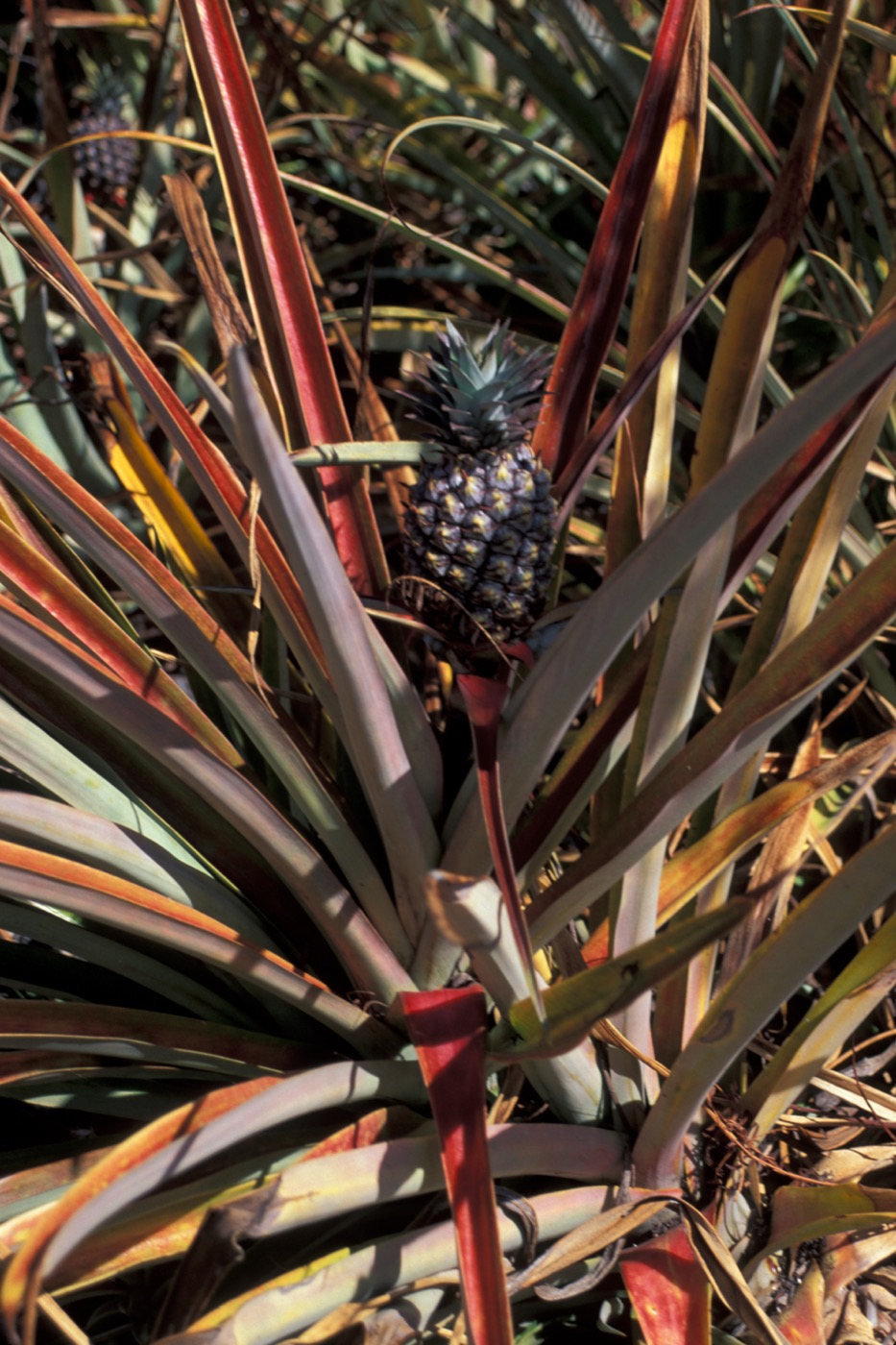
| Botanical source | Stem of Ananas comosus (L.) Merr., family Bromeliaceae. Bromelain occurs in all parts of the plant but the stem is the commercial source and a cannery by-product |
| Molecular description | 212 amino acids, 22,831 Da (UniProt P14518); catalytic Cys26 and His158; three disulfide bonds; one N-linked glycan at Asn117, so the enzyme is a glycoprotein |
| Activity standardisation | 1 GDU liberates 1 mg of amino nitrogen from a standard gelatin solution after 20 min at 45 C and pH 4.5. Reported as measured for the lot, not as a nominal grade |
| Alternative units | 1 CDU liberates 1 microgram of tyrosine per minute at 37 C from standard casein at pH 7.0. MCU is also quoted; no standardised GDU-to-MCU factor exists |
| Appearance and solubility | Cream to light tan free-flowing powder with a faint characteristic odour; soluble in water to a slightly turbid solution, insoluble in common organic solvents |
| Optimum conditions and stability | Characterised bromelains show optima around pH 7 to 8 at about 50 C. Thiol-dependent: resists chicken cystatin and is only slowly inactivated by E-64, unlike papain |
| Typical purity limits | Lead 5 mg/kg max. under the FAO/WHO general specification for enzyme preparations; arsenic, cadmium and mercury to agreed limits; loss on drying and ash to specification |
| Microbiology | Total coliforms 30 CFU/g max.; Salmonella absent in 25 g; E. coli absent in 25 g; no antimicrobial activity, per the general criteria for food enzyme preparations |
| Allergen status | Pineapple is not an EU Annex II or FALCPA allergen, but bromelain is an occupational respiratory sensitiser and cross-reacts with papain. Declare the pineapple source |
| Origin and dietary status | Plant-derived; vegan and vegetarian. No milk, egg, fish, crustacean, mollusc, soy, gluten, bovine or porcine input. Lactose-free carrier as standard. Halal and kosher on request |
| Shelf life and storage | 24 months from manufacture in sealed original packaging below 25 C, dry and out of light; cold storage at 2 to 8 C protects declared GDU. HS code 35079099 |
| HS code | 3507.90 (35079099) |
Bromelain occurs throughout the pineapple plant, but the stem is the commercial source and the stem is what the cannery leaves behind. The residual stem tissue is pressed, the juice clarified, the protein recovered by ammonium sulfate or solvent precipitation, then ultrafiltered and spray-dried. The distinction that gets lost on purchase orders is that pineapple yields two different enzymes with two different registry numbers: stem bromelain, EC 3.4.22.32, CAS 37189-34-7, formerly EC 3.4.4.24 and EC 3.4.22.4, and fruit bromelain, EC 3.4.22.33, CAS 9001-00-7. A specification that says only 'bromelain' has not said which one it means. Trade material, and the material described here, is stem bromelain. UniProt P14518 gives a 212 amino acid, 22,831 Da cysteine endopeptidase of peptidase family C1 with a catalytic Cys26 and His158, three disulfide bonds and one N-linked glycan at Asn117. Specificity is broad, with a strong preference for Z-Arg-Arg-NHMec among small substrates, and unlike papain it resists chicken cystatin and is only slowly inactivated by E-64. Characterised bromelains show catalytic optima in the region of pH 7 to 8 at around 50 C.
Bromelain is bought and sold on gelatin digesting units, and the definition is specific: one GDU is the amount of enzyme that liberates one milligram of amino nitrogen from a standard gelatin solution after 20 minutes of digestion at 45 C and pH 4.5. The casein-based alternative, the CDU, is the amount that liberates one microgram of tyrosine after one minute of digestion at 37 C from a standard casein substrate at pH 7.0. Milk-clotting units are also quoted, and there is no standardised factor that converts GDU into MCU, so a contract written in one and a certificate written in the other cannot be reconciled without running a cross-assay. This is not a theoretical concern. A 2024 study in Foods that assayed commercial material found a bromelain supplement labelled 600 GDU/g measuring 424 GDU/g, and a commercial reference enzyme labelled 1200 GDU/g measuring 553 GDU/g; the same work recorded 2909 GDU/g and 717 CDU/mg in powder from basal stems against 1179 GDU/g from peels and 694 GDU/g from cores. The activity is real and it is measurable, and the gap between nominal and actual is a documented failure mode of this ingredient. Thovek reports the measured GDU for the lot on the certificate of analysis rather than the nominal grade, states the assay used, and will supply a retained sample for the buyer's own laboratory to confirm before the container is released. Established food-technology uses are meat tenderising, protein hydrolysate manufacture, baking, and anti-browning treatment of cut fruit, alongside textile and cosmetic applications; the enzyme is also a standard component of multi-enzyme digestive blends. Thovek supplies bromelain on its composition and its measured proteolytic activity only, and any claim carried on a finished product is the buyer's responsibility in the buyer's own market.
The material is plant-derived, vegan and vegetarian, with no bovine, porcine, milk, egg, fish, crustacean, molluscan or other marine input and no gluten-containing cereal in the process stream. Pineapple is on neither the EU Annex II list of fourteen nor the US FALCPA and FASTER Act list of nine, so no mandatory allergen declaration attaches in most markets, but bromelain is a well-documented occupational respiratory sensitiser among enzyme handlers and EFSA's papain assessments record cross-reactivity between papain and bromelain, which is a live issue for anyone building a blend that contains both. Bromelain is also a glycoprotein, N-glycosylated at Asn117, where papain is not, and that plant-type glycan is one reason the two behave differently in IgE testing. Name the pineapple source on the ingredient statement even where it is not compelled, handle the powder as an allergenic protein dust, and prefer granulated low-dust grades for open blending. The carrier is the other declaration to nail down: bromelain concentrate is routinely cut with maltodextrin to land on a nominal GDU figure, which is exactly how the label-versus-assay gap opens, and lactose has historically been used as an enzyme diluent and would bring a milk declaration with it. Thovek ships lactose-free and gluten-free by default, states the carrier and the diluted-down activity on the specification and the CoA, and will not substitute either between lots without written agreement.
Applications
Digestive enzyme blendsSports nutrition formulasMeat tenderising systemsProtein hydrolysate manufactureBakery dough systemsAnti-browning fruit treatmentCosmetic exfoliant formulationsPet food palatants
Available grades
Food and supplement grade stem bromelain supplied against a Food Chemicals Codex-style specification agreed lot by lot. Activity band is fixed at order stage and reported as the measured GDU per gram for the lot, with the assay named; CDU and MCU reporting available where the buyer's own specification is written that way. Maltodextrin or starch standardised as standard and lactose-free, with the diluted-down activity stated; undiluted high-activity concentrate available where the buyer prefers to do its own blending. Low-dust granulated and coated grades for open blending and for acid-resistant delivery systems. Kosher and halal certification on request.
Packaging: 25 kg net HDPE-lined fibre drums or 20 to 25 kg foil-laminate sacks in an outer fibre drum, double food-grade PE lined. Bromelain is hygroscopic and loses declared GDU under warmth and humidity, so drums rather than paper sacks are standard, a desiccant sachet is fitted for humid destinations and refrigerated container shipment is quoted on request. Low-dust granulated grades are recommended where the receiving plant hand-charges blenders, because the powder is an occupational sensitiser. Palletised and stretch-wrapped; retained samples held against every lot, with 1 kg pilot packs and 100 g samples available before commitment so the buyer can verify GDU independently.