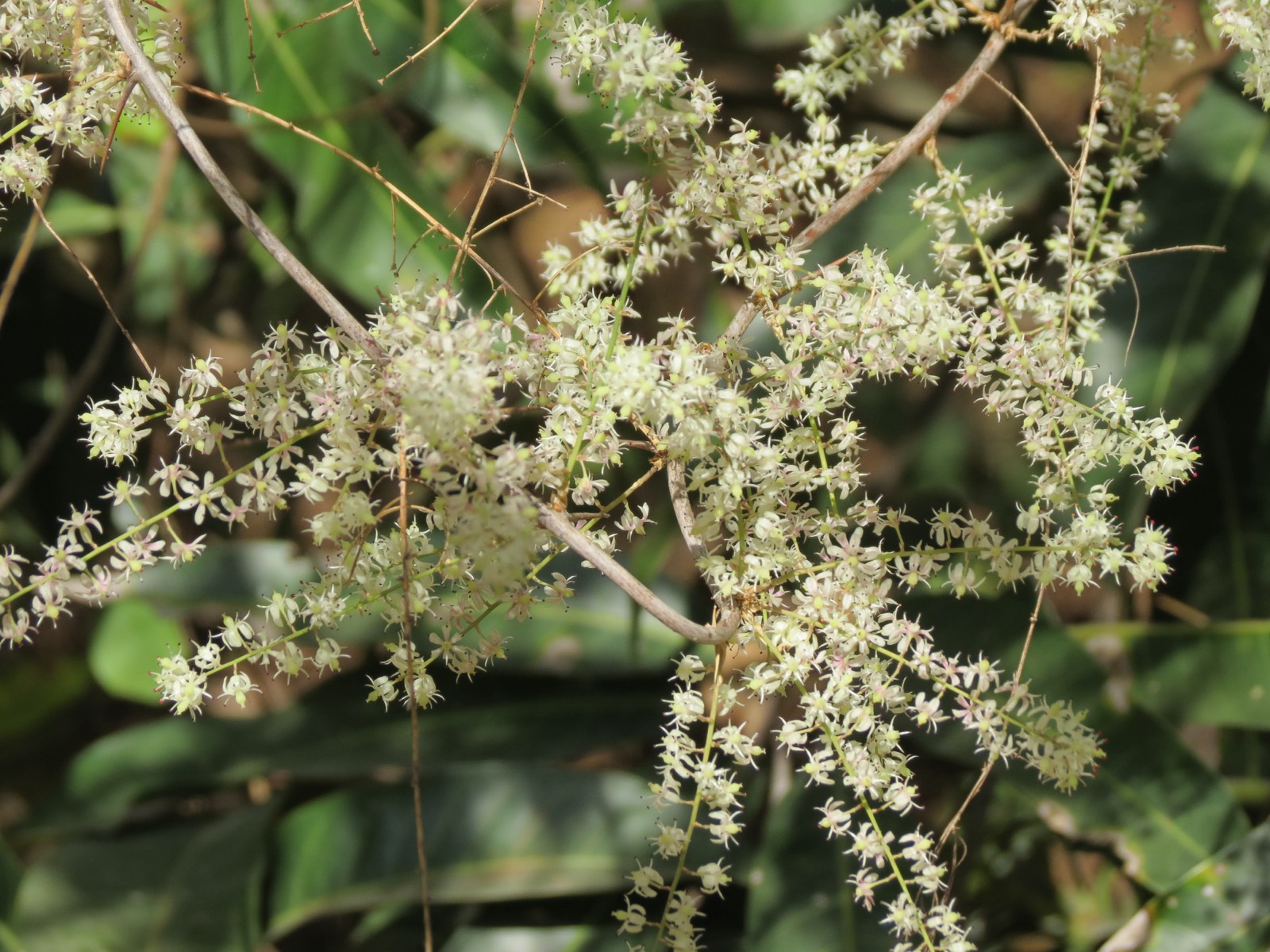
Maca & Ginseng Energy Blend Capsules
Finished capsule blend · Lepidium meyenii hypocotyl with Panax ginseng root extract
Caffeine-free capsule blend of Lepidium meyenii hypocotyl extract and Panax ginseng root extract, with the ginsenoside assay method named on every lot. Vegan HPMC shell, private label.
Specifications
| Product type and format | Finished two-piece hard capsule in measured dose form, supplied as bulk capsules for the buyer's own bottling or as a bottled and labelled private-label SKU |
| Botanical inputs and origin | Lepidium meyenii Walp. (Brassicaceae) dried hypocotyl and Panax ginseng C.A. Meyer (Araliaceae) dried root. Peruvian maca, Chinese or Korean root; extracted in India |
| House reference formula | Size 0 HPMC shell, nominal 0.67 mL, 500 mg fill: 350 mg maca extract at NLT 0.6% total glucosinolates plus 150 mg Panax ginseng root extract at 20% total ginsenosides by UV |
| Maca standardisation | Total glucosinolates NLT 0.6% reported by UV as glucotropaeolin or by HPLC, or macamides and macaenes 0.5-0.6% by HPLC. The two marker families are not equivalent |
| Maca ecotype | Yellow, red or black hypocotyl selected at order and declared on the COA. Glucotropaeolin is around 80-90% of total glucosinolates across all three ecotypes |
| Ginseng standardisation | Total ginsenosides 5-30% by UV colorimetry or 1.5-7% by HPLC summing Rb1, Rb2, Rc, Rd, Re, Rf and Rg1. Ph. Eur. root monograph requires NLT 0.40% Rg1 plus Rb1 |
| Method caution and species identity | UV reads far higher than HPLC on one lot, and an 80% UV figure is stem-and-leaf, not root. Ginsenoside Rf is present in P. ginseng and absent in P. quinquefolius |
| Release assay | Assayed on the finished capsule, not only on the input extracts: glucosinolate and ginsenoside content per unit with the method named, plus fill weight and weight variation |
| Capsule shell and excipients | Vegan HPMC standard; bovine or porcine gelatin declared if ordered. Titanium dioxide free, E171 having lost EU food-additive status on 7 Aug 2022. Palm, not tallow, stearate |
| Appearance, disintegration and shelf life | Opaque capsule, tan to light brown fill with a malty note. Disintegration NMT 30 minutes per USP <2040>. 24 months sealed below 25 C, dry and out of direct light |
| Heavy metals and microbiology | Pb NMT 3 ppm, As NMT 2 ppm, Cd NMT 1 ppm, Hg NMT 0.1 ppm by ICP-MS. TPC NMT 10,000 cfu/g, yeast and mould NMT 500 cfu/g, Salmonella and E. coli absent in 10 g |
| Stimulant status and adulterant screening | Caffeine-free with no added stimulant. Every lot screened by LC-MS/MS for undeclared sibutramine, synthetic stimulants and PDE-5 inhibitors, the adulterants of this category |
| Allergen and diet status | Vegan with the HPMC shell; vegetarian, and bovine or porcine, with gelatin. Brassicaceae but no mustard seed material. No milk, egg, soy, fish, crustacean, gluten, sesame or nut |
| CITES position | Panax ginseng is Appendix II only for the Russian Federation population and extracts are excluded. |
| HS code | 2106 90 99 |
This finished capsule pairs two botanicals that brands routinely put together and that almost nobody specifies properly. The maca fraction is an extract of the dried hypocotyl of Lepidium meyenii Walp., family Brassicaceae — the swollen storage organ of an Andean crop also treated taxonomically as Lepidium peruvianum Chacon — sourced from the Junin and Pasco plateau of the central Peruvian Andes. The ginseng fraction is an extract of the dried main and lateral root of Panax ginseng C.A. Meyer, family Araliaceae, the Asian or Korean ginseng of commerce, from established Chinese or Korean growing regions. Extraction, blending, encapsulation and release testing are carried out in India. The house reference build is a size 0 shell at a 500 mg fill, 350 mg of maca extract at not less than 0.6% total glucosinolates with 150 mg of Panax ginseng root extract at 20% total ginsenosides by UV, and the formula is rebuilt to a buyer's brief on ratio, marker family, method and capsule size.
Both halves carry a marker trap, and a buyer who does not name the method on the purchase order will eventually receive something they did not intend. Maca is standardised on two entirely separate and non-interchangeable families. Glucosinolates are the sulphur-containing brassica markers dominated by glucotropaeolin, benzyl glucosinolate, which published profiling puts at roughly 80 to 90 per cent of total glucosinolates across the red, yellow and black ecotypes; the common trade grade is 0.6 per cent total glucosinolates, and trade certificates report it more often by UV as glucotropaeolin than by HPLC, so the spec must admit both. Macamides are N-benzyl fatty acid amides that occur only in maca and are usually quoted with macaenes at 0.5 to 0.6 per cent by HPLC. A 0.6 per cent glucosinolate extract and a 0.6 per cent macamide extract are different articles. Ginseng is worse. Total ginsenosides by UV colorimetry and by HPLC are different measurements that do not agree on the same lot, UV reading substantially higher because it responds to material beyond the individual ginsenosides; an 80 per cent UV figure in the market is in practice stem-and-leaf material rather than root and has no place in a root specification. The European Pharmacopoeia monograph sets the root at not less than 0.40 per cent for the sum of ginsenosides Rg1 and Rb1 by HPLC, and the same HPLC marker set — protopanaxadiols Rb1, Rb2, Rc and Rd with protopanaxatriols Re, Rf and Rg1 — releases extract lots. Ginsenoside Rf is the identity handle that a label cannot provide: it occurs in Panax ginseng and not in Panax quinquefolius, so the chromatogram settles the species question outright. We release on the finished capsule and name the method for each fraction on the certificate.
The declarations that decide whether this passes a buyer's audit are the allergen line, the stimulant line and the shell. Maca is a crucifer, and because mustard is a declared allergen under EU Regulation 1169/2011 Annex II and in Canada, every EU buyer will query a Brassicaceae ingredient: the material is botanically related to mustard but contains no mustard seed material and is not a declarable allergen, and it is worth stating both halves of that plainly. Beyond that, no milk, egg, soy, fish, crustacean, mollusc, peanut, tree nut, sesame, celery or lupin material and no gluten-bearing cereal enters the process, and the material is non-GMO. The product is caffeine-free: no caffeine, synephrine or other stimulant is added, which matters because stimulant spiking and sibutramine are the documented adulterants of energy-positioned supplements, and we screen every lot by LC-MS/MS accordingly. With the standard hypromellose shell the capsule is vegan; a gelatin shell makes it vegetarian at best and bovine or porcine in origin, declared on the specification. Shells are titanium dioxide free, E171 having lost its EU food-additive authorisation on 7 August 2022, and magnesium stearate where used is palm-derived. On CITES, Panax ginseng is listed in Appendix II only for the population of the Russian Federation and that annotation covers whole and sliced root while excluding extracts, so cultivated Chinese and Korean root carries no permit burden; material from the Russian Far East would be a different matter. Thovek makes no therapeutic or disease claim for this product. Claim wording and substantiation are the buyer's responsibility, botanical health claims remain on hold in the EU under Regulation 1924/2006, and US structure-function claims require the statutory disclaimer and notification to FDA within thirty days of first marketing.
Applications
Energy-positioned capsule linesAdaptogen blend SKUsPrivate-label supplement brandsSports nutrition capsule rangesContract manufacturing programmesHerbal tonic capsule linesE-commerce own-label SKUsPractitioner channel dispensing
Available grades
Capsule sizes 00, 0, 1 and 2 with fills from 300 to 800 mg. Maca fraction at 0.6% total glucosinolates by UV or HPLC, 0.5% or 0.6% macamides and macaenes by HPLC, or 4:1 and 10:1 native ratio extract, in yellow, red or black ecotype. Ginseng fraction at 5%, 10%, 20% or 30% total ginsenosides by UV or 1.5%, 4% or 7% by HPLC, from white air-dried or red steam-processed root. Vegan HPMC, bovine gelatin or porcine gelatin shells, all titanium dioxide free. Excipient-free fills, carrier-free extracts, kosher and halal certified production, bulk, bottled or blistered presentation.
Packaging: Bulk capsules in food-grade HDPE jars of 500 or 1,000 pieces with double PE liners, silica gel desiccant and induction seals, packed 10,000 to 50,000 capsules per fibreboard master carton. Finished private label bottled to buyer artwork in 30, 60, 90 or 120 count HDPE or PET bottles, amber or opaque where light protection is wanted, with tamper-evident induction seals; PVC-PVdC or alu-alu blisters for pharmacy, travel and sampling packs. Palletised and shrink-wrapped for ambient sea or air freight, no cold chain. Each consignment carries a batch COA naming the assay method for each fraction, the maca ecotype and the ginseng root type, heavy-metal and pesticide-residue reports, the adulterant screening report, allergen, vegan, mustard-negative and shell-origin declarations, non-GMO statement, MSDS and certificate of origin.