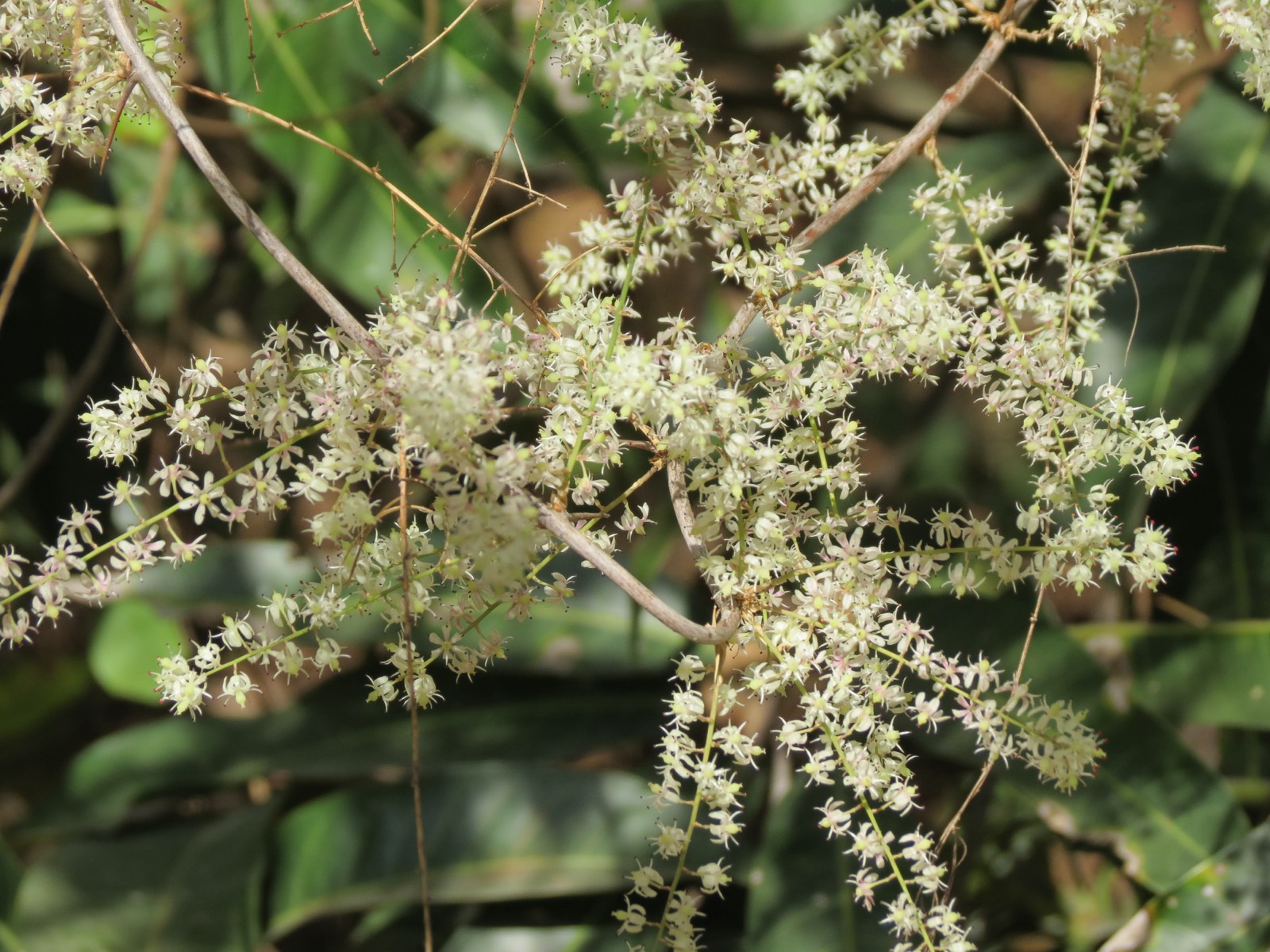
Shatavari Women's Tonic (Powder & Syrup)
Shatavari (Asparagus racemosus) women's tonic in powder or syrup form, standardised on total steroidal saponins to the buyer's figure. Vegan, milk-free export build; dairy versions declared.
Specifications
| Botanical source | Asparagus racemosus Willd., family Asparagaceae; traded as shatavari, satavar, satamuli or Indian asparagus. Identity by TLC/HPTLC against authenticated reference. |
| Part used and origin | Dried tuberous root, lifted after two to three seasons of cultivation and milled before use. Indian origin, with grower and lot traceability documented. |
| Powder build | Plain milled root churna, or churna carried to a target saponin figure with standardised root extract blended back. Sieved to 40, 60 or 80 mesh as specified. |
| Syrup build | Aqueous or hydro-alcoholic root extract in a sugar, sorbitol or maltitol base; sugar-free versions to order. Preservative system fixed by the buyer's specification. |
| Standardisation | Total steroidal saponins to the buyer's figure, commonly 5 to 50 per cent in the extract used. Method must be named: gravimetry, UV-Vis at 540 nm, or HPLC. |
| Marker chemistry | Shatavarin IV is the usual named HPLC marker: CAS 84633-34-1, C45H74O17, 887.1 g/mol. Native matrix also carries mucilage, sterols and flavonoids. |
| Appearance — powder | Light brown to brown free-flowing powder, characteristic odour, bitter-sweet taste. Partially water soluble; soluble in ethanol and hydro-alcoholic media. |
| Appearance — syrup | Pale to mid-brown viscous liquid with a characteristic herbal odour. Specific gravity, pH, total solids and viscosity fixed per batch specification. |
| Powder limits | Loss on drying NMT 5.0 per cent; total ash NMT 5.0 per cent. Heavy metals by ICP-MS: lead NMT 3 ppm, arsenic NMT 1 ppm, cadmium NMT 1 ppm, mercury NMT 0.1 ppm. |
| Microbiology | Total plate count NMT 10,000 cfu/g; yeast and mould NMT 1,000 cfu/g; E. coli and S. aureus absent; Salmonella absent in 25 g. Syrup held to liquid-product limits. |
| Pesticides and mycotoxins | Screened to EU MRLs or USP <561> as the buyer specifies; aflatoxin B1 and total aflatoxins to the destination market limit. Reported per lot on the COA. |
| Allergen status | No milk, egg, fish, crustacean, soy, gluten, peanut or tree-nut input in the standard build. Kalpa-style versions on a dairy base must declare MILK — specify at order. |
| Diet and regulatory status | Vegan and vegetarian; no bovine, porcine or marine input. Non-GMO, not irradiated. The Ayurvedic Pharmacopoeia of India carries a Shatavari root monograph. |
| Shelf life, storage | Powder 24 months, syrup 18–24 months on stability data, below 25 °C. Powder is hygroscopic — reseal promptly. |
| HS code | 21069099 for the finished tonic |
Applications
Available grades
Powder as plain milled churna at 40, 60 or 80 mesh, or standardised to a named total-saponin figure between 5 and 50 per cent by gravimetry, UV-Vis or HPLC against shatavarin. Native ratio extracts at 4:1 and 10:1 for the syrup base. Syrup in sugar, sorbitol or maltitol bases and in sugar-free form. Dairy-based kalpa-style presentations only on written specification, with MILK declared. Conventional and NPOP / NOP / EU-organic certified lots subject to certificate scope; kosher and halal certification available. Manufactured under FSSAI licence with GMP, ISO 22000 and HACCP documentation.
Related products
Prenatal DHA + Folic Acid Softgels
Contract-made prenatal softgels pairing DHA with folic acid or L-5-MTHF, in a marine fish-oil build or a fish-free vegan algal build. Allergen and diet status declared per build; 200 mg DHA is the usual base.
Cranberry + D-Mannose Capsules
Cranberry extract standardised on proanthocyanidins by DMAC (AOAC 2019.06) blended with D-mannose in one capsule. Vegan HPMC shell, peanut-free cranberry verified per lot, private label to order.
Evening Primrose Oil Softgels (GLA 9-10%)
Soft gelatin capsules filled with Oenothera biennis seed oil standardised to 9-10% gamma-linolenic acid. Bovine gelatin, fish gelatin or vegan HPMC shell, 500 mg and 1,000 mg fills, private label from India.