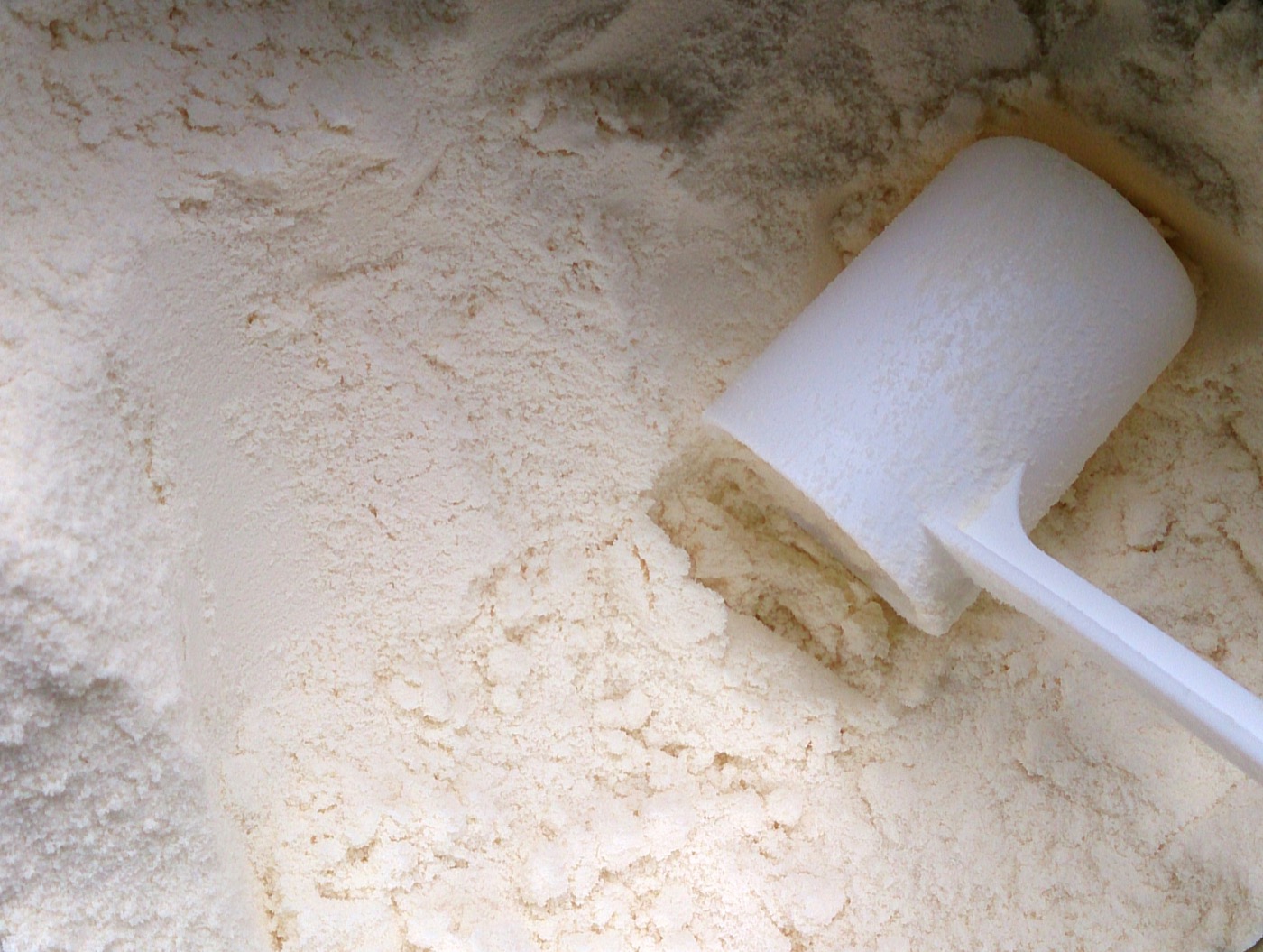
Whey & Casein Blend Protein Powder
Bulk bovine milk protein powder blending whey protein concentrate or isolate with micellar casein at 50:50 to 70:30, typically 75-82% protein (N x 6.38). Fast and slow milk fractions in one powder. Contains milk.
Specifications
| Identity | Blend of bovine whey protein (WPC 80 or WPI 90) with casein (micellar casein concentrate or caseinate). No CAS for the blend; casein component CAS 9000-71-9. |
| Blend ratio | Standard 50:50, 60:40 and 70:30 whey:casein on a protein basis; other ratios blended to a signed customer specification. |
| Protein (N x 6.38) | 75.0-82.0% as-is by Kjeldahl, according to ratio and grade; WPI 90 plus MCC 85 builds reach 80-85% on a dry basis. |
| Appearance and flavour | Free-flowing white to light cream powder; bland, clean dairy flavour and odour; not less than 95% through a 30-mesh screen on the non-instantised grade. |
| Protein fractions | Whey side: beta-lactoglobulin, alpha-lactalbumin, serum albumin, immunoglobulins. Casein side: micellar alpha-s1-, alpha-s2-, beta- and kappa-casein. |
| Lactose | 3.0-7.0% on the standard WPC 80 build; not more than 2.0% on the low-lactose build using WPI 90 with micellar casein. Not a lactose-free product. |
| Fat | 3.0-7.0% on WPC 80 builds; not more than 2.0% on WPI-based low-fat builds. Reported as-is on every certificate of analysis. |
| Moisture, ash and pH | Moisture not more than 5.0%; ash 3.0-8.0%; pH 6.4-7.2 measured on a 10% aqueous solution at 20 C. |
| Solubility and instantising | Instantised grade agglomerated with up to 1% soy lecithin for cold dispersion; a lecithin-free non-instantised grade is available for soy-sensitive labels. |
| Microbiology | TPC not more than 30,000 cfu/g; coliforms not more than 10/g; E. coli absent/g; Salmonella absent/25 g; L. monocytogenes absent/25 g; yeast and mould not more than 50 cfu/g. |
| Contaminants | Melamine not more than 2.5 mg/kg, the Codex maximum level for foods other than infant formula; heavy metals, aflatoxin M1 and antibiotic residues reported per lot. |
| Allergens and origin | Contains MILK; SOY on the lecithin-instantised grade only. Free from egg, fish, crustacean, gluten, peanut, tree nut, sesame. Vegetarian not vegan; bovine dairy origin. |
| Shelf life and storage | 12-18 months from manufacture in unopened original packaging below 25 C and not more than 65% RH, away from strong odours; the declared figure is grade-specific. |
| HS code | 2106.10 (21061000) |
Applications
Available grades
Standard blend on whey protein concentrate 80 plus micellar casein concentrate 85. Low-lactose, low-fat blend on whey protein isolate 90 plus micellar casein. Caseinate blend on calcium or sodium caseinate where emulsification and viscosity matter more than micellar structure. Each available instantised with soy lecithin or non-instantised and lecithin-free. Halal, kosher and non-GM documentation on request.
Related products
Whey Protein Concentrate (WPC)
Spray-dried bovine whey protein concentrate in WPC 34 through WPC 80 grades, made to ADPI composition — bland clean flavour, high hydration rate, gelation and acid stability for beverage, bar and dairy work.
Whey Protein Isolate (WPI)
Bovine whey protein isolate at 90–92% protein on dry matter, made by cross-flow microfiltration or ion exchange — near lactose-free, low fat, and clear in acid beverages at pH 3–4.
Whey Protein Hydrolysate (WPH)
Bovine whey protein hydrolysate produced by controlled enzymatic cleavage of WPC or WPI — a defined peptide mixture with higher solubility, lower viscosity and reduced heat gelation.