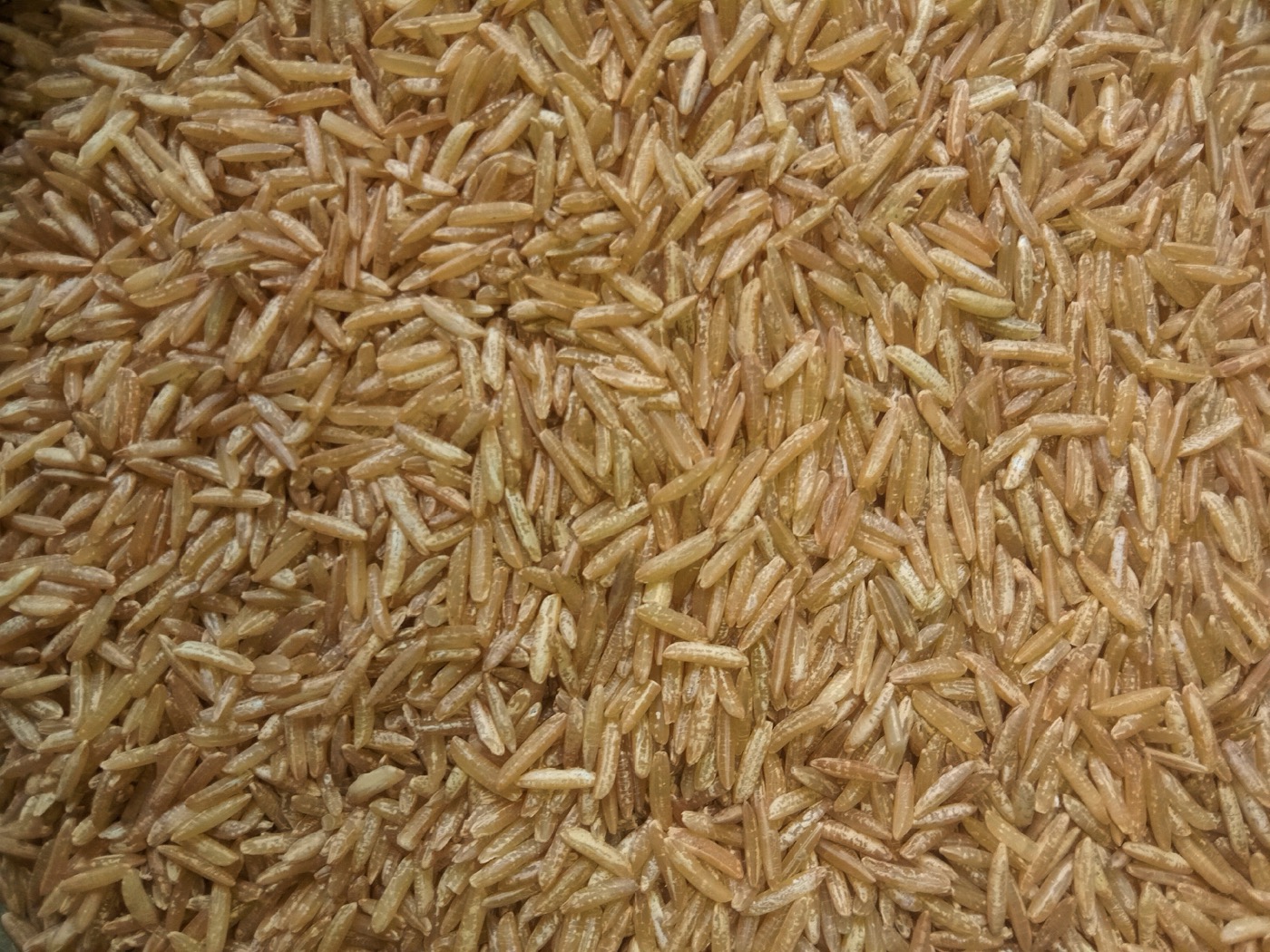
Rice protein
Bulk rice protein powder, 80% protein on a dry basis, made by enzymatic starch removal from Indian rice. Vegan, gluten-free, no declarable allergen. 85% and 90% grades available.
Specifications
| Source | Protein fraction of Oryza sativa endosperm, recovered from broken rice or whole-grain rice milled in India; no animal or dairy input at any stage |
| Protein content (dry basis) | 80% minimum on the standard grade; 85% and 90% grades available. Declared N x 6.25 unless the buyer's specification names a commodity-specific Jones factor |
| Appearance | Free-flowing cream to light-beige powder with a mild cereal aroma; whole-grain and sprouted grades run darker, toward light brown |
| Solubility | Largely insoluble at neutral pH - it disperses and suspends rather than dissolves, and settles out of a still liquid. Suits shakes, bars and bakery, not clear RTD |
| Moisture | Not more than 7.0% |
| Fat | Not more than 3.0%; typical batches run around 1.5% |
| Ash | Not more than 5.0% |
| Particle size | 95% through 80 mesh (about 180 microns) as standard; 100 mesh and 200 mesh available where mouthfeel matters |
| Amino acid profile note | Lysine is limiting at 2.7-3.1% of total amino acids, against 6.0% for soy isolate and 9.7% for whey isolate. Met+Cys 4.3-5.3%, BCAA about 18%, EAA 36-38% |
| Processing method | Enzymatic: alpha-amylase and glucoamylase hydrolyse the starch, the insoluble protein is separated, washed and low-temperature dried. Hexane-free, non-GMO |
| Allergen status | Rice is not a declarable allergen under EU Reg. 1169/2011 Annex II, the US FALCPA/FASTER Act nine, or Codex. Naturally gluten-free, dairy-free, soy-free, vegan |
| Heavy metals and micro | Specify speciated inorganic arsenic by ICP-MS per lot - reference points are Codex 0.35 mg/kg in husked rice and EU 0.15 mg/kg in non-parboiled milled rice |
| Shelf life | 24 months from manufacture in unopened original packaging, stored cool, dry and out of direct sunlight |
| HS code | 21061000 (India ITC-HS) - protein concentrates and textured protein substances. Final classification rests with the importing customs authority |
Applications
Available grades
80% protein as standard, with 85% and 90% grades for higher-load formats. Organic certified to NPOP, NOP and EU rules on request, plus whole-grain and sprouted-rice variants and finer 100 or 200 mesh milling.
Related products
Whey Protein Concentrate (WPC)
Spray-dried bovine whey protein concentrate in WPC 34 through WPC 80 grades, made to ADPI composition — bland clean flavour, high hydration rate, gelation and acid stability for beverage, bar and dairy work.
Whey Protein Isolate (WPI)
Bovine whey protein isolate at 90–92% protein on dry matter, made by cross-flow microfiltration or ion exchange — near lactose-free, low fat, and clear in acid beverages at pH 3–4.
Whey Protein Hydrolysate (WPH)
Bovine whey protein hydrolysate produced by controlled enzymatic cleavage of WPC or WPI — a defined peptide mixture with higher solubility, lower viscosity and reduced heat gelation.