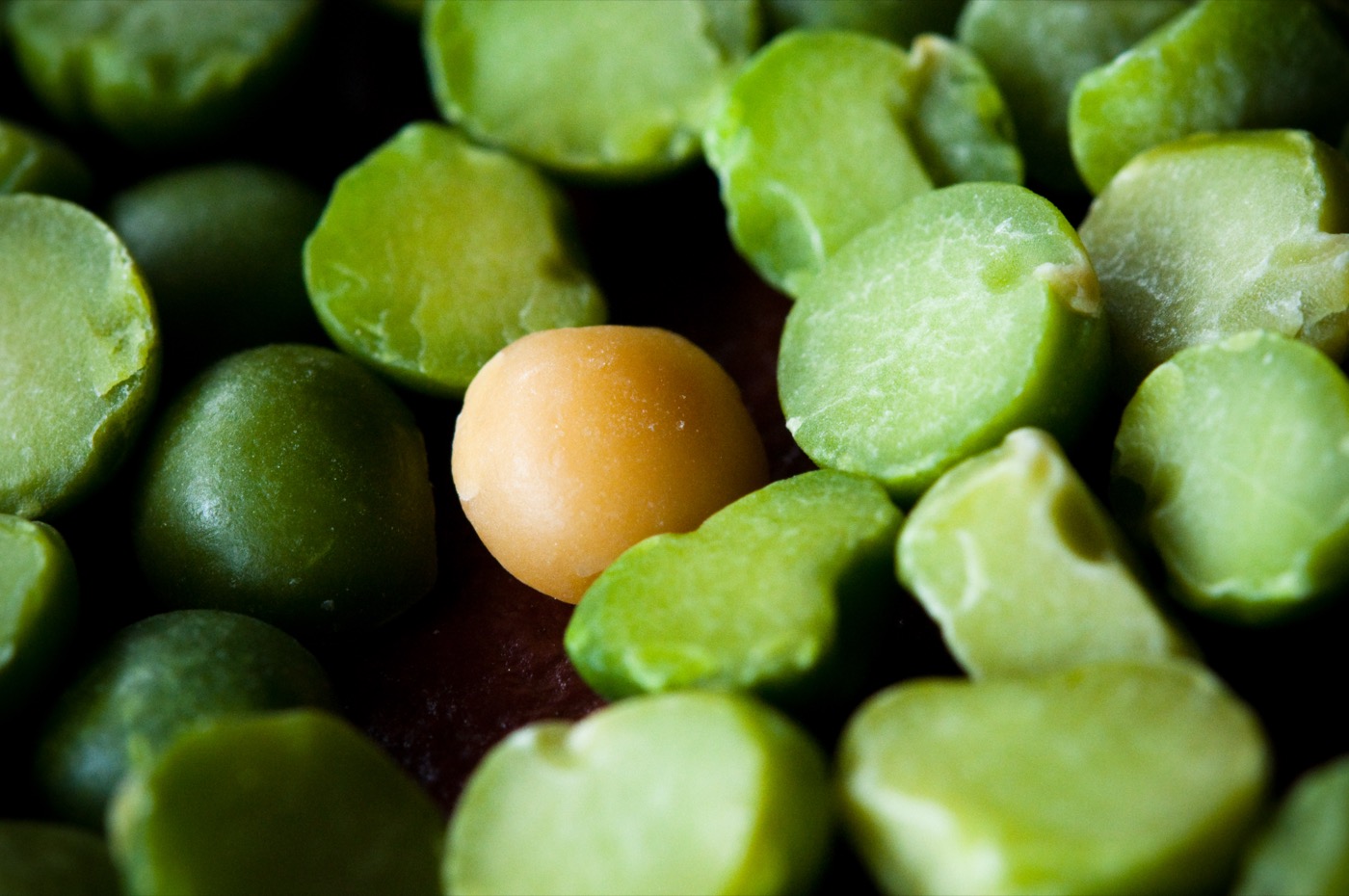
Plant protein blend
Complementary vegan protein blend, typically 70:30 pea to rice, at 80% minimum protein as-is. Pea covers lysine, rice covers methionine, so the blend carries all nine essential amino acids.
Specifications
| Identity | Blend of vegetable protein isolates and concentrates. No single CAS number applies to a formulated multi-source blend; components are declared individually. |
| Standard composition | 70% pea protein isolate (Pisum sativum) with 30% rice protein concentrate (Oryza sativa). Ratios and additional inputs made to buyer formulation. |
| Protein (assay) | 80% minimum as-is, Kjeldahl nitrogen x 6.25; typically 85% minimum on dry matter. 75% and 85% cuts also produced. |
| Amino acid profile | All nine essential amino acids present. Rice corrects the pea methionine gap and pea corrects the rice lysine gap; such blends report PDCAAS 0.80–0.90. |
| Appearance, odour and taste | Free-flowing cream to light-beige powder with a characteristic earthy pea and cereal note. Flavour-masked grades available for lightly flavoured systems. |
| Solubility and dispersibility | Disperses rather than fully dissolves; nitrogen solubility varies with pH. Instantised grade uses sunflower lecithin, so it stays soy-free. |
| Moisture, ash and fat | Moisture 8.0% maximum; ash 5–6% typical; residual fat up to 8%; pH of a 10% dispersion 6.5–7.5. |
| Particle size | 95% through 100 mesh (150 micron) as standard; an 80 mesh coarse cut is available for bars and extrusion. |
| Inorganic arsenic (rice fraction) | Tested as inorganic arsenic, not total arsenic. Common contract limit 0.15 mg/kg, mirroring the EU limit for rice destined for infant food. |
| Heavy metals | Lead, cadmium, mercury and arsenic to buyer specification. A stated cadmium limit is advised where sunflower or pumpkin seed protein is in the blend. |
| Microbiology | Typical limits: TPC <10,000 cfu/g; yeast and mould <100 cfu/g; coliforms <10 cfu/g; E. coli negative in 10 g; Salmonella negative in 25 g. |
| Allergen and dietary status | Vegan and vegetarian. No milk, egg, fish, crustacean, bovine or porcine input; gluten-free by formulation. Soy only if specified. Sesame cross-contact statement per line. |
| Shelf life and storage | 24 months from manufacture in sealed original packing below 25 C and 65% RH. Keep dry, out of direct sunlight and away from strong odours. |
| HS code (India ITC-HS) | 3504.00 (35040099) |
Applications
Available grades
Standard 70:30 pea to rice; custom ratios with mung bean, pumpkin seed or sunflower protein; instantised sunflower-lecithin grade; flavour-masked grade; organic NPOP, NOP or EU on request; non-GMO.
Related products
Whey Protein Concentrate (WPC)
Spray-dried bovine whey protein concentrate in WPC 34 through WPC 80 grades, made to ADPI composition — bland clean flavour, high hydration rate, gelation and acid stability for beverage, bar and dairy work.
Whey Protein Isolate (WPI)
Bovine whey protein isolate at 90–92% protein on dry matter, made by cross-flow microfiltration or ion exchange — near lactose-free, low fat, and clear in acid beverages at pH 3–4.
Whey Protein Hydrolysate (WPH)
Bovine whey protein hydrolysate produced by controlled enzymatic cleavage of WPC or WPI — a defined peptide mixture with higher solubility, lower viscosity and reduced heat gelation.