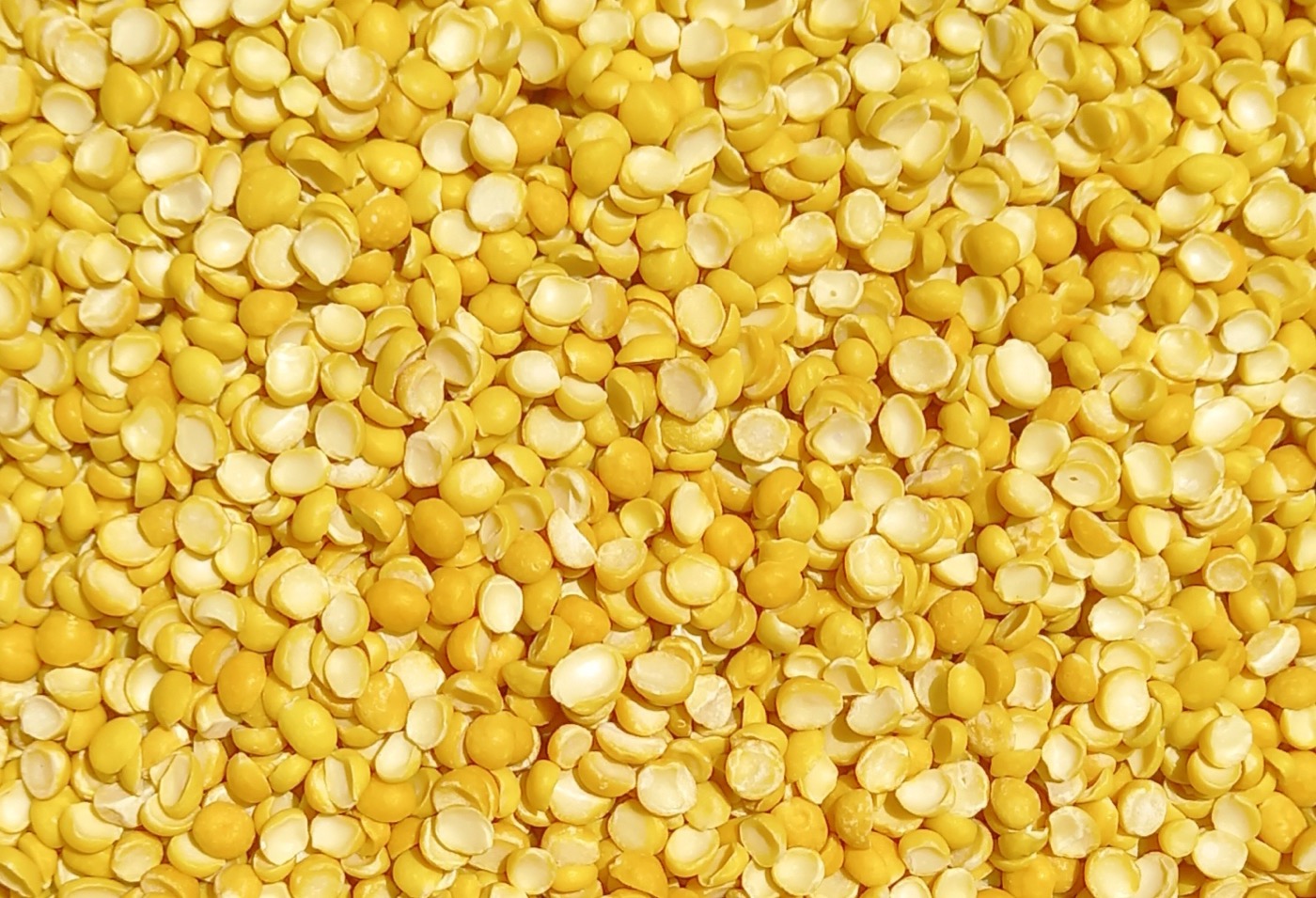
Pea & Rice Protein Blend
Blend of yellow pea protein isolate and brown rice protein at a standard 70:30 ratio, minimum 80% protein. Pea lysine and rice methionine offset each other in one vegan, gluten-free powder.
Specifications
| Composition | Yellow pea protein isolate with brown rice protein, standard 70:30 w/w; 75:25 and 60:40 builds to order |
| Botanical sources | Pisum sativum L. (yellow field pea) and Oryza sativa L. (brown rice) |
| Protein (N x 6.25) | Minimum 80% as is; approximately 86% on a dry-matter basis at 7% moisture |
| Appearance and odour | Free-flowing light beige to cream powder; clean, mildly legume-cereal aroma, no off-notes |
| Amino acid character | Pea contributes lysine and leucine; rice contributes methionine and cysteine, covering each other's limiting amino acid |
| Published blend analysis | 81.30 g protein, 26.43 g essential amino acids, 5.98 g leucine and 1.19 g methionine per 100 g in an analysed commercial pea-rice blend |
| Moisture | Maximum 8.0% |
| Ash | Maximum 6.0% |
| Fat | Maximum 8.0% |
| Particle size | 95% through 80 mesh standard; agglomerated / instantised grade available for shaker and RTD dispersion |
| Dispersion behaviour | Disperses in water and plant milks to an opaque suspension; not suitable for clear ready-to-drink formats |
| Allergen and diet status | Vegan and vegetarian; no milk, egg, fish, crustacean, soy, sesame or nut input; peas and rice naturally gluten-free; pea is a legume, declare accordingly |
| Heavy metals and microbiology | Tested per lot to buyer limits for Pb, As, Cd and Hg; Salmonella absent/25 g, E. coli absent/10 g, TPC and yeast-mould to agreed limits |
| Shelf life | 24 months unopened below 25 °C and 60% RH |
| HS code | 3504.00 (35040099) |
| HS code | 3504.00 (35040099) |
Applications
Available grades
Standard 70:30 at min 80% protein; 75:25 and 60:40 ratios; instantised / agglomerated grade; certified organic (NOP, EU, NPOP) grade; unflavoured or cocoa- and vanilla-masked versions; non-GMO declared documentation.
Related products
Whey Protein Concentrate (WPC)
Spray-dried bovine whey protein concentrate in WPC 34 through WPC 80 grades, made to ADPI composition — bland clean flavour, high hydration rate, gelation and acid stability for beverage, bar and dairy work.
Whey Protein Isolate (WPI)
Bovine whey protein isolate at 90–92% protein on dry matter, made by cross-flow microfiltration or ion exchange — near lactose-free, low fat, and clear in acid beverages at pH 3–4.
Whey Protein Hydrolysate (WPH)
Bovine whey protein hydrolysate produced by controlled enzymatic cleavage of WPC or WPI — a defined peptide mixture with higher solubility, lower viscosity and reduced heat gelation.