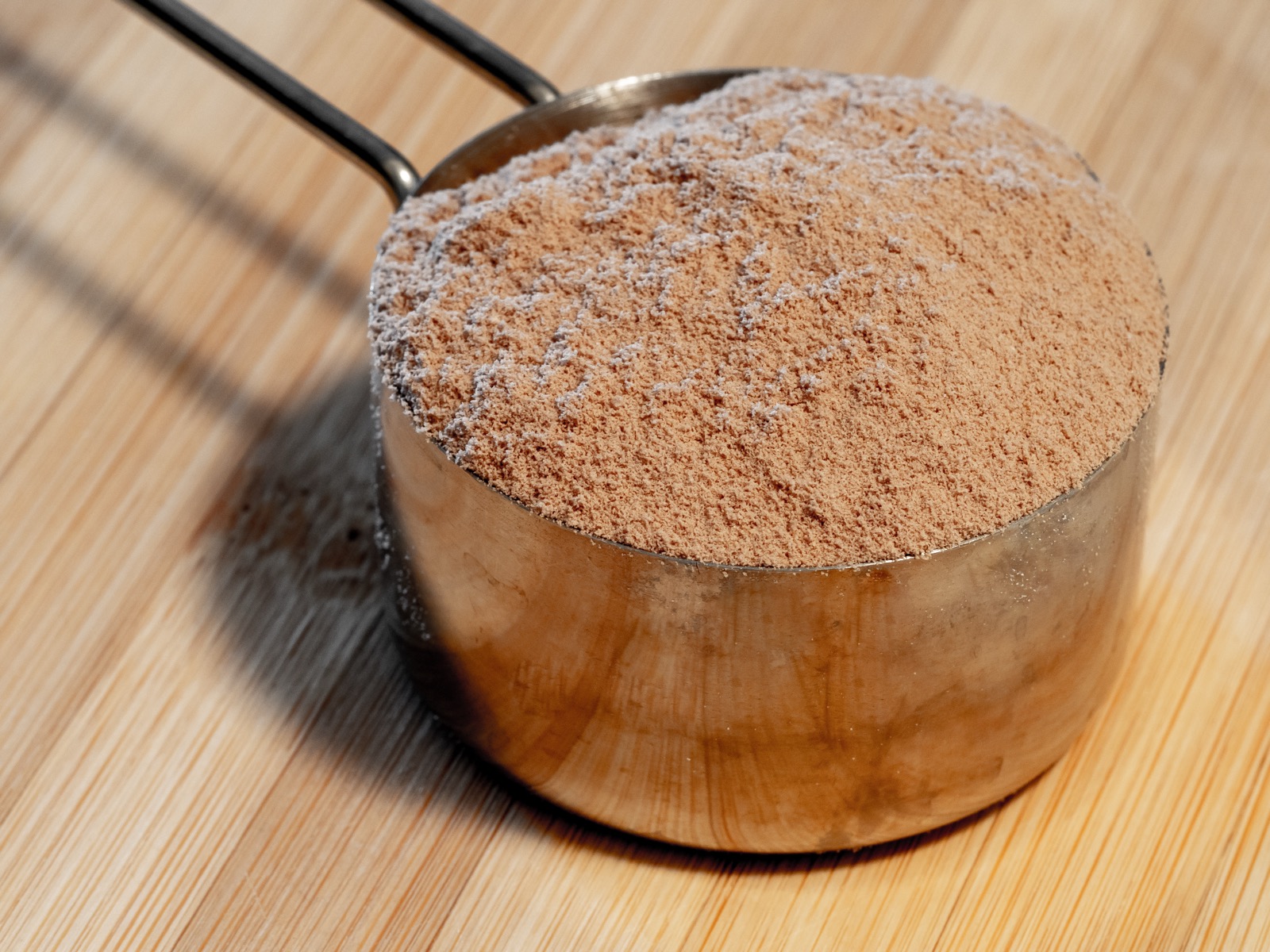
Mass gainer blend
Bulk mass gainer blend built to your recipe: maltodextrin carrier, WPC 80-led protein system, fat source and micronutrient premix at a 3:1 to 5:1 carb-to-protein ratio. Contains milk.
Specifications
| Product type | Compounded dry blend made to the buyer's recipe - carbohydrate carrier, multi-source protein system, fat source, vitamin-mineral premix and optional actives |
| Typical composition band | Protein 15-23%, carbohydrate 66-77%, fat 3-6% by weight, the band recorded in Indian customs proceedings in January 2025. Carb-to-protein ratio 3:1 standard, 2:1 to 5:1 on request |
| Energy density | Roughly 370-410 kcal per 100 g depending on fat level. Commercial servings of 150-330 g are built to deliver 500-1,250 kcal with 30-50 g protein and 100-250 g carbohydrate |
| Carbohydrate system | Maltodextrin as the bulk carrier - below 20 DE by definition, commercial grades DE 10-19, non-sweet and low osmolality. Oat flour, waxy maize starch or dextrose as co-carriers |
| Protein system | WPC 80 base with milk protein concentrate, calcium caseinate or micellar casein behind it. Vegan builds use pea with rice protein in complementary ratio and no dairy input |
| Lactose | Material in dairy builds - WPC 80 alone carries about 4-8% lactose and skimmed milk powder adds more. Lactase inclusion or a whey-isolate build brings it down |
| Optional actives | Creatine monohydrate (87.9% creatine by weight, balance water of crystallisation), digestive enzyme blend, MCT powder, added free amino acids - all buyer-specified |
| Appearance and dispersion | Free-flowing powder; colour and aroma set by the flavour system. Instantised with soy or sunflower lecithin, disperses in cold water or milk with a hand shaker |
| Moisture | Not more than 5.0%. Maltodextrin is hygroscopic, so pack barrier and warehouse humidity govern shelf life as much as the blend specification does |
| Microbiology (typical) | Total plate count max 10,000 cfu/g; yeast and mould max 100 cfu/g; E. coli, Salmonella and Staph. aureus absent in the stated sample size. Limits fixed per contract |
| Allergen status | Dairy build declares MILK, plus SOY where soy lecithin is used; oat or barley carriers declare GLUTEN; egg albumen declares EGG. No fish, crustacean, peanut or tree nut input |
| Origin and dietary status | Bovine dairy - vegetarian but not vegan. No porcine, gelatin or marine material. Fully vegan pea-and-rice build, halal and kosher certification available on request |
| HS code | 2106.90 (21069099) |
| Shelf life | 18 months unopened in the original sealed pack, stored below 25 C and below 60% relative humidity, away from direct light and strong odours |
Applications
Available grades
Standard 3:1 carbohydrate-to-protein gainer as the base grade, with a 5:1 high-energy build and a 2:1 higher-protein build. Lactose-reduced whey-isolate version, fully vegan pea-and-rice version, unflavoured neutral base for buyers who flavour in-house, and creatine-loaded or enzyme-loaded versions. Halal and kosher certification on request.
Related products
Whey Protein Concentrate (WPC)
Spray-dried bovine whey protein concentrate in WPC 34 through WPC 80 grades, made to ADPI composition — bland clean flavour, high hydration rate, gelation and acid stability for beverage, bar and dairy work.
Whey Protein Isolate (WPI)
Bovine whey protein isolate at 90–92% protein on dry matter, made by cross-flow microfiltration or ion exchange — near lactose-free, low fat, and clear in acid beverages at pH 3–4.
Whey Protein Hydrolysate (WPH)
Bovine whey protein hydrolysate produced by controlled enzymatic cleavage of WPC or WPI — a defined peptide mixture with higher solubility, lower viscosity and reduced heat gelation.