Turmeric Oleoresin (Curcuminoids)
Curcuma longa L. · total curcuminoids 25–45% by HPLC
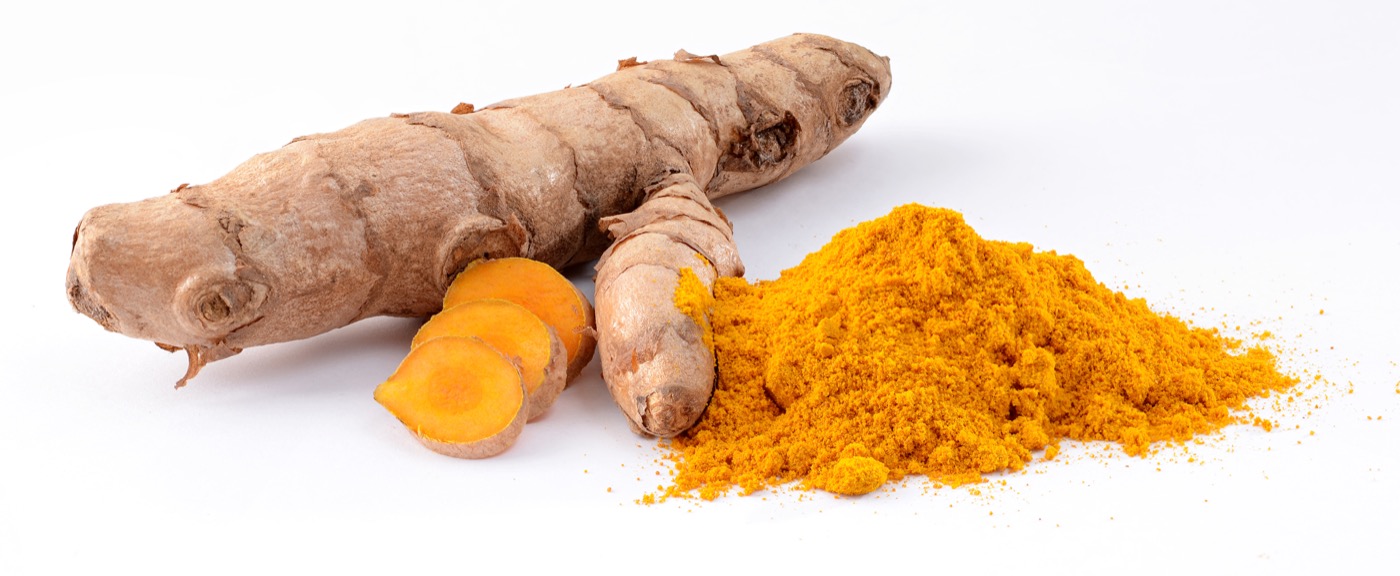
Solvent-extracted Curcuma longa rhizome oleoresin standardised on total curcuminoids by HPLC from 25% to 45%, with the turmeric volatile oil retained. Viscous orange-red oil; powder and dispersion grades.
Specifications
| Botanical source and part | Curcuma longa L. (Zingiberaceae), dried rhizome, Indian-grown. Solvent extractive carrying both the curcuminoid colour principles and the turmeric volatile oil. |
| Product form | Viscous orange-red to dark red oleoresin. Also supplied as an emulsified water-dispersible liquid and as a spray-dried powder on maize maltodextrin or gum acacia. |
| Colouring principles | Curcumin (diferuloylmethane), CAS 458-37-7, C21H20O6, MW 368.38, with demethoxycurcumin (CAS 33171-16-3) and bisdemethoxycurcumin (CAS 33171-05-0). |
| Standardisation | Total curcuminoids 25%, 30%, 37%, 40% or 45% by HPLC, taken as the sum of the three curcuminoids. Intermediate strengths made to a buyer's firm specification. |
| Assay method — fix on the order | HPLC against curcuminoid standards and the colour route (absorbance near 425 nm, total colouring matters) do not give the same number. The method is stated on the CoA. |
| Volatile oil and physical data | The turmeric volatile oil (turmerones, germacrone, atlantone, zingiberene) is retained. Volatile oil, colour value, refractive index and specific gravity reported per lot. |
| Solubility | Oil-soluble and ethanol-soluble, practically water-insoluble. Polysorbate- or gum-acacia-emulsified grades for beverages; spray-dried powder grades are water-dispersible. |
| Extraction and residual solvents | Food-grade ethanol, acetone, ethyl acetate, isopropanol or hexane, or supercritical CO2. Residual solvents to ICH Q3C; no chlorinated and no ICH Class 1 solvents used. |
| Regulatory position | Turmeric oleoresin is a colour additive exempt from certification at 21 CFR 73.615; turmeric (Curcuma longa L.) is also listed at 21 CFR 182.20 among GRAS natural extractives. |
| Not E 100 curcumin | EU Reg. 231/2012 defines E 100 curcumin as crystallised material at NLT 90% total colouring matters. An oleoresin at 25–45% is not E 100 and is not offered as one. |
| Diluent declaration | Where a lot is cut to grade the diluent is named: sunflower oil or MCT as standard. Soybean oil only on written request, which then triggers a soy allergen declaration. |
| Allergen and dietary status | Vegan and vegetarian, plant-derived; not bovine, porcine, marine or dairy. Non-GMO. Free of all EU 1169/2011 Annex II allergens, subject to the declared diluent. |
| Contaminants and authenticity | Lead, metanil yellow and Sudan dye screening on every lot; heavy metals by ICP-MS; pesticides to EU MRLs. ASTM D6866 biobased-carbon confirmation on request. |
| Shelf life, storage | 24 months sealed below 25 °C, protected from light; curcuminoids are light- and alkali-sensitive and stain. |
| HS code | 33019014 (India ITC-HS) — extracted oleoresins, turmeric |
Turmeric oleoresin is the whole extractive of the dried rhizome of Curcuma longa L. (Zingiberaceae): it carries both the colour principles and the volatile oil, and it is the material from which crystallised curcumin is subsequently made. That distinction is the entire commercial point of this product. Curcumin 95% is a purified orange-yellow crystal with the volatile fraction stripped out; the oleoresin is a viscous orange-red to dark red oil that still smells and tastes of turmeric, because the rhizome's volatile oil — the turmerones, with germacrone, atlantone and zingiberene among the other constituents — remains in the product. Buyers who want colour and spice character take the oleoresin; buyers who want a curcuminoid dose in a capsule take the crystal. Thovek supplies both and does not substitute one for the other, because they are different articles with different specifications, different handling and, as set out below, different tariff positions.
The colouring fraction is a family rather than a single molecule: curcumin, the diferuloylmethane, CAS 458-37-7, C21H20O6, MW 368.38, together with demethoxycurcumin (CAS 33171-16-3) and bisdemethoxycurcumin (CAS 33171-05-0). Standard grades run 25%, 30%, 37%, 40% and 45% total curcuminoids, and the assay method has to be fixed on the purchase order because the two routes in use do not return the same number: HPLC sums the three curcuminoids against reference standards, while the colour-additive route reads absorbance in the 425 nm region and reports total colouring matters. Volatile oil content, colour value, refractive index and specific gravity are reported per lot alongside the assay. One regulatory boundary should be stated plainly on any quotation: EU Regulation 231/2012 defines E 100 curcumin as material obtained by solvent extraction of the ground rhizome and purified by crystallisation, with a content of not less than 90% total colouring matters, so an oleoresin at 25–45% is not E 100 curcumin and must not be offered as one. In the United States the position is different and more favourable: turmeric oleoresin is separately listed as a colour additive exempt from certification at 21 CFR 73.615, and turmeric (Curcuma longa L.) also appears in the 21 CFR 182.20 list of natural extractives generally recognised as safe.
Extraction is by food-grade solvent — ethanol, acetone, ethyl acetate, isopropanol or hexane — or by supercritical carbon dioxide where a solvent-free declaration is wanted. 21 CFR 73.615 permits acetone, ethyl alcohol, ethylene dichloride, hexane, isopropyl alcohol, methyl alcohol, methylene chloride and trichloroethylene for the colour additive; Thovek uses none of the chlorinated members of that list, and residual solvents are reported to ICH Q3C. The neat oleoresin is oil- and ethanol-soluble and practically water-insoluble, so it is supplied as such for fat systems, as a polysorbate- or gum-acacia-emulsified dispersion for beverages, and as a spray-dried powder on maize maltodextrin or gum acacia for dry blending. Where a lot is standardised down to grade with a diluent, that diluent is named on the specification: sunflower oil or MCT is the house standard rather than soybean oil, because soy and sesame are declarable allergens and an unnamed diluent on an oleoresin is one of the commonest routes by which an allergen reaches a buyer's finished pack unlabelled. Subject to the declared diluent the article is plant-derived, vegan and vegetarian, non-GMO, and free of milk, egg, fish, crustacean, mollusc, soy, peanut, tree nut, sesame, mustard, celery, lupin and gluten. Turmeric has a long adulteration history — lead chromate and metanil yellow used as colour extenders, Sudan dyes, and synthetic curcumin substituted for plant-derived material — so every lot is screened for the dye adulterants and for lead, and carbon-14 biobased-content confirmation to ASTM D6866 is available where a natural-origin claim is being made. Curcuminoids are light- and alkali-sensitive and stain readily, so material ships in opaque lined containers and should be handled on dedicated equipment.
Applications
Natural colour for foodsCurry and seasoning basesBeverage colour emulsionsCurcuminoid supplement premixesBakery and confectionery colourDairy and fat colouringFeedstock for curcumin purificationSavoury snack seasoning
Available grades
Total curcuminoids 25%, 30%, 37%, 40% and 45% by HPLC; supercritical CO2 grade for a solvent-free declaration; deodorised and decolourised grades where turmeric aroma or shade is unwanted; polysorbate- and gum-acacia-emulsified water-dispersible liquids for beverages; spray-dried powders at 5–20% curcuminoids on maize maltodextrin or gum acacia; oil dilutions cut with sunflower oil or MCT, soybean oil only on written request; organic (NPOP / NOP / EU), kosher and halal certification. Crystallised curcumin at NLT 95% total curcuminoids is quoted as a separate article with its own classification.
Packaging: Neat oleoresin: 20–25 kg food-grade HDPE carboys or epoxy-lined MS drums with nitrogen headspace, and 200 kg drums for volume orders. Powder and dispersion grades: 25 kg fibre drums with double opaque LDPE liners, plus 1 kg and 5 kg aluminium-foil laminate pouches for pilot lots. Opaque packing throughout because curcuminoids are light-sensitive, and dedicated scoops and liners because the material stains persistently. Palletised and shrink-wrapped for FCL or LCL.