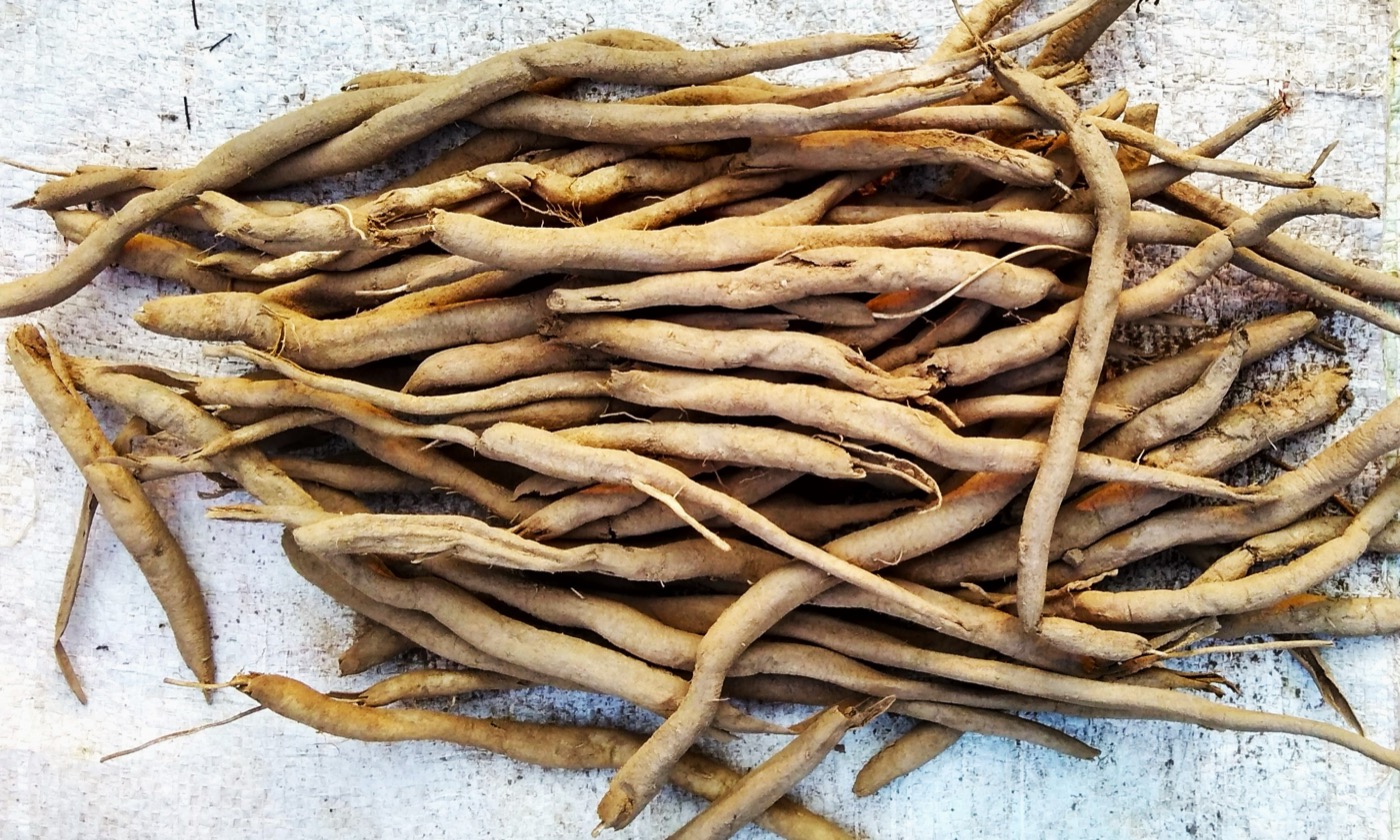
Safed Musli Extract (Chlorophytum borivilianum)
Hydro-alcoholic extract of dried Chlorophytum borivilianum root tubers, standardised to 10%, 20% or 40% total steroidal saponins by gravimetry. Vegan, allergen-free, India-grown, 25 kg export drums.
Specifications
| Botanical source | Chlorophytum borivilianum Santapau & R.R.Fern., family Asparagaceae; dried root tubers. Accepted name per Plants of the World Online. |
| Trade and Ayurvedic names | Safed musli, musali, dhauli musli, white musli. Distinct from kali (black) musli, which is Curculigo orchioides. |
| Assay / standardisation | Total saponins 10%, 20% or 40% w/w by gravimetry (n-butanol partition). Native ratio extracts 4:1 and 10:1 also produced. |
| Marker chemistry | Spirostane- and furostane-type steroidal saponins (borivilianosides, chlorophytosides) plus root fructans and free sugars. |
| Identity control | Macro/microscopic authentication of incoming tubers against a retained reference, confirmed by HPTLC fingerprint on the finished extract. |
| Extraction and solvents | Water or ethanol–water; no chlorinated solvents. Residual solvents within ICH Q3C Class 3 limits. |
| Appearance and odour | Free-flowing off-white to light brown fine powder; characteristic mild odour, faintly sweet to bland taste. |
| Particle size and solubility | NLT 95% through 80 mesh (BSS); 40 mesh available for capsule blends. Water-dispersible; partially soluble in ethanol–water. |
| Loss on drying and ash | LOD NMT 5.0% at 105 °C; total ash NMT 5.0%; acid-insoluble ash NMT 2.0%. Carrier, where used, is non-GM maize maltodextrin. |
| Heavy metals | Lead NMT 10 ppm, arsenic NMT 3 ppm, cadmium NMT 0.3 ppm, mercury NMT 1 ppm, to the AYUSH export limits for Ayurvedic products aligned with WHO guidance. |
| Microbiology | Total plate count NMT 10^5 cfu/g; yeast and mould NMT 10^3 cfu/g; E. coli, Salmonella, S. aureus and P. aeruginosa absent. |
| Allergen status | Free from milk, egg, soy, fish, crustacean, mollusc, gluten, peanut, tree nut, sesame, celery, mustard, lupin and sulphites. |
| Origin declaration | Vegan and vegetarian. No bovine, porcine or marine input. Cultivated tubers from Gujarat, Madhya Pradesh and Rajasthan; non-GMO, non-irradiated. |
| Shelf life, storage | 36 months from manufacture in sealed original packing below 25 °C, protected from light and moisture. |
| HS code | 1302 19 19 |
Applications
Available grades
Total saponins 10%, 20% and 40% by gravimetry; native ratio extracts 4:1 and 10:1; plain milled tuber powder at 80 mesh. Options: NPOP/NOP organic certification, water-only extraction for clean-label briefs, EU-MRL pesticide screening, low-microbial steam-treated, kosher and halal certification.
Related products
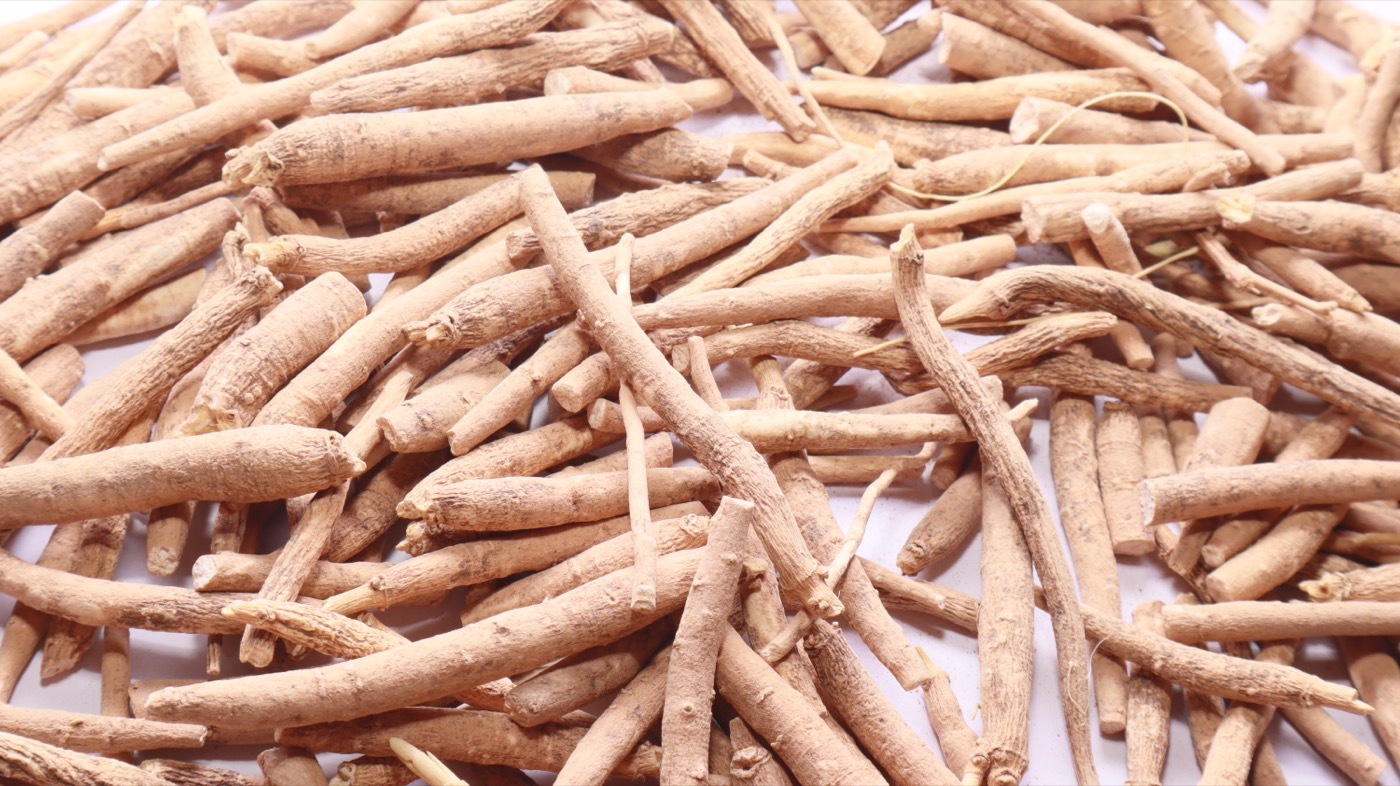
Ashwagandha Extract (Withania somnifera)
Hydro-alcoholic root extract of Withania somnifera standardised to 1.5–10% total withanolides by HPLC. Root-only material, vegan, bulk 25 kg export packing from India with batch COA.
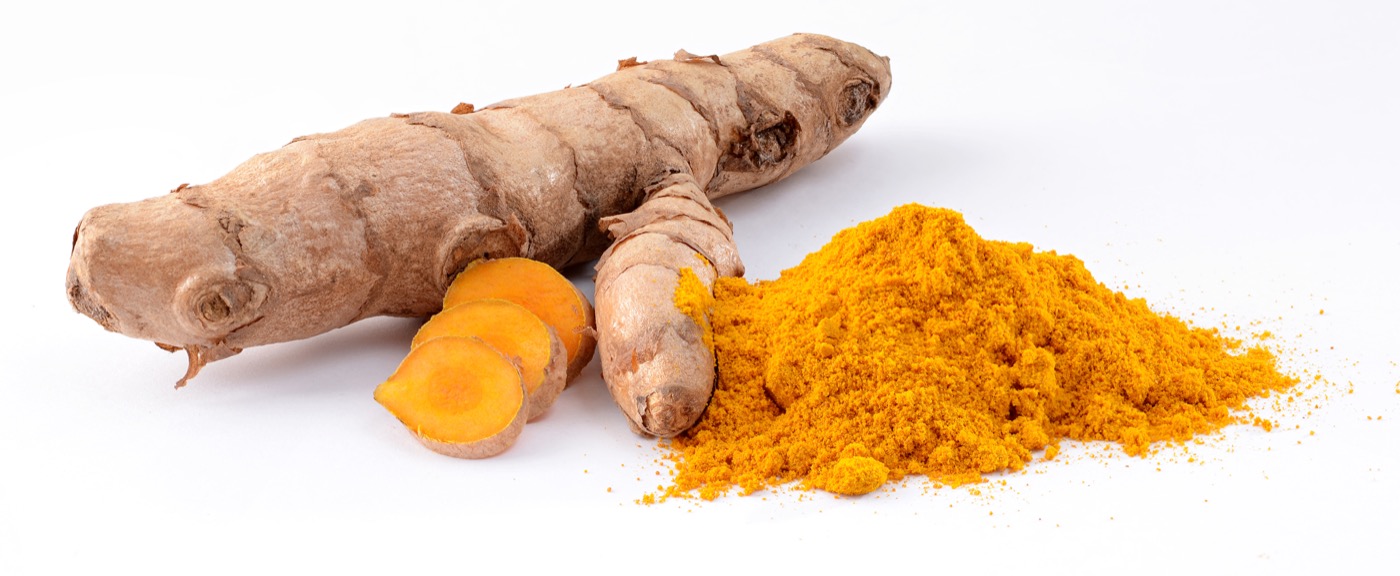
Turmeric Extract / Curcumin 95%
Purified Curcuma longa rhizome extract assaying NLT 95% total curcuminoids by HPLC, in USP curcumin / desmethoxy / bisdesmethoxy proportions. Orange-yellow crystalline powder, vegan.
Turmeric / Curcumin Extract
Standardized curcumin extract (up to 95% curcuminoids) for high-potency anti-inflammatory supplements.