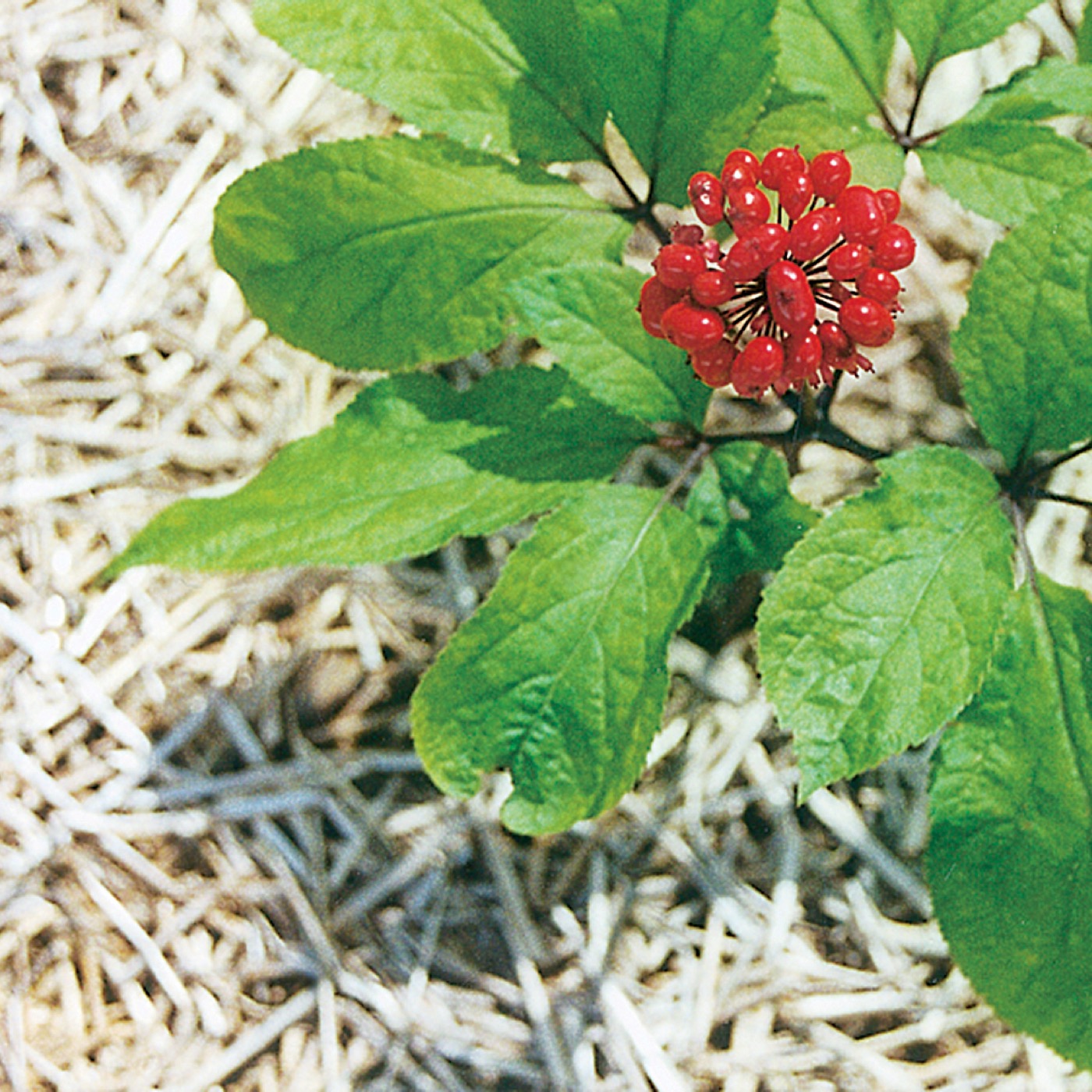
Panax Ginseng Root Extract
Water or hydro-ethanolic extract of dried Panax ginseng root, standardised on total ginsenosides by UV or HPLC. Free-flowing vegan powder for bulk export, 5% to 80% grades.
Specifications
| Botanical source | Panax ginseng C.A. Meyer (Araliaceae), dried main and lateral root; white air-dried or red steam-processed root supplied to order |
| Also known as | Asian, Korean or Chinese ginseng. Not Panax quinquefolius (American ginseng) and not Eleutherococcus senticosus, which is outside the Panax genus |
| Marker compounds | Dammarane triterpene saponins: protopanaxadiols Rb1, Rb2, Rc and Rd; protopanaxatriols Re, Rf and Rg1. Rf is absent from American ginseng |
| Standardisation | Total ginsenosides 5%, 10%, 20% or 30% by UV colorimetry, or 1.5%, 4% or 7% by HPLC; 80% UV grade on request. Method named on every COA |
| Method caution | UV colorimetry reads substantially higher than HPLC on the same lot. Compare offers method-for-method and name UV or HPLC on the purchase order |
| Pharmacopoeial reference | European Pharmacopoeia ginseng root monograph requires not less than 0.40% of ginsenosides Rg1 plus Rb1 by HPLC, calculated on the dried root |
| Extraction | Water or hydro-ethanolic, ethanol 30-70% v/v; drug-to-extract ratio 4:1 to 20:1 by grade. Maltodextrin carrier only where specified in writing |
| Appearance and organoleptics | Light yellow to yellowish-brown free-flowing powder; characteristic odour, slightly bitter taste. Mildly hygroscopic, re-seal after sampling |
| Particle size and moisture | Minimum 95% through 80 mesh (about 180 microns), 100 mesh on request; loss on drying not more than 5.0%; total ash not more than 5.0% |
| Heavy metals | Within USP <2232> permitted daily exposures for dietary supplements: inorganic arsenic 15, cadmium 5, lead 5 and total mercury 15 micrograms per day |
| Microbiology and solvents | Total plate count NMT 10,000 cfu/g; yeast and mould NMT 1,000 cfu/g; E. coli and Salmonella absent in 10 g; residual ethanol within ICH Q3C Class 3 |
| Allergen and diet status | No milk, egg, soy, fish, crustacean, gluten, sesame or tree-nut inputs. Vegan and vegetarian, non-GMO, no animal-derived carriers or processing aids |
| Origin and shelf life | Root of Chinese or Korean origin, extracted and released in India; 24 months from manufacture, sealed, below 25 C, protected from light and moisture |
| HS code | 1302 19 14 (India ITC-HS): vegetable saps and extracts, other, extracts, of ginseng (including powder) |
Applications
Available grades
Ratio extracts 4:1 to 20:1; standardised 5%, 10%, 20% and 30% total ginsenosides by UV; 1.5%, 4% and 7% total ginsenosides by HPLC; 80% UV on request. White or red (steamed) root, water or hydro-ethanolic, 80 or 100 mesh, low residual solvent and organic-certified options.
Related products
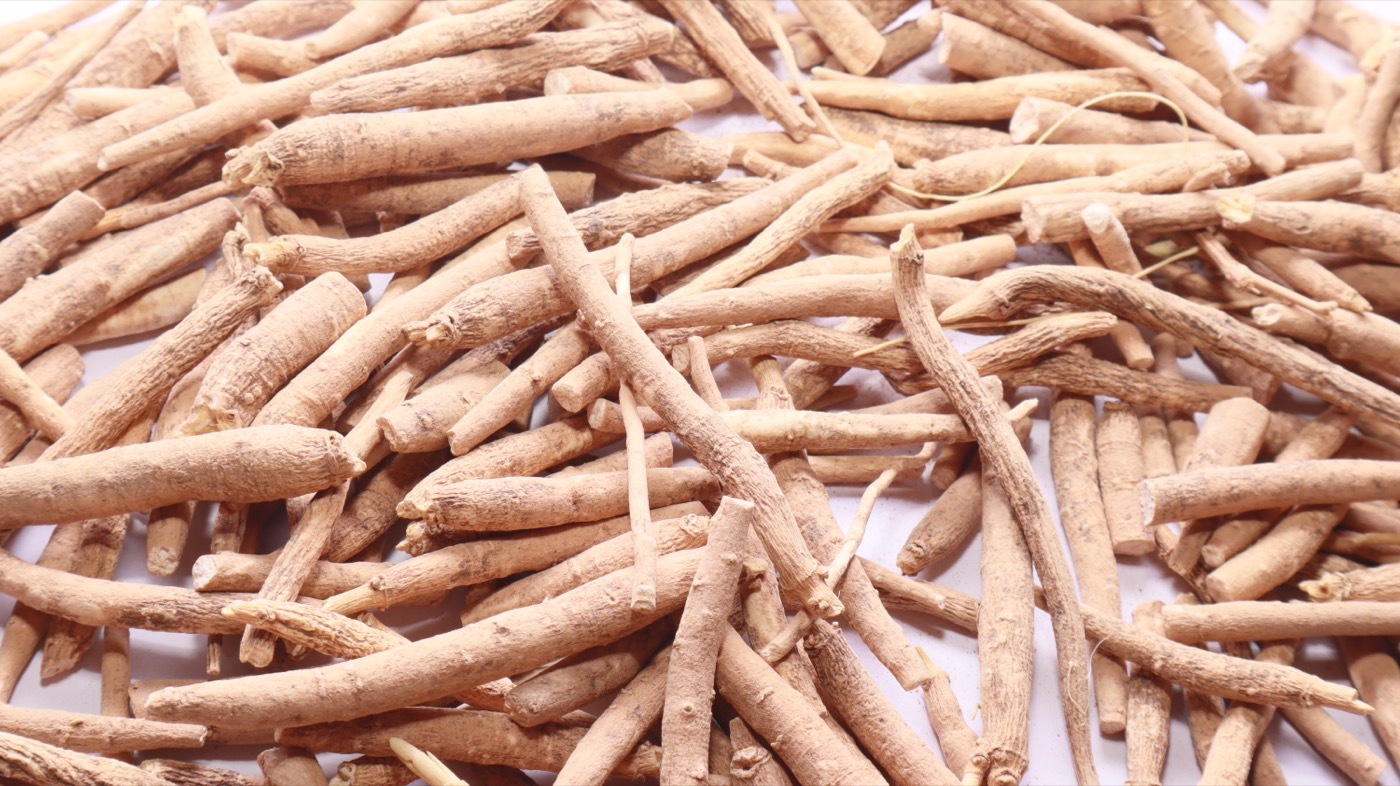
Ashwagandha Extract (Withania somnifera)
Hydro-alcoholic root extract of Withania somnifera standardised to 1.5–10% total withanolides by HPLC. Root-only material, vegan, bulk 25 kg export packing from India with batch COA.
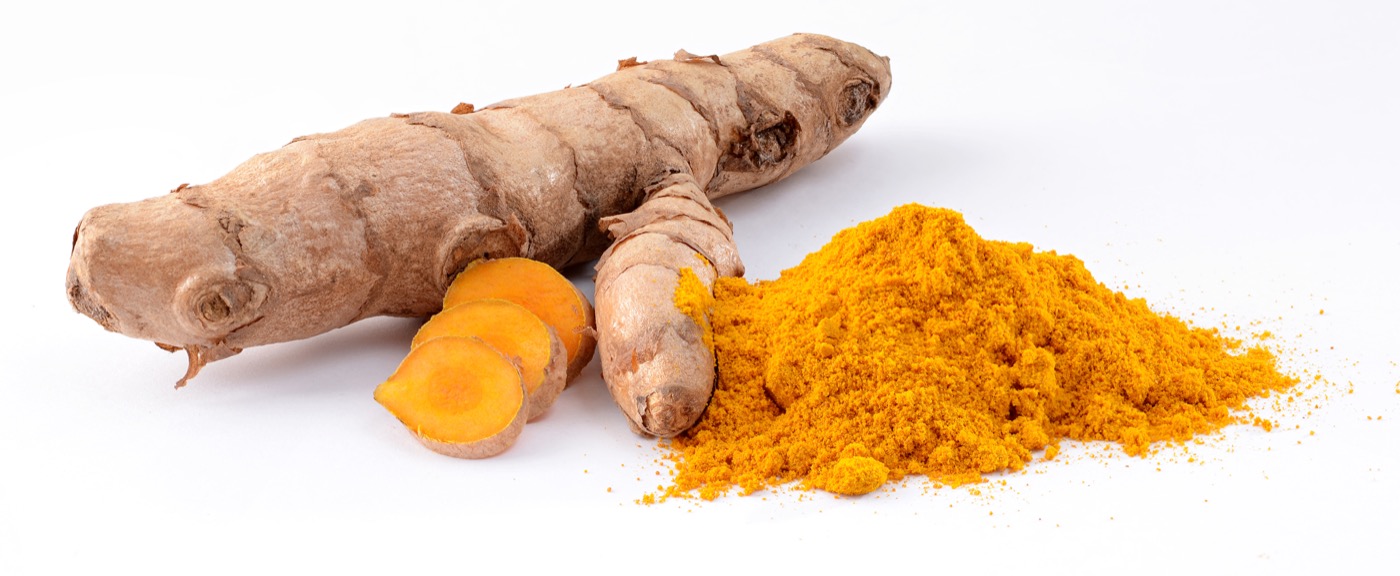
Turmeric Extract / Curcumin 95%
Purified Curcuma longa rhizome extract assaying NLT 95% total curcuminoids by HPLC, in USP curcumin / desmethoxy / bisdesmethoxy proportions. Orange-yellow crystalline powder, vegan.
Turmeric / Curcumin Extract
Standardized curcumin extract (up to 95% curcuminoids) for high-potency anti-inflammatory supplements.