Clove Bud Extract (Eugenol)
Syzygium aromaticum (L.) Merr. & L.M.Perry · clove bud extract, eugenol standardised by GC
Clove bud extract from Syzygium aromaticum standardised on eugenol by GC, with an isolated eugenol NLT 98% liquid grade alongside. Vegan, allergen-free, Indian origin.
Specifications
| Botanical source | Syzygium aromaticum (L.) Merr. & L.M.Perry, Myrtaceae. Older literature and 21 CFR 184.1257 use the synonym Eugenia caryophyllata Thunberg. |
| Part used | Dried unopened flower buds (clove bud). Leaf and stem are extracted separately, carry different eugenol levels and are priced differently; part used stated per lot. |
| Standardisation | Eugenol-standardised dry extract by GC to a buyer-agreed figure; 4:1 and 10:1 native concentrates; isolated eugenol NLT 98% by GC supplied as a separate liquid grade. |
| Marker compound | Eugenol, CAS 97-53-0, C10H12O2, MW 164.20. Reported 72–90% of clove oil (bud 60–90%, leaf 70–82%, stem 85–92%). Co-constituents: beta-caryophyllene 87-44-5, eugenyl acetate. |
| Isolated eugenol grade | Clear colourless to pale yellow or amber liquid, clove odour; bp 252–253 °C at 760 mmHg; mp −9.2 to −9.1 °C; density 1.0652 g/cm3 at 20 °C; nD20 1.5405. |
| Solubility | Eugenol in water 2460 mg/L at 25 °C; 1 mL dissolves in 2 mL of 70% alcohol. Dry extract is water-dispersible to ethanol-soluble depending on grade. |
| Assay method | GC-FID or GC-MS against a eugenol reference standard; HPLC where a buyer's method requires it. An oil percentage is not an extract percentage — compare like with like. |
| Extraction and carrier | Water or water/ethanol, no chlorinated solvents; residual solvents to ICH Q3C and USP <467>. Carrier-free or non-GMO maize maltodextrin. NLT 95% through 80 mesh. |
| Contaminants | Pb, As, Cd and Hg by ICP-MS to USP <232> and EU Regulation 2023/915; pesticide residues to EU MRL; aflatoxins and ochratoxin A to the applicable EU spice limits. |
| Microbiology | TPC NMT 10,000 cfu/g; yeast and mould NMT 100 cfu/g; E. coli absent in 10 g; Salmonella absent in 25 g; coliforms NMT 10 cfu/g. |
| Regulatory status | US 21 CFR 184.1257 covers clove oils (CAS 8000-34-8; leaf 8015-97-2), eugenol (97-53-0), oleoresins and extractives. IFRA restricts eugenol in perfumery. |
| Allergen and diet status | Vegan and vegetarian. No milk, egg, soy, fish, crustacean, gluten, peanut, tree nut, sesame, mustard or celery input; non-GMO. ELISA confirmation on request. |
| Handling, shelf life and storage | Strongly odorous — segregate from neutral powders; gloves and eye protection for the neat isolate. 24 months below 25 °C, sealed, away from light; isolate under nitrogen. |
| HS code | 13021919 (India ITC-HS) for the dry standardised extract. Isolated eugenol, clove oleoresin and clove oil each classify elsewhere; see the classification note. |
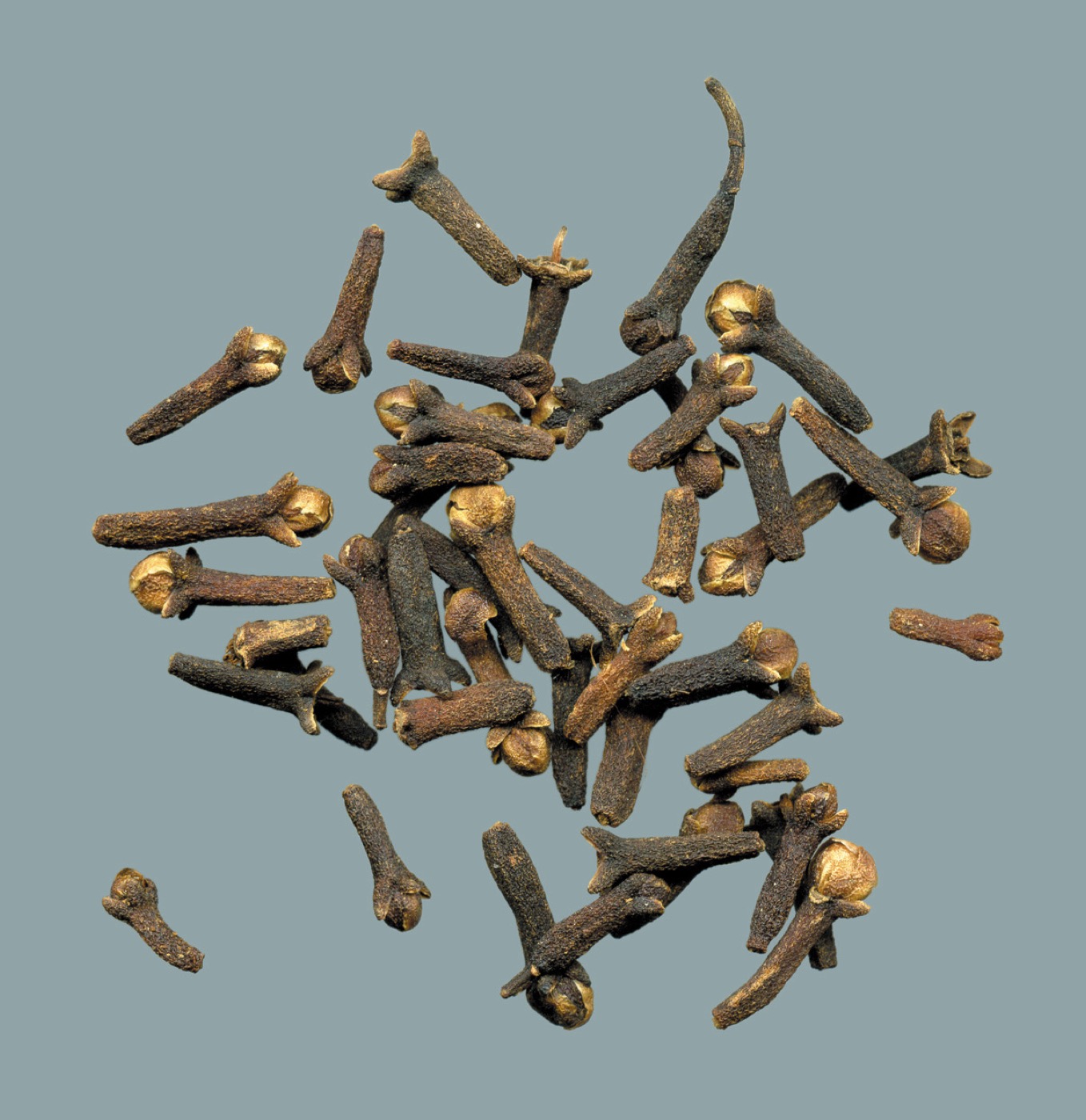
Clove is the dried, unopened flower bud of Syzygium aromaticum (L.) Merr. & L.M.Perry (Myrtaceae), a tree native to the Maluku Islands of Indonesia and long naturalised in Indian production. Thovek supplies the bud — not the leaf or stem — as a dried extract: buds are cleaned and milled, extracted in water or aqueous ethanol, concentrated and spray-dried, then standardised on eugenol by GC, or supplied as a 4:1 or 10:1 native concentrate where the whole-bud profile matters more than a marker figure. A separate liquid grade of isolated eugenol at NLT 98% by GC is quoted as its own line item. One physical fact settles a great deal of specification confusion at the enquiry stage: eugenol melts at −9.2 to −9.1 °C and boils at 252–253 °C at 760 mmHg, so it is a liquid at ambient temperature. Nothing sold as a free-flowing 'eugenol powder' is neat eugenol. It is either a clove extract standardised to a stated eugenol figure or eugenol adsorbed or encapsulated onto a carrier, and those two answer to different specifications, different prices and different tariff headings.
Eugenol (CAS 97-53-0, C10H12O2, molecular weight 164.20, IUPAC 2-methoxy-4-prop-2-enylphenol) is the compound the whole trade is priced around. It is a clear colourless to pale yellow or amber liquid with the odour of cloves, density 1.0652 g/cm3 at 20 °C, refractive index 1.5405 at 20 °C/D, water solubility 2460 mg/L at 25 °C and a closed-cup flash point above 100 °C; one millilitre dissolves in two millilitres of 70% alcohol. Literature places eugenol at 72–90% of clove essential oil, and the figure moves with the plant part: bud oil is reported at 60–90%, leaf oil 70–82% and stem oil 85–92%. Beta-caryophyllene (CAS 87-44-5, C15H24, molecular weight 204.35) and eugenyl acetate are the principal co-constituents. Two commercial cautions follow. First, an oil percentage is not an extract percentage: a bud oil at 85% eugenol and a dry bud extract at 15% eugenol are entirely different materials, and offers are only comparable once both state the matrix and the method. Second, the eugenol figure on a dry extract is method-sensitive, so Thovek quotes GC-FID or GC-MS against a eugenol reference standard and will state the chromatographic conditions on request.
Regulatory position is unusually well defined for a spice derivative and buyers should read it before formulating. In the United States, 21 CFR 184.1257 covers clove essential oils (clove oil CAS 8000-34-8, clove leaf oil CAS 8015-97-2), eugenol (CAS 97-53-0), oleoresins and natural extractives, listing the source under the older name Eugenia caryophyllata Thunberg, a synonym of Syzygium aromaticum. Eugenol is also subject to restriction in perfumery under IFRA standards, and reports of contact sensitisation exist from dental use although the literature disagrees on how allergenic it is; treat it as a restricted flavour and fragrance material, handle the neat isolate with gloves and eye protection, and confirm the concentration limit that applies in your own market and product category. The extract is used in oral-care and confectionery flavour systems, in savoury and bakery seasoning, and in food-technology work on the oxidative stability of fats and oils, where the phenolic fraction is the functional part. Every lot is released against GC assay, ICP-MS heavy metals, pesticide residues, aflatoxins and ochratoxin A and full microbiology. Material is vegan and vegetarian with no milk, egg, soy, fish, crustacean, gluten, peanut, tree nut, sesame, mustard or celery input and no animal-derived processing aid; organic (NPOP / NOP / EU) lots ship with a transaction certificate.
Applications
Oral care flavour systemsToothpaste and mouthwash flavourChewing gum and mintsBakery and confectionery spiceMeat and sauce seasoningCapsule and tablet blendsAyurvedic churna formulationsFat and oil stability work
Available grades
Eugenol-standardised clove bud dry extract by GC to a buyer-agreed figure; 4:1 and 10:1 native concentrates; isolated eugenol NLT 98% by GC as a liquid line item; organic (NPOP / NOP / EU) and conventional; spray-dried or granulated, carrier-free or on non-GMO maize maltodextrin. Clove bud oleoresin and steam-distilled clove bud, leaf and stem oils are quoted separately, as is eugenol encapsulated on a carrier for dry flavour systems. Bud, leaf and stem material is never substituted for one another without written agreement.
Packaging: Dry extract: 25 kg net in food-grade double LDPE liners inside fibre or HDPE drums; 1 kg and 5 kg foil-laminate pouches for pilot and stability lots; 100 g qualification samples free of charge. Isolated eugenol: 25 kg and 200 kg nitrogen-blanketed HDPE or epoxy-lined steel drums, filled to leave minimal headspace, with 500 mL amber glass samples. Every lot ships with a batch COA and GC chromatogram, ICP-MS heavy metal report, pesticide, aflatoxin and ochratoxin A results, an allergen and non-GMO declaration, an SDS and a Certificate of Origin; organic lots add the transaction certificate. Kosher and Halal certificates on request.