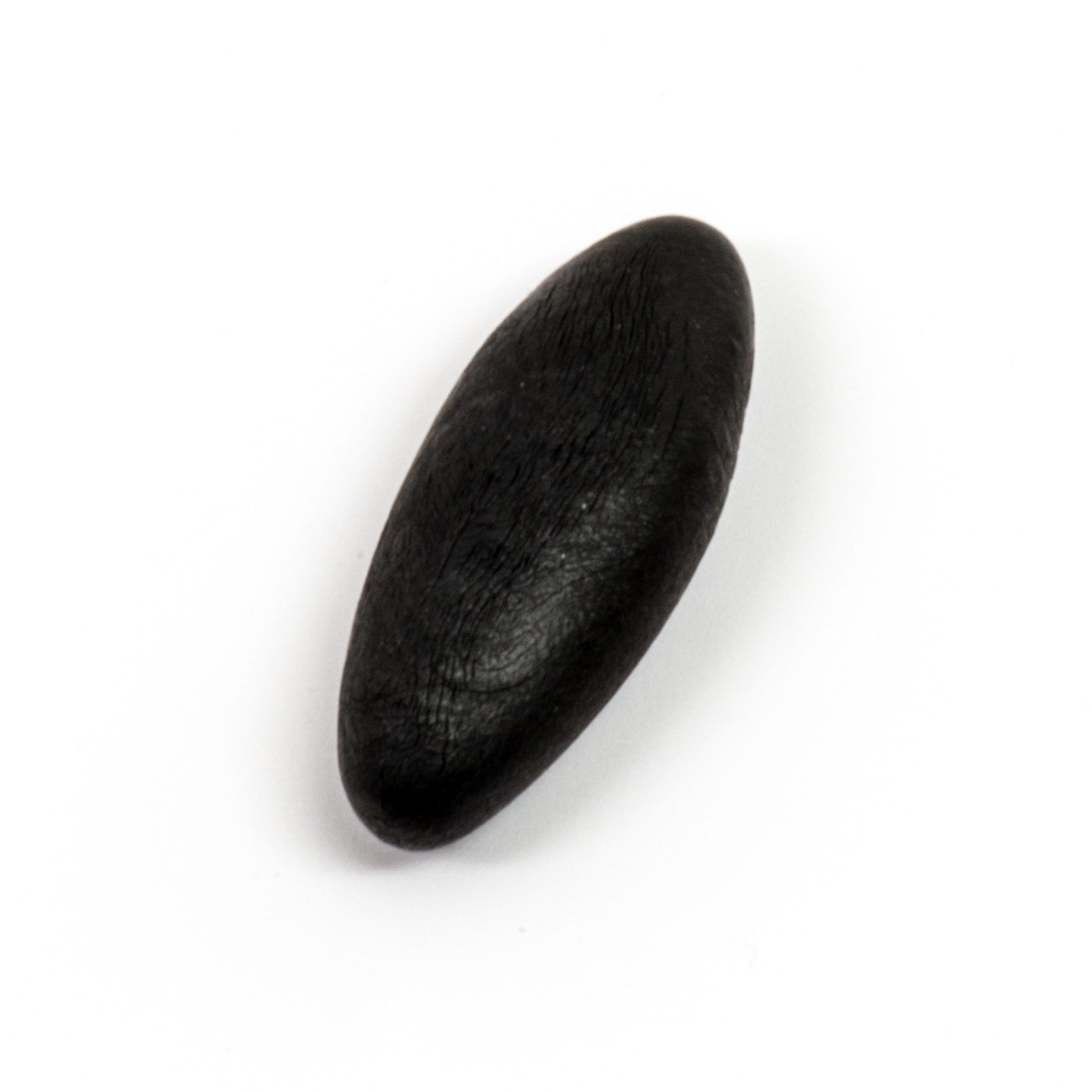
Shilajit Extract, Fulvic Acid Standardised
Purified Himalayan shilajit exudate, aqueous-extracted and standardised on fulvic acid by gravimetry. Powder or resin, vegan and dairy-free, ICP-MS screened for lead, arsenic, cadmium, mercury and thallium.
Specifications
| Source and identity | Purified shilajit, the rock exudate known in Ayurveda as Shilajatu and listed as Asphaltum punjabinum; collected from high-altitude Himalayan strata |
| Standardisation | Fulvic acid 20 %, 50 % or 60 % minimum. The declared figure is always printed together with the analytical method that produced it |
| Reference method | ISO 19822:2018 separates humic acid from hydrophobic fulvic acid and weighs the ash-free residue; Thovek treats it as the arbitration method |
| Method comparability | Total-organic-carbon, titrimetric and colorimetric shortcuts inflate fulvic acid results. Values from different methods are not interchangeable between suppliers |
| Dibenzo-alpha-pyrones | DBPs and DBP-chromoproteins are characteristic constituents and can be specified and assayed separately alongside the fulvic acid figure |
| Purification and aids | Aqueous extraction and filtration only. No cow's milk, ghee or other animal-derived processing aid is used, unlike some classical shodhana procedures |
| Appearance and solubility | Powder is a dark brown to blackish-brown free-flowing solid; resin is a blackish-brown viscoelastic mass. Both disperse in warm water to a dark colloidal solution |
| Loss on drying | Powder 5.0 % maximum; resin is supplied at 8 to 12 % moisture, which is what gives the resin its working consistency |
| Ash and trace elements | Total ash 15 % maximum. Iron, magnesium, potassium, calcium, zinc and selenium occur naturally and vary by seam; the actual profile is reported on each COA |
| Heavy metals | Lead 3.0, arsenic 1.0, cadmium 1.0 and mercury 0.1 mg/kg maximum by ICP-MS, with thallium screened. Tighter limits set for California Proposition 65 programmes |
| Microbiology | Total plate count 10,000 cfu/g max; yeast and mould 1,000 cfu/g max; E. coli and Salmonella absent in the stated sample |
| Allergens and diet | Free from milk, egg, soy, fish, crustacean, gluten and nut inputs; vegan and vegetarian; no bovine, porcine or marine material anywhere in the process |
| Shelf life and storage | Powder 36 months and resin 24 months from manufacture, sealed, below 25 degrees C and away from direct sunlight. Resin softens in heat, which is normal |
| HS code | 13021919, extracts other, under vegetable saps and extracts. The sheet value 29362900 is a vitamins line and does not apply. See the classification note |
Applications
Available grades
Fulvic acid 20 %, 50 % and 60 % minimum, each declared with the method used. Spray-dried powder, granulated powder and viscoelastic resin. Dibenzo-alpha-pyrone standardised grades on request. Conventional only, since a rock exudate is not an agricultural crop and organic certification does not apply; kosher and halal certification available.
Related products
Coenzyme Q10 (Ubiquinone)
Fermentation-derived Coenzyme Q10, all-trans ubidecarenone at 98% minimum, supplied as crystalline powder, micronised grade, water-dispersible beadlet or MCT dispersion for softgel filling.
Ubiquinol (Reduced CoQ10)
Reduced (ubiquinol) form of Coenzyme Q10, CAS 992-78-9, supplied nitrogen-packed as neat powder or as a tocopherol-stabilised oil dispersion for softgel filling. Oxygen-sensitive, cold-chain handled.
Alpha Lipoic Acid
Racemic alpha lipoic acid (thioctic acid), CAS 1077-28-7, at 99% minimum - crystalline, micronised or granular, with R-(+)-lipoic acid and water-soluble sodium R-lipoate quoted separately.