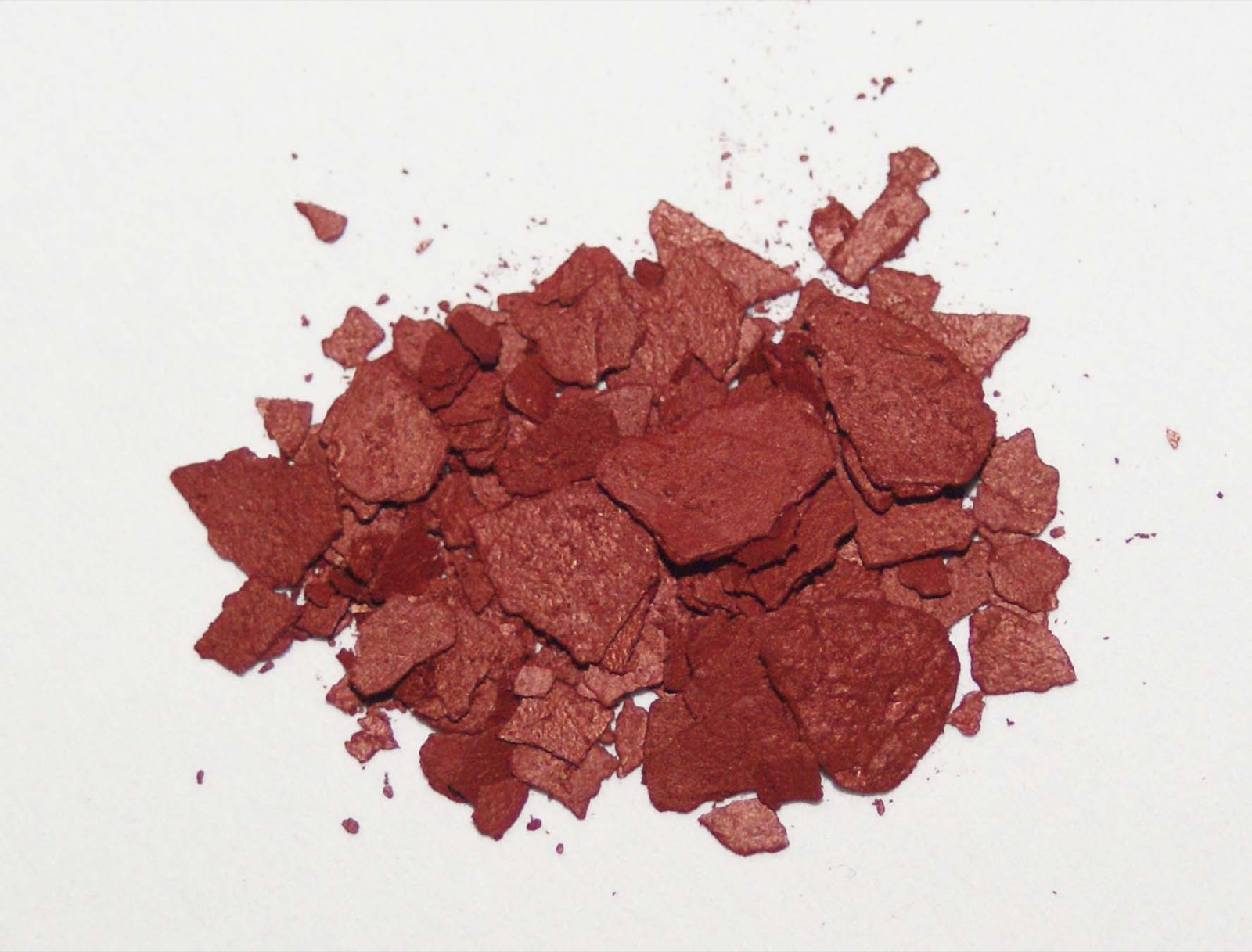
Polyphenol fruit blend
Dry-blended premix of grape seed, pomegranate rind, grape skin, apple and berry extracts standardised on total polyphenols as gallic acid equivalents. Ratios to brief, composite-tested per lot.
Specifications
| Composition | Dry-blended premix of separately standardised fruit extracts. Default 40:25:15:10:10 grape seed, pomegranate rind, grape skin, apple and berry by weight; any ratio to brief |
| Botanical sources | Vitis vinifera L. seed and skin, Punica granatum L. rind, Malus domestica Borkh. fruit and Vaccinium / Ribes / Aronia berry fruit; ratio stated on every CoA |
| Blend standardisation | Total polyphenols 40-80% as gallic acid equivalents by Folin-Ciocalteu; the grade is contracted and released on composite testing of the finished blend |
| Why the GAE number needs care | Folin-Ciocalteu measures reducing capacity, not polyphenols alone. Ascorbic acid, reducing sugars and sulphites all respond and push the GAE result above true polyphenol content |
| Marker cross-checks per lot | OPC by HPLC on the grape seed fraction, ellagic acid by HPLC on the pomegranate fraction and total anthocyanins by pH-differential on the coloured fractions, reported separately |
| Component chemistry | Gallic acid CAS 149-91-7, C7H6O5, MW 170.12 (GAE basis); ellagic acid CAS 476-66-4, C14H6O8, MW 302.19; punicalagin CAS 65995-63-3, C48H28O30, MW 1084.72 |
| Grape seed component | NLT 95.0% total proanthocyanidins by UV-Vis and NLT 75.0% oligomeric proanthocyanidins by HPLC before blending; both lines carried through to the blend CoA |
| Peanut adulteration control | Grape seed extract is documented as adulterated with peanut skin extract. Every grape-derived lot is HPLC/TLC fingerprinted and a peanut-free statement is issued |
| Appearance and taste | Reddish-brown to purple-brown free-flowing powder, markedly astringent. Shade depends on the anthocyanin fraction and shifts with the pH of the finished matrix |
| Extraction and solvents | Water and aqueous ethanol on all components; no chlorinated solvents. Residual solvents to USP <467> and ICH Q3C, reported per lot |
| Particle size, LOD and ash | NLT 95% through 80 mesh (180 micron); loss on drying NMT 5.0%; sulphated ash NMT 5.0%. Granulated and direct-compression versions available |
| Heavy metals and microbiology | Lead NMT 3.0 ppm, arsenic NMT 1.0 ppm, cadmium NMT 1.0 ppm, mercury NMT 0.1 ppm; TPC NMT 10,000 cfu/g; Salmonella and E. coli absent |
| Allergens and origin | Vegan and vegetarian; no bovine, porcine, marine or insect material; peanut-free statement per lot; no added sulphites, SO2 NMT 10 mg/kg; carrier is maize maltodextrin |
| Shelf life, storage | 24 months unopened. Store below 25 C, RH under 60%, sealed and protected from light. |
| HS code | 2106 90 99 as a multi-plant premix |
Applications
Available grades
Total polyphenols at 40%, 50%, 60%, 70% and 80% as gallic acid equivalents. Default 40:25:15:10:10 grape seed, pomegranate rind, grape skin, apple and berry; any ratio and any pairing of component assay levels built to brief and printed on the CoA. Anthocyanin-forward, OPC-forward and ellagitannin-forward versions for colour, astringency or marker-led formulations. Water-dispersible spray-dried grade on maize maltodextrin or gum acacia for beverage lines, plus granulated, direct-compression and instantised versions. Organic (NPOP/NOP/EU), kosher and halal certification available. Single-fruit extracts are supplied separately and classify differently at customs.
Related products
Coenzyme Q10 (Ubiquinone)
Fermentation-derived Coenzyme Q10, all-trans ubidecarenone at 98% minimum, supplied as crystalline powder, micronised grade, water-dispersible beadlet or MCT dispersion for softgel filling.
Ubiquinol (Reduced CoQ10)
Reduced (ubiquinol) form of Coenzyme Q10, CAS 992-78-9, supplied nitrogen-packed as neat powder or as a tocopherol-stabilised oil dispersion for softgel filling. Oxygen-sensitive, cold-chain handled.
Alpha Lipoic Acid
Racemic alpha lipoic acid (thioctic acid), CAS 1077-28-7, at 99% minimum - crystalline, micronised or granular, with R-(+)-lipoic acid and water-soluble sodium R-lipoate quoted separately.