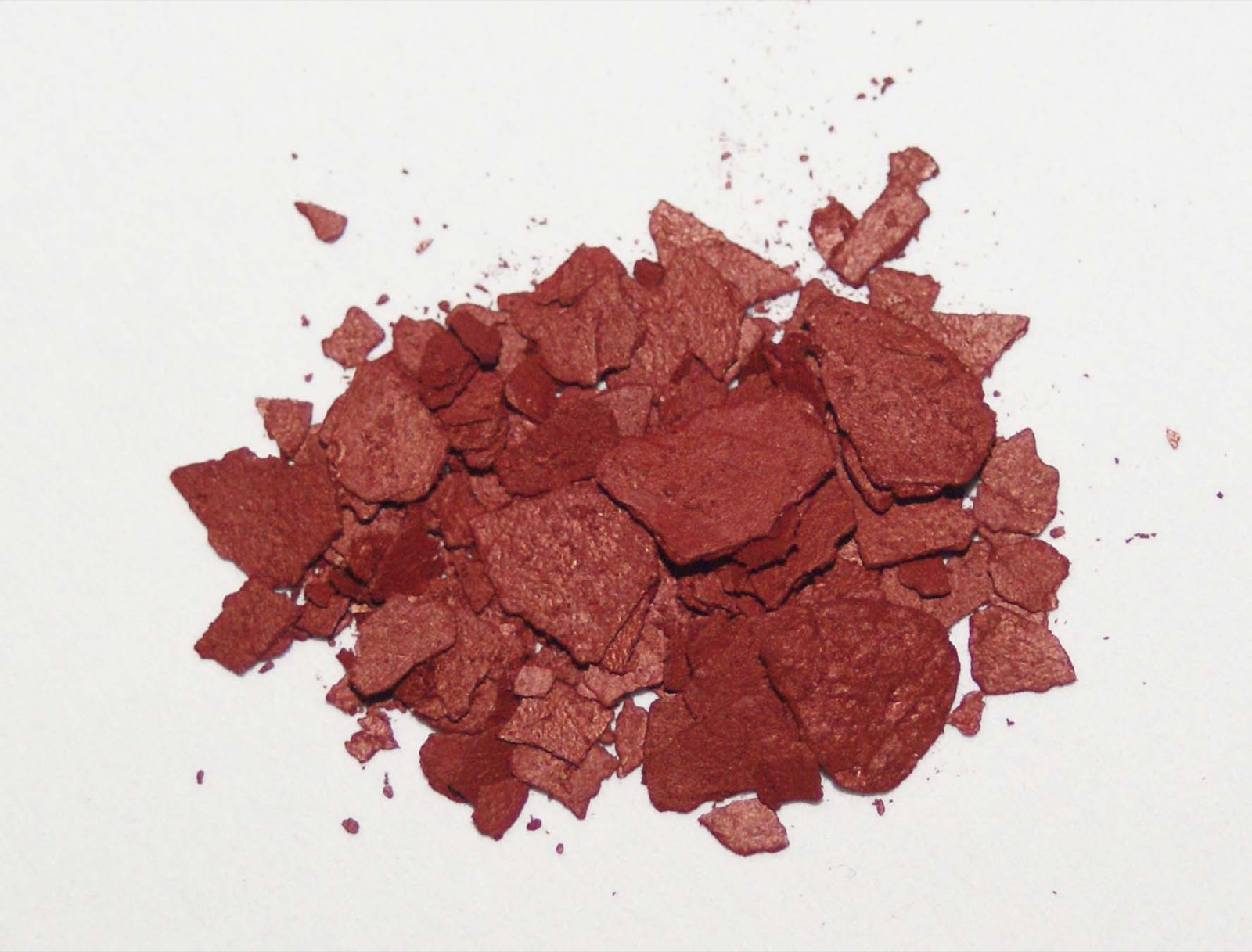
Catechins (tea polyphenols)
Tea catechin fraction from unfermented Camellia sinensis leaf, released on total catechins 50-90% by HPLC with tea polyphenols up to 98% by Folin. Caffeine declared per lot, decaffeinated grades.
Specifications
| Botanical source | Camellia sinensis (L.) Kuntze (Theaceae), young unfermented leaf and leaf bud; plant-to-extract ratio typically 6:1 to 10:1 on the USP basis |
| Standardisation | Total catechins 50-90% by HPLC calculated as EGCG; total tea polyphenols 70-98% by Folin-Ciocalteu as gallic acid equivalents; grade fixed per contract |
| Two numbers, two methods | Polyphenols by Folin and catechins by HPLC do not reconcile on the same powder. A 98% polyphenol grade is not a 98% catechin grade; name the method on the order |
| Major catechins | (-)-EGCG CAS 989-51-5, C22H18O11, MW 458.37; (-)-EGC CAS 970-74-1, C15H14O7, MW 306.27; (-)-ECG CAS 1257-08-5, C22H18O10, MW 442.40 |
| Minor catechins | (-)-Epicatechin CAS 490-46-0 and (+)-catechin CAS 154-23-4, both C15H14O6, MW 290.27. Every catechin is reported individually as well as in the total |
| Extract registry number | Tea polyphenols / Camellia sinensis leaf extract, CAS 84650-60-2. A UVCB extract-level number for a substance of variable composition, not a purity statement |
| USP reference limits | Powdered Decaffeinated Green Tea Extract: total catechins NLT 60.0% as EGCG, EGCG NLT 40.0%, caffeine NMT 0.1% anhydrous, water NMT 6.0%, ROI NMT 0.5% |
| Caffeine | Independent of the catechin assay and declared per lot. Decaffeinated to NMT 0.5%, or the USP NMT 0.1% basis; route stated as hot water, supercritical CO2 or ethyl acetate |
| Epimerisation on heat | Heat and alkaline pH convert EGCG to gallocatechin gallate and ECG to catechin gallate. Agree whether epimers count in the total before qualifying a hot-filled beverage |
| Appearance and solubility | Off-white to light yellow or yellowish-brown fine powder with a characteristic tea odour; EGCG dissolves in water, ethanol and DMSO at about 20 g/L |
| Loss on drying and ash | Water NMT 6.0% and residue on ignition NMT 0.5% on the USP basis. Higher limits apply to carrier-bearing water-dispersible grades and are stated per grade |
| Lead and microbiology | Tea is a lead-accumulating leaf crop, so lead is limited and reported every lot. TPC NMT 10,000 cfu/g, yeast and mould NMT 1,000 cfu/g, Salmonella and E. coli absent |
| EU market restriction | Reg. (EU) 2022/2340 keeps a food portion below 800 mg EGCG and mandates EGCG-per-portion, maximum-portion and warning statements on the finished label |
| Allergens, origin | Vegan and vegetarian; no milk, egg, soy, fish, crustacean, peanut, tree nut, sesame or gluten input; carrier is maize maltodextrin. |
| HS code | 2101 20 90 |
Applications
Available grades
Total catechins at 50%, 60%, 70%, 80% and 90% by HPLC as EGCG. Tea polyphenols at 70%, 80%, 90%, 95% and 98% by Folin as gallic acid equivalents, paired with a stated catechin sum so the two numbers cannot be confused. Non-decaffeinated with native leaf caffeine quantified per lot; decaffeinated at NMT 0.5% caffeine; USP-basis decaffeinated at NMT 0.1% anhydrous. Decaffeination by hot water, supercritical CO2 or ethyl acetate, nominated by the buyer and stated on the CoA. Water-soluble, granulated and instantised versions for beverage and effervescent lines. Organic (NPOP/NOP/EU), kosher and halal certification available. High-purity single-catechin isolates are a separate article with a different price and a different tariff exposure.
Related products
Coenzyme Q10 (Ubiquinone)
Fermentation-derived Coenzyme Q10, all-trans ubidecarenone at 98% minimum, supplied as crystalline powder, micronised grade, water-dispersible beadlet or MCT dispersion for softgel filling.
Ubiquinol (Reduced CoQ10)
Reduced (ubiquinol) form of Coenzyme Q10, CAS 992-78-9, supplied nitrogen-packed as neat powder or as a tocopherol-stabilised oil dispersion for softgel filling. Oxygen-sensitive, cold-chain handled.
Alpha Lipoic Acid
Racemic alpha lipoic acid (thioctic acid), CAS 1077-28-7, at 99% minimum - crystalline, micronised or granular, with R-(+)-lipoic acid and water-soluble sodium R-lipoate quoted separately.