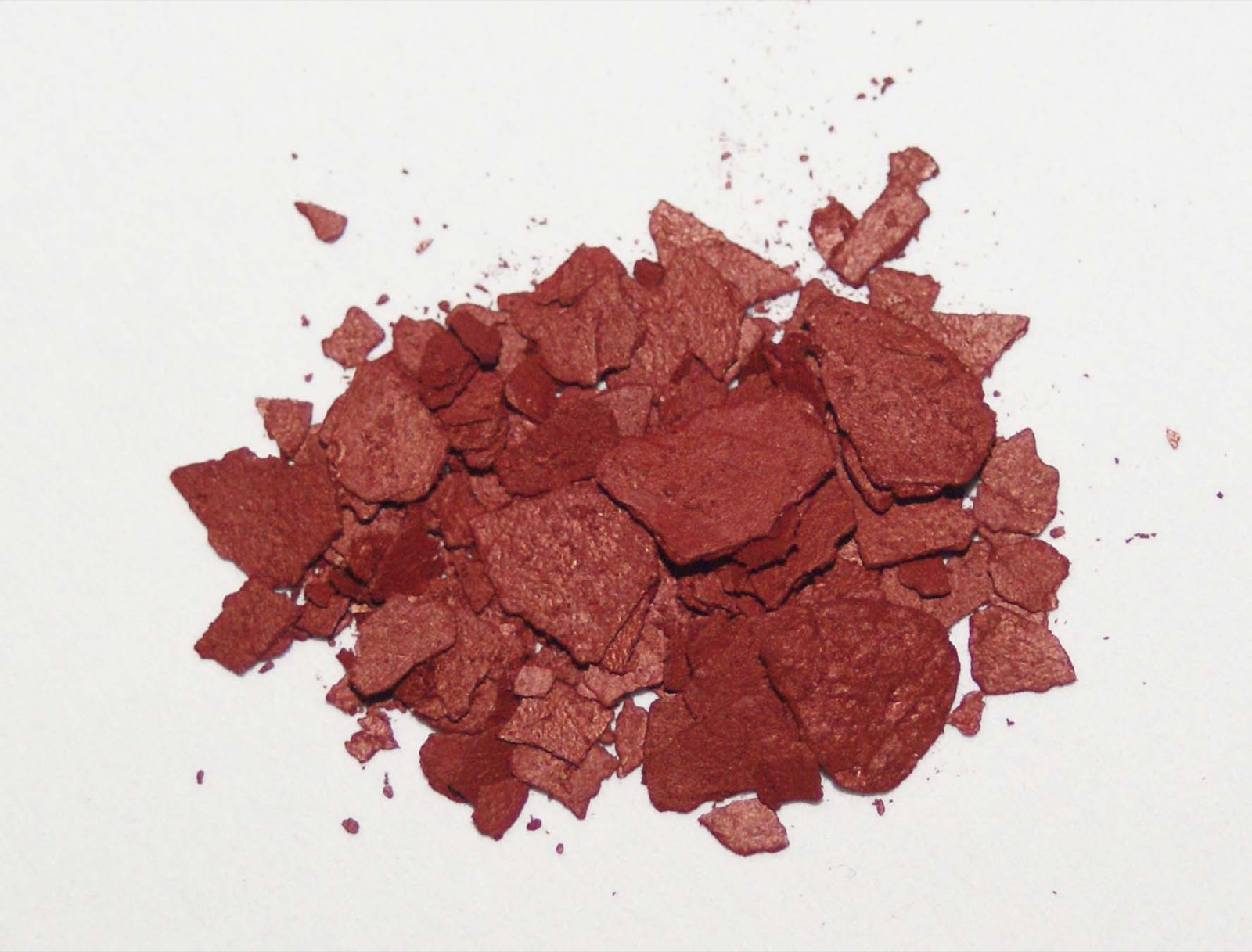
Astaxanthin
Bulk astaxanthin from Haematococcus pluvialis, CAS 472-61-7. Supplied as 5% and 10% oleoresin, cold-water-dispersible beadlet and softgel fill. Algal and vegan, not krill or shrimp derived.
Specifications
| Chemical name | 3,3'-Dihydroxy-β,β-carotene-4,4'-dione; all-trans-astaxanthin |
| CAS No. / formula / weight | 472-61-7; C40H52O4; 596.84 g/mol |
| Biological source | Haematococcus pluvialis, freshwater green microalga, harvested at the red cyst (aplanospore) stage; cell wall cracked before extraction |
| Stereochemistry | Algal material is predominantly (3S,3'S). Synthetic astaxanthin is racemic at about 1:2:1 (3S,3'S)/(3R,3'S)/(3R,3'R) and is a feed pigment only. |
| Ester profile | Largely esterified in the alga: roughly 70% monoesters, 25% diesters and 5% free astaxanthin, esterified with palmitic, oleic and linoleic acids. |
| Standardisation offered | Oleoresin 5% and 10% total astaxanthin; cold-water-dispersible beadlet 1.5% to 5%; softgels filled at 4, 8 or 12 mg astaxanthin. |
| Assay method | HPLC against an all-trans astaxanthin reference standard, with UV-Vis confirmation at approximately 477 nm in the carrier solvent. |
| Appearance and odour | Oleoresin: dark red viscous oil. Beadlet: red to red-brown free-flowing granules. Faint characteristic algal odour. |
| Solubility | Oil-soluble; practically insoluble in water. Beadlet grades disperse in cold water to a uniform pink-red colour. |
| Colour index | E161j (astaxanthin), used as a colour and as a nutrient ingredient depending on the destination market. |
| Purity and contaminants | Heavy metals, residual solvents, pesticide residues and microbiology to agreed limits; batch-specific certificate of analysis supplied. |
| Allergen status | Free from milk, egg, fish, crustacean, gluten and tree nuts. Algal, not krill or shrimp derived. Soy only if a tocopherol antioxidant is used. |
| Dietary and origin status | Vegan and vegetarian as oleoresin and beadlet. Softgel shells are bovine or fish gelatin unless a starch-carrageenan vegetarian shell is specified. |
| Shelf life, storage | 24 months unopened at 2-8 °C, nitrogen-flushed and protected from light, heat and oxygen. |
| HS code | 2106.90 (21069099) for the 4/8/12 mg softgels; 3203.00 (32030020) correct only for the neat oleoresin |
| HS code | 2106.90 (21069099) for the 4/8/12 mg softgels; 3203.00 (32030020) correct only for the neat oleoresin |
Applications
Available grades
Food and nutraceutical grade oleoresin at 5% and 10% total astaxanthin; cold-water-dispersible beadlet at 1.5%, 2.5% and 5%; finished softgels at 4, 8 and 12 mg; cosmetic grade oleoresin; feed and aquaculture pigment grade. Kosher, Halal, non-GMO and vegan declarations available. Custom assay, particle size and carrier oil to buyer specification.
Related products
Coenzyme Q10 (Ubiquinone)
Fermentation-derived Coenzyme Q10, all-trans ubidecarenone at 98% minimum, supplied as crystalline powder, micronised grade, water-dispersible beadlet or MCT dispersion for softgel filling.
Ubiquinol (Reduced CoQ10)
Reduced (ubiquinol) form of Coenzyme Q10, CAS 992-78-9, supplied nitrogen-packed as neat powder or as a tocopherol-stabilised oil dispersion for softgel filling. Oxygen-sensitive, cold-chain handled.
Alpha Lipoic Acid
Racemic alpha lipoic acid (thioctic acid), CAS 1077-28-7, at 99% minimum - crystalline, micronised or granular, with R-(+)-lipoic acid and water-soluble sodium R-lipoate quoted separately.