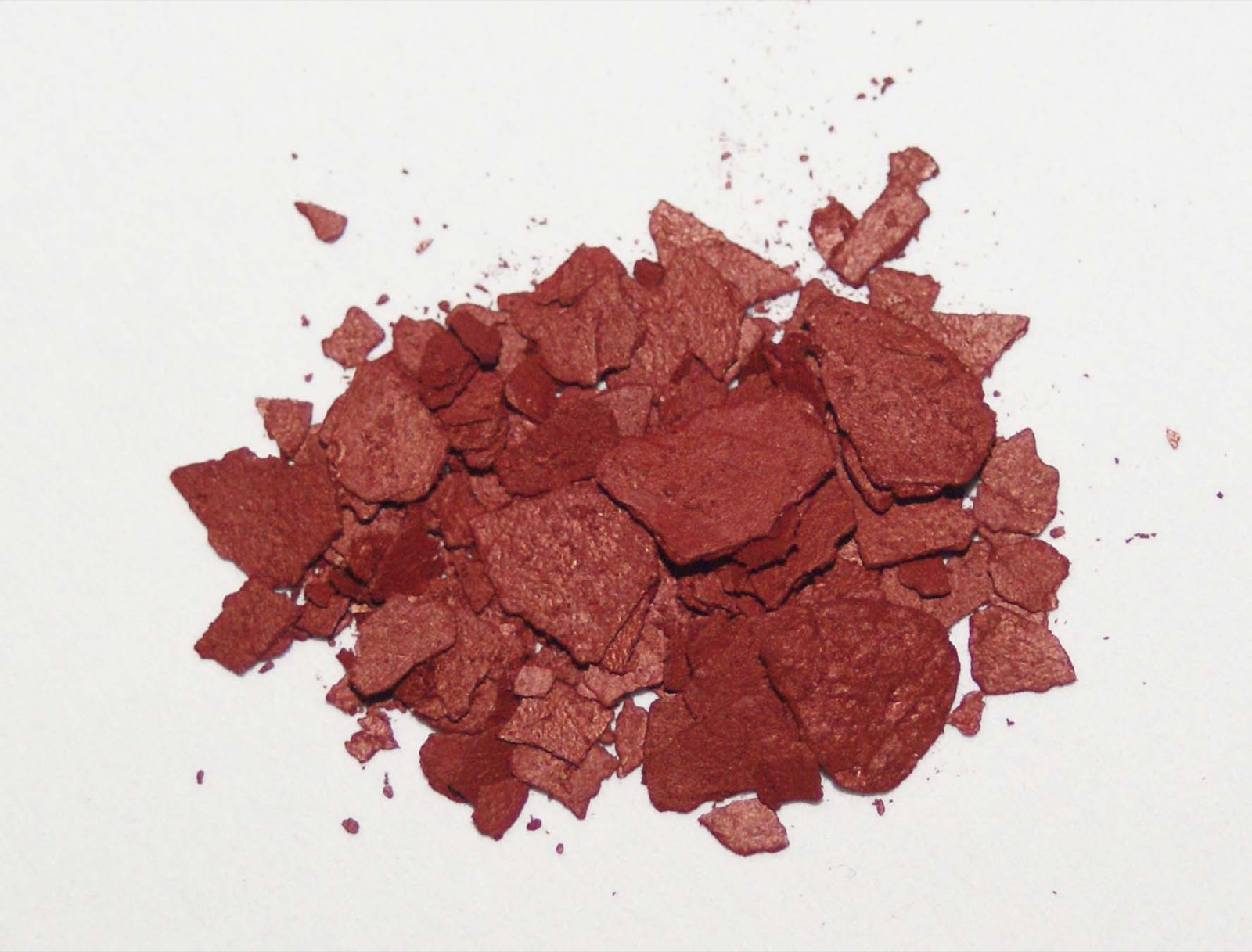
Anthocyanins (mixed berry)
Mixed-berry anthocyanin concentrate from bilberry, blackcurrant, elderberry and chokeberry fruit, standardised 5-25% total anthocyanins as cyanidin-3-O-glucoside by the pH-differential method.
Specifications
| Botanical sources | Vaccinium myrtillus L., Ribes nigrum L., Sambucus nigra L. and Aronia melanocarpa (Michx.) Elliott fruit; species ratio fixed to brief and stated per lot |
| Standardisation | Total anthocyanins 5%, 10%, 15% or 25% as cyanidin-3-O-glucoside; the grade is contracted and released on the stated method, not interchanged |
| Assay method | pH-differential method for total monomeric anthocyanins as C3G equivalents (Lee, Durst & Wrolstad, J AOAC Int 2005;88(5):1269-78; AOAC 2005.02), HPLC-DAD cross-check |
| Reference standard | Cyanidin-3-O-glucoside chloride (kuromanin chloride), CAS 7084-24-4, C21H21ClO11, MW 484.84, used for calibration and for expressing the total |
| Anthocyanin chemistry | Cyanidin, delphinidin, petunidin, peonidin and malvidin as 3-O-glucosides, galactosides, arabinosides and rutinosides; the profile follows the species mix |
| Free aglycone limit | Free anthocyanidins NMT 1%, checked against cyanidin chloride CAS 528-58-5, C15H11ClO6, MW 322.69; a raised figure signals degradation or a non-berry source |
| Identity and adulteration control | HPLC-DAD/MS profile reconciled to the declared species ratio, plus a dye screen. Black rice, black soybean hull, purple sweet potato and amaranth are documented adulterants |
| Appearance and solubility | Dark purple to purple-black hygroscopic fine powder; water-soluble; colour red below about pH 3 and dull blue-grey above about pH 5 |
| Extraction and solvents | Water or aqueous ethanol, membrane refining, vacuum concentration and drying; residual solvents tested to ICH Q3C and reported per lot |
| Stability guidance | Heat, light, oxygen and sulphite sensitive. Formulate below pH 4, avoid metabisulphite and ascorbate-metal systems, avoid prolonged hot holding |
| Loss on drying and ash | Loss on drying NMT 5.0%; sulphated ash NMT 5.0%. Any carrier is maize maltodextrin or gum acacia, named with its botanical origin on the specification |
| Heavy metals and microbiology | Lead NMT 3.0 ppm, arsenic NMT 1.0 ppm, cadmium NMT 1.0 ppm, mercury NMT 0.1 ppm; TPC NMT 10,000 cfu/g; Salmonella and E. coli absent |
| Allergens and origin | Vegan and vegetarian; no bovine, porcine, marine or insect material; free of EU 14 and FDA 9 allergens; no added sulphites, SO2 NMT 10 mg/kg |
| Shelf life, storage | 24 months unopened. Store below 25 C, RH under 60%, in light-proof sealed packaging; 2-8 C for long holds. |
| HS code | 1302 19 19 |
Applications
Available grades
Total anthocyanins at 5%, 10%, 15% and 25% as cyanidin-3-O-glucoside. Declared species ratios built to brief, including bilberry-led, blackcurrant-led, elderberry-led and aronia-led mixes, each printed on the CoA. Single-botanical lots supplied separately where a species-specific pharmacopoeial fingerprint is required. Water-dispersible spray-dried grade on maize maltodextrin or gum acacia for beverage work. Freeze-dried whole berry powders are unextracted fruit and are not interchangeable with any extract grade. Organic certification (NPOP/NOP/EU) where the wild-collection or farm custody chain supports it; kosher and halal available. Grades are not interchangeable and a switch needs re-qualification.
Related products
Coenzyme Q10 (Ubiquinone)
Fermentation-derived Coenzyme Q10, all-trans ubidecarenone at 98% minimum, supplied as crystalline powder, micronised grade, water-dispersible beadlet or MCT dispersion for softgel filling.
Ubiquinol (Reduced CoQ10)
Reduced (ubiquinol) form of Coenzyme Q10, CAS 992-78-9, supplied nitrogen-packed as neat powder or as a tocopherol-stabilised oil dispersion for softgel filling. Oxygen-sensitive, cold-chain handled.
Alpha Lipoic Acid
Racemic alpha lipoic acid (thioctic acid), CAS 1077-28-7, at 99% minimum - crystalline, micronised or granular, with R-(+)-lipoic acid and water-soluble sodium R-lipoate quoted separately.