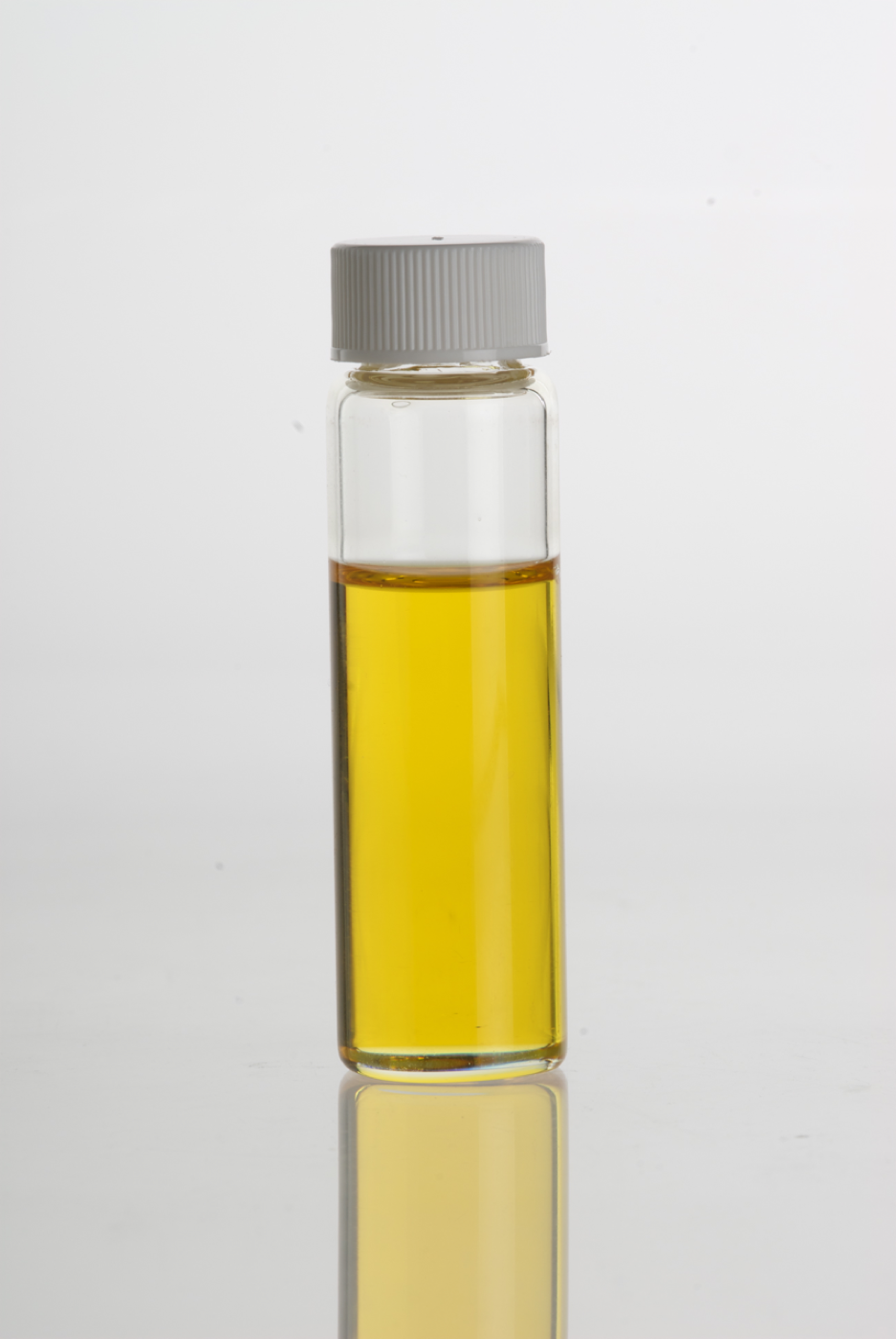
Wheat Germ Oil
Cold-pressed oil from the germ of Triticum aestivum, the richest natural source of alpha-tocopherol among edible oils. Wheat-derived, so a cereal allergen declaration is mandatory.
Specifications
| Botanical name and part | Triticum aestivum L. (Poaceae), germ (embryo), which is only 2-3% of the wheat kernel by weight |
| CAS and INCI | CAS 68917-73-7, also cited as 8006-95-9; INCI Triticum vulgare (wheat) germ oil |
| Extraction | Cold-pressed and filtered (virgin, unrefined); supercritical CO2 and refined/winterised grades available |
| Total tocopherols | Typically 2,000-3,100 mg/kg. One published profile: 2,188 mg/kg comprising 53.9% alpha, 18.2% beta, 22.5% gamma and 5.4% delta tocopherol |
| Alpha-tocopherol | 100-300 mg per 100 g of oil, the highest level recorded among common edible oils |
| Fatty acid profile (GC) | Linoleic C18:2 49-60%; palmitic C16:0 11-19%; oleic C18:1 14-25%; alpha-linolenic C18:3 4-10%; stearic C18:0 about 1% |
| Minor constituents | Policosanols including octacosanol, phytosterols (beta-sitosterol, campesterol), carotenoids and steryl ferulates; assayed to a declared minimum on request |
| Appearance and odour | Viscous pale to deep amber oil; characteristic cereal, nutty odour and taste |
| Acid value | Codex CXS 19-1981 allows 4.0 mg KOH/g max for virgin and cold-pressed oils, 0.6 for refined |
| Peroxide value | Codex CXS 19-1981 allows 15 meq active oxygen/kg max for virgin and cold-pressed oils, 10 for refined |
| ALLERGEN: WHEAT | Wheat-derived. Declarable as a cereal containing gluten under EU Reg. 1169/2011 Annex II, with no exemption for this oil |
| Gluten and US labelling | FDA exempts highly refined oils from the Contains statement; cold-pressed and crude grades are not exempt. No gluten-free claim unless the lot tests below 20 ppm |
| Other allergens | Free from milk, egg, fish, crustacean, soy, peanut, tree nut and sesame |
| Origin, diet and storage | Plant origin, vegan and vegetarian; no bovine, porcine or marine material. 12 months unopened below 25 C, nitrogen headspace, dark packaging; highly oxidation-prone |
| HS code | 1515.90 (15159091) |
Applications
Available grades
Cold-pressed virgin unrefined (highest native tocopherol), supercritical CO2 extracted, and refined/winterised. Food and cosmetic grades. Tocopherol-standardised lots to a declared HPLC minimum on request. Softgels at 500 mg and 1000 mg fill in bovine gelatin, fish gelatin or vegetarian HPMC shell.
Related products

Fish Oil (Omega-3)
Refined, deodorised fish body oil in natural triglyceride form, standard 18/12 grade (EPA 18% min, DHA 12% min). Ph. Eur. 1912 pharmacopoeial grade and softgel formats available.

Omega-3 Concentrate (EPA/DHA)
Molecularly distilled EPA/DHA concentrate from fish body oil, supplied as re-esterified triglyceride or ethyl ester in 33/22, 40/20, 50/20, 20/50 and 70% EPA grades.

Cod Liver Oil
Purified liver oil of wild cod (Gadus morhua), naturally supplying vitamin A 600-2500 IU/g and vitamin D3 60-250 IU/g to Ph. Eur. Cod-liver oil (Type A) and USP limits.