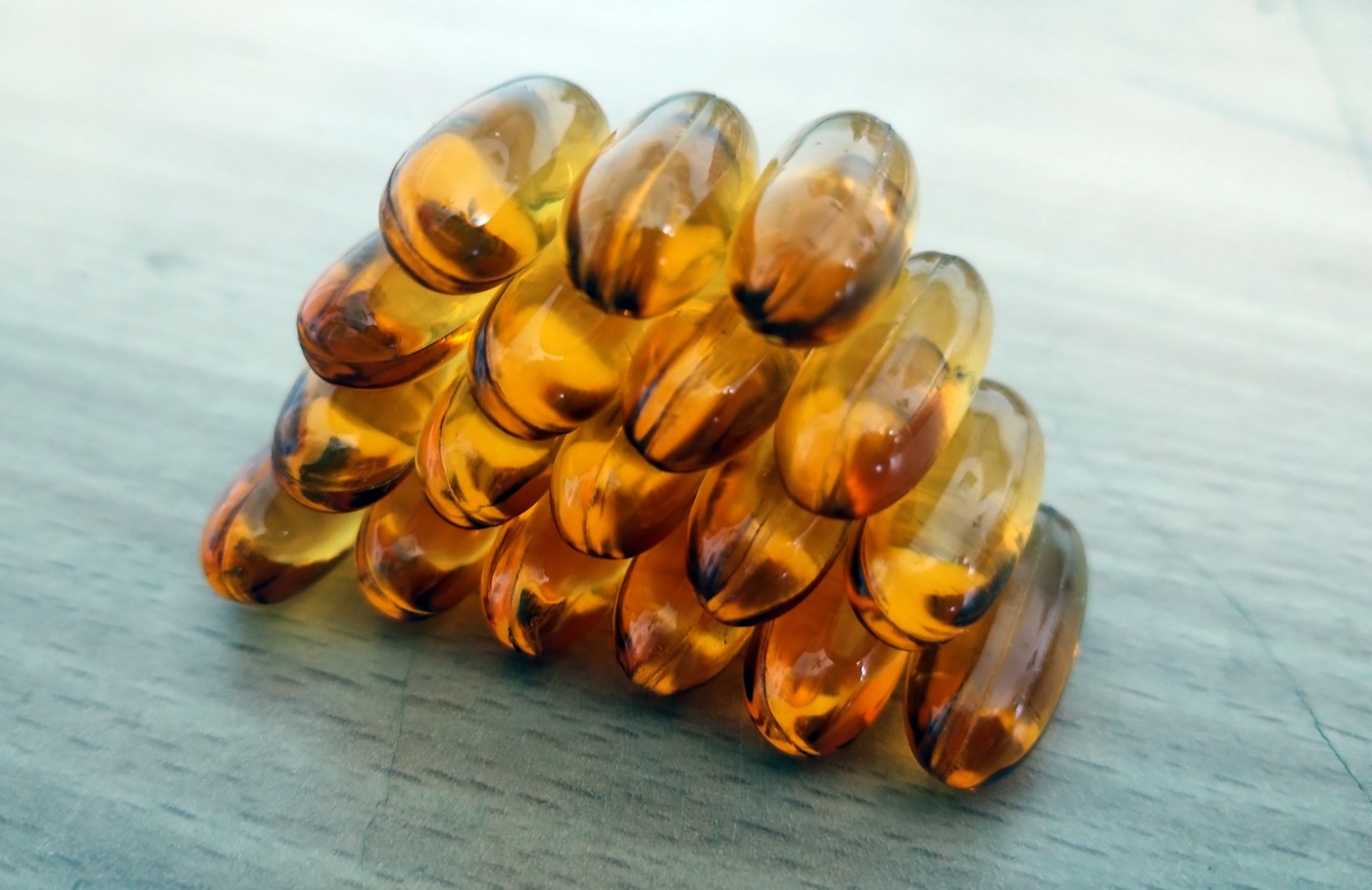
Omega-3 Concentrate (EPA/DHA)
Molecularly distilled EPA/DHA concentrate from fish body oil, supplied as re-esterified triglyceride or ethyl ester in 33/22, 40/20, 50/20, 20/50 and 70% EPA grades.
Specifications
| Product identity | EPA/DHA concentrate from refined fish body oil, supplied as re-esterified triglyceride (rTG) or ethyl ester (EE); clear light yellow, low-odour oil |
| Grades offered | 33/22, 40/20, 50/20 and high-DHA 20/50 EPA:DHA ratios, plus 70% EPA; most ratios available in both TG and EE forms |
| Manufacturing route | Transesterification of refined fish oil to ethyl esters, short-path or molecular distillation, then optional re-esterification with glycerol for rTG |
| USP reference (EE grades) | Fish Oil Omega-3 Acid Ethyl Esters Concentrate: total omega-3 acid ethyl esters NLT 60%, combined EPA and DHA ethyl esters NLT 50% |
| Ph. Eur. reference (TG grades) | 1352 Omega-3-acid triglycerides: triglycerides min 50%, ethyl esters plus free acids max 5.0%, oligomers max 3.0%; re-esterified TG EPA + DHA min 45%, total omega-3 min 60% |
| Ph. Eur. reference (high-strength EE) | Omega-3-acid ethyl esters 90: EPA EE min 40%, DHA EE min 34%, EPA + DHA min 80%, total omega-3 EE min 90%, oligomers max 1.0 area % |
| Feedstock and vitamin status | Refined body oil (CAS 8016-13-5) of wild anchovy, sardine and mackerel; no liver oil used, so no significant vitamin A or D3 carry-over |
| Oxidation limits | GOED Voluntary Monograph: peroxide value max 5 meq/kg, p-anisidine value max 20, TOTOX max 26 |
| Contaminant limits | EU 2023/915 marine oils: dioxins max 1.75 pg WHO-TEQ/g fat; dioxins plus dl-PCBs max 6.0 pg/g fat; NDL-PCBs (ICES-6) max 200 ng/g fat |
| Solubility | Miscible with oils and non-polar solvents; practically insoluble in water. EE grades are less viscous and more volatile than TG grades |
| Allergen status | Contains FISH; declarable under EU Reg. 1169/2011 Annex II. Highly refined oils fall outside the US FALCPA allergen definition. No milk, egg, soy, gluten, crustacean, nut. |
| Dietary and origin status | Marine animal origin; not vegan or vegetarian. Softgel shells in bovine or fish gelatin; specify fish gelatin for a bovine-free finished unit |
| Stabilisation, shelf life and storage | Mixed natural tocopherols added; 24 months unopened at 15-30 C protected from light, nitrogen headspace, re-blanket after part use |
| HS code (India ITC-HS) | form-dependent - 2106.90 (21069099) ONLY for the ethyl-ester grade; 1516.10 (15161000) for re-esterified triglyceride; 1504.20 (15042010) for natural-TG concentrate |
Applications
Available grades
rTG concentrates in 33/22, 40/20 and 50/20; EE concentrates in 33/22, 40/20, 50/20 and 70% EPA; high-DHA 20/50 for prenatal and infant-adjacent formats. Ph. Eur. 1352 and Ph. Eur. omega-3-acid ethyl esters grades to order. Softgel fills 500 mg and 1000 mg, bovine or fish gelatin shells, halal and kosher available.
Related products

Fish Oil (Omega-3)
Refined, deodorised fish body oil in natural triglyceride form, standard 18/12 grade (EPA 18% min, DHA 12% min). Ph. Eur. 1912 pharmacopoeial grade and softgel formats available.

Cod Liver Oil
Purified liver oil of wild cod (Gadus morhua), naturally supplying vitamin A 600-2500 IU/g and vitamin D3 60-250 IU/g to Ph. Eur. Cod-liver oil (Type A) and USP limits.
Krill Oil
Antarctic krill oil softgels: EPA and DHA carried on phospholipids, with naturally esterified astaxanthin. Crustacean allergen, CCAMLR-managed Southern Ocean source. Bulk and private-label supply.