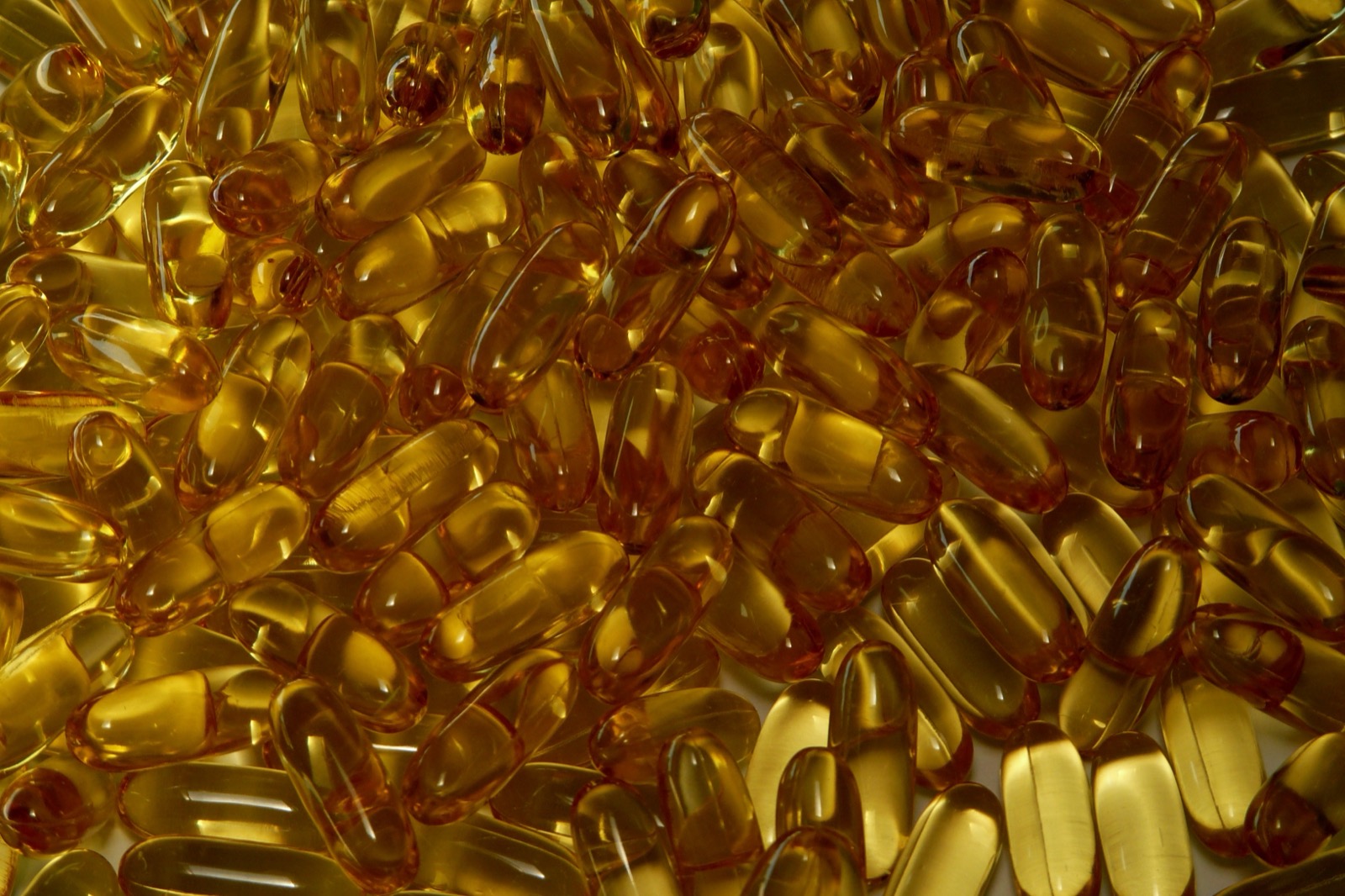
Krill Oil
Antarctic krill oil softgels: EPA and DHA carried on phospholipids, with naturally esterified astaxanthin. Crustacean allergen, CCAMLR-managed Southern Ocean source. Bulk and private-label supply.
Specifications
| Source | Antarctic krill, Euphausia superba (crustacean), harvested in the Southern Ocean under CCAMLR catch limits; MSC chain-of-custody lots on request |
| Fill material | Ethanol-extracted krill lipid extract, filtered free of protein and shell residue; refined but not chemically modified |
| Appearance and odour | Deep red to red-brown viscous oil with a characteristic mild marine odour; colour derives from naturally esterified astaxanthin |
| Total phospholipids | Standard grade ≥ 35% to < 60% w/w per the EU novel food union list; phospholipid-rich grade at ≥ 60% w/w available |
| EPA and DHA | EPA ≥ 9% and DHA ≥ 5% of the oil (EU novel food minima); contracts commonly written at EPA ≥ 12% and DHA ≥ 5.5%, by GC-FID |
| Astaxanthin | Naturally present as astaxanthin esters, typically in the 100–500 mg/kg range; batch value stated on the COA, minimum agreed per contract |
| Oxidation | Peroxide value ≤ 3 meq O2/kg. p-Anisidine and TOTOX are not reported: astaxanthin interferes with the pAV assay, which GOED limits to uncoloured oils |
| Other oil quality | Saponification value ≤ 230 mg KOH/g; trans fatty acids ≤ 1%; moisture and volatiles ≤ 3%, or water activity ≤ 0.6 at 25 °C |
| Contaminants | GOED voluntary monograph limits: arsenic, cadmium, lead and mercury each ≤ 0.1 mg/kg; dioxins, furans and dioxin-like PCBs ≤ 3 pg WHO-TEQ/g |
| Fluoride | Over 99% of krill fluoride sits in the exoskeleton; deshelled processing gives oil below 0.5 mg/kg against 3–5 mg/kg for whole-krill extraction |
| Allergen declaration | Contains crustacean. A fish gelatin shell adds a fish declaration. Free from milk, egg, soy, gluten, peanut and tree nut unless a named excipient states otherwise |
| Origin and diet status | Marine animal origin — not vegan or vegetarian. Softgel shell is bovine or fish gelatin with glycerin; halal, kosher and BSE-origin statements follow the shell chosen |
| Format, packaging and shelf life | 500, 1000 and 1250 mg softgel fills; 24 months unopened at ≤ 25 °C, protected from light and air; bulk oil supplied nitrogen-blanketed |
| HS code (India) | 1603.00 (16030090) |
Applications
Available grades
Standard krill oil (phospholipids ≥ 35% to < 60%) and phospholipid-rich krill oil (≥ 60% phospholipids); softgel fills of 500 mg, 1000 mg and 1250 mg; bovine or fish gelatin shell; MSC chain-of-custody certified lots on request; bulk oil for in-house encapsulation.
Related products
Fish Oil (Omega-3)
Refined, deodorised fish body oil in natural triglyceride form, standard 18/12 grade (EPA 18% min, DHA 12% min). Ph. Eur. 1912 pharmacopoeial grade and softgel formats available.
Omega-3 Concentrate (EPA/DHA)
Molecularly distilled EPA/DHA concentrate from fish body oil, supplied as re-esterified triglyceride or ethyl ester in 33/22, 40/20, 50/20, 20/50 and 70% EPA grades.
Cod Liver Oil
Purified liver oil of wild cod (Gadus morhua), naturally supplying vitamin A 600-2500 IU/g and vitamin D3 60-250 IU/g to Ph. Eur. Cod-liver oil (Type A) and USP limits.