Sea Buckthorn Oil
Hippophae rhamnoides · pulp oil 30–35% palmitoleic acid (omega-7); seed oil ~1:1 omega-6:omega-3
Cold-pressed or supercritical CO2 sea buckthorn oil from Hippophae rhamnoides. Pulp grade carries 30–35% palmitoleic acid (omega-7); seed grade runs near 1:1 omega-6 to omega-3. Vegan, allergen-free.
Specifications
| Botanical source | Hippophae rhamnoides L. (Elaeagnaceae). Indian Himalayan material may also include H. salicifolia and H. tibetana; species declared per batch. |
| Plant part and oil type | Berry pulp (fruit oil), seed (seed oil) or whole berry. Pulp and seed oils have different fatty acid profiles and are not interchangeable. |
| INCI name | Hippophae Rhamnoides Fruit Oil (pulp grade); Hippophae Rhamnoides Seed Oil (seed grade). |
| CAS / EC inventory reference | 90106-68-6, EINECS 290-292-8 (Hippophae rhamnoides, ext.). Botanical oil, so no discrete-substance CAS applies. |
| Extraction | Supercritical CO2 or cold mechanical pressing. CO2 grades are solvent-free with no residual solvent, inorganic salts or heavy metals. |
| Appearance and odour | Deep orange to red viscous oil with characteristic fruity-oily odour. Slight turbidity at ambient is typical of pulp oil, not a defect. |
| Palmitoleic acid, C16:1 n-7 (pulp) | Typically 30-42% of total fatty acids; CO2 pulp grade specified 30-35%. Alongside palmitic acid C16:0 at 22-33%. Barely present in seed oil. |
| Linoleic and alpha-linolenic (seed) | Approx. 33-36% C18:2 n-6 and 30-36% C18:3 n-3, an n-6 to n-3 ratio close to 1:1. ALA is an essential omega-3 fatty acid. |
| Total carotenoids | Published pulp-oil range 692-3420 mg/kg. Stabilised CO2 extract declares 0.04-0.11% carotenoids within 1-9% unsaponifiable matter. |
| Tocopherols and tocotrienols | Published total tocols 666-1788 mg/kg; alpha-tocopherol is about 70-80% of total vitamin E. Seed oil is proportionally richer in tocotrienols. |
| Acid and peroxide value | Typical acid value 2.3-4.7 mg KOH/g depending on extraction route; peroxide value held below the 15 meq O2/kg edible-oil limit. |
| Allergen and origin status | No milk, egg, soy, fish, crustacean, gluten or tree nut. Plant-derived: vegan and vegetarian. Not marine, bovine or porcine. Non-GMO. |
| Handling and shelf life | Warm to approx. 40 C and shake before dispensing. 24 months typical; up to 60 months for antioxidant-stabilised CO2 grades stored cool and dark. |
| HS code | 15159091 (India, edible-grade other fixed vegetable oil). Cosmetic grade 15159099; finished softgels 21069099. |
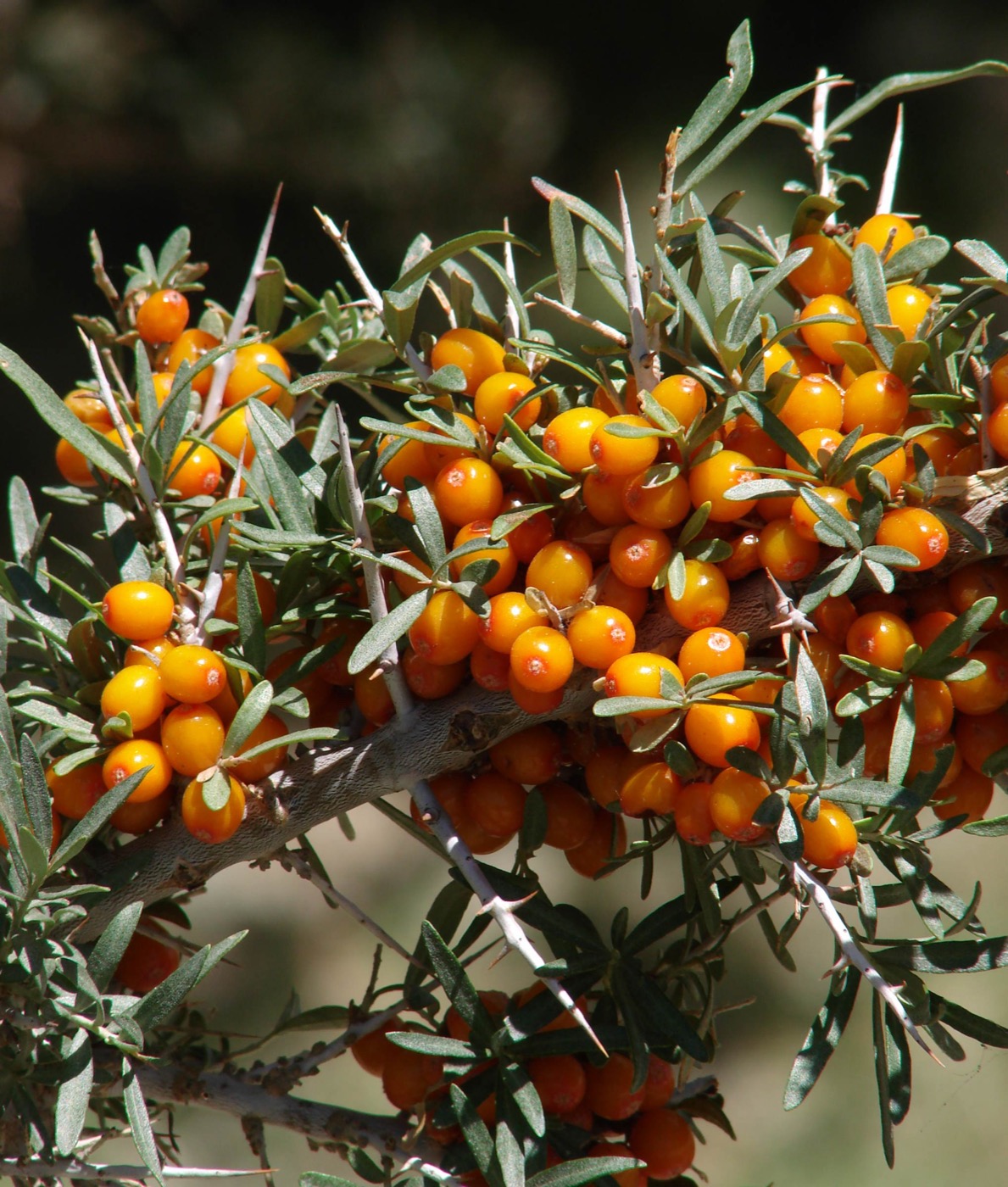
Sea buckthorn oil is pressed or CO2-extracted from the berries of Hippophae rhamnoides L. (Elaeagnaceae), a thorny, nitrogen-fixing shrub of cold arid uplands. India is a genuine origin rather than a re-export point: roughly 70% of the country's sea buckthorn stands are in Ladakh (Leh and Kargil), with further populations in Himachal Pradesh, Sikkim and Arunachal Pradesh, where Hippophae salicifolia and H. tibetana also occur. The berry yields two commercially distinct oils that buyers must not treat as interchangeable. Fruit or pulp oil is expressed from the fleshy mesocarp and is one of the richest plant sources known of palmitoleic acid (C16:1 n-7, "omega-7"), typically 30–42% of total fatty acids, with a supercritical CO2 pulp grade specified at 30–35% palmitoleic and 22–33% palmitic. Seed oil, pressed from the small dark seeds, contains almost no palmitoleic acid; it is built instead on linoleic acid (C18:2 n-6) at roughly 33–36% and alpha-linolenic acid (C18:3 n-3) at roughly 30–36%, giving an unusually balanced n-6 to n-3 ratio close to 1:1. Whole-berry oil sits between the two and its profile depends entirely on the pulp-to-seed ratio in the feedstock, so it should always be bought against a batch fatty acid profile rather than a nominal figure.
The unsaponifiable fraction is where much of the commercial interest sits. A stabilised CO2 pulp extract carries 1–9% unsaponifiables comprising carotenoids, sterols, alkanols and tocopherols, of which 0.04–0.11% is carotenoid. Published values for pulp oils span 692–3420 mg/kg total carotenoids and 666–1788 mg/kg total tocols, with alpha-tocopherol accounting for around 70–80% of the vitamin E present; seed oil carries a markedly higher share of tocotrienols. These constituents give the oil its deep orange-to-red colour and contribute to its own oxidative stability, and they also mean the material is a strong natural colourant in clear or pale bases. Pulp oil is viscous and commonly shows slight turbidity at ambient temperature, which is normal for the grade rather than a defect; warming to about 40 °C and shaking before dispensing gives a homogeneous draw. Alpha-linolenic acid in the seed and whole-berry grades is a recognised essential omega-3 nutrient, and we describe composition and nutrient content only.
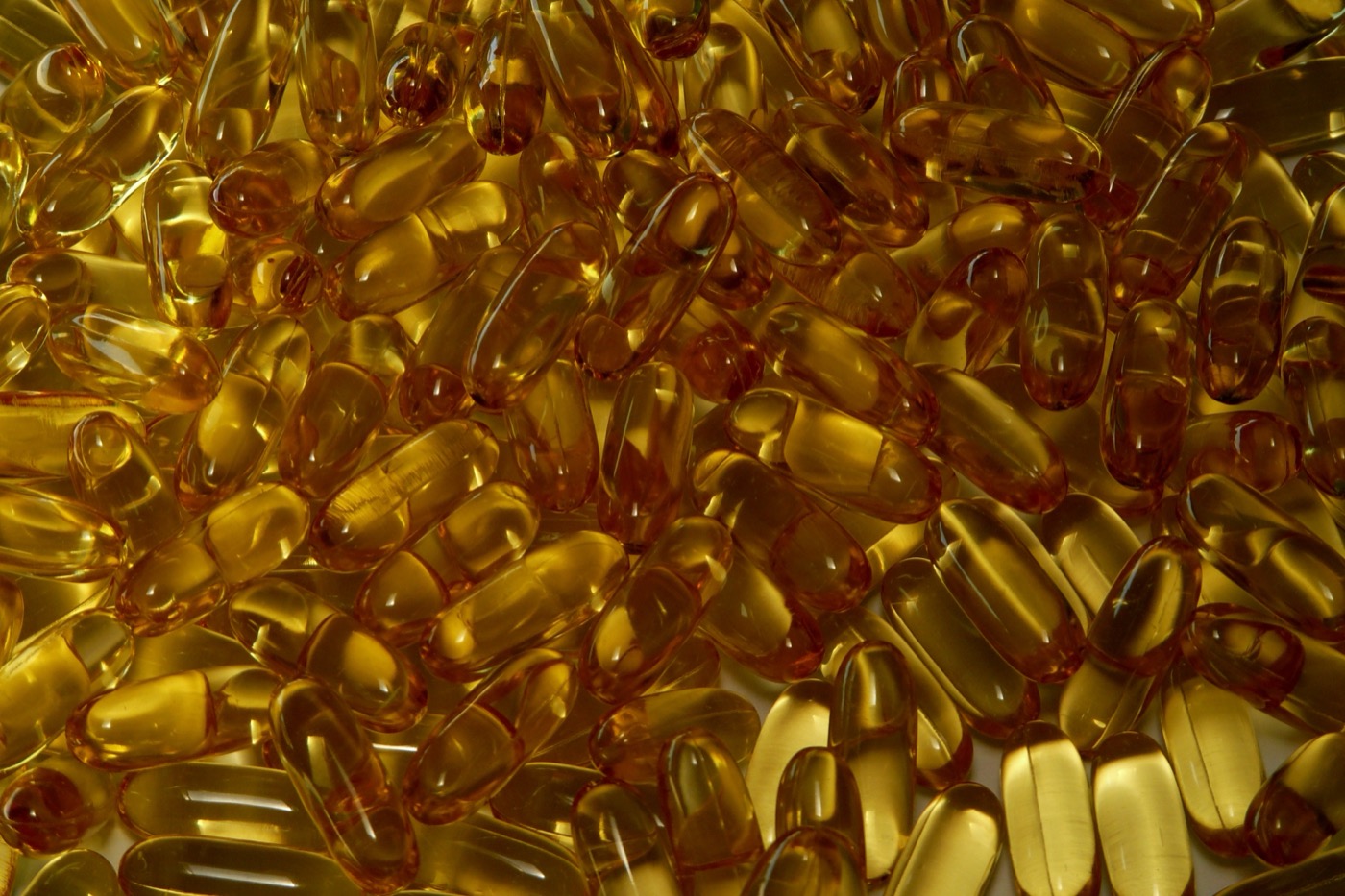
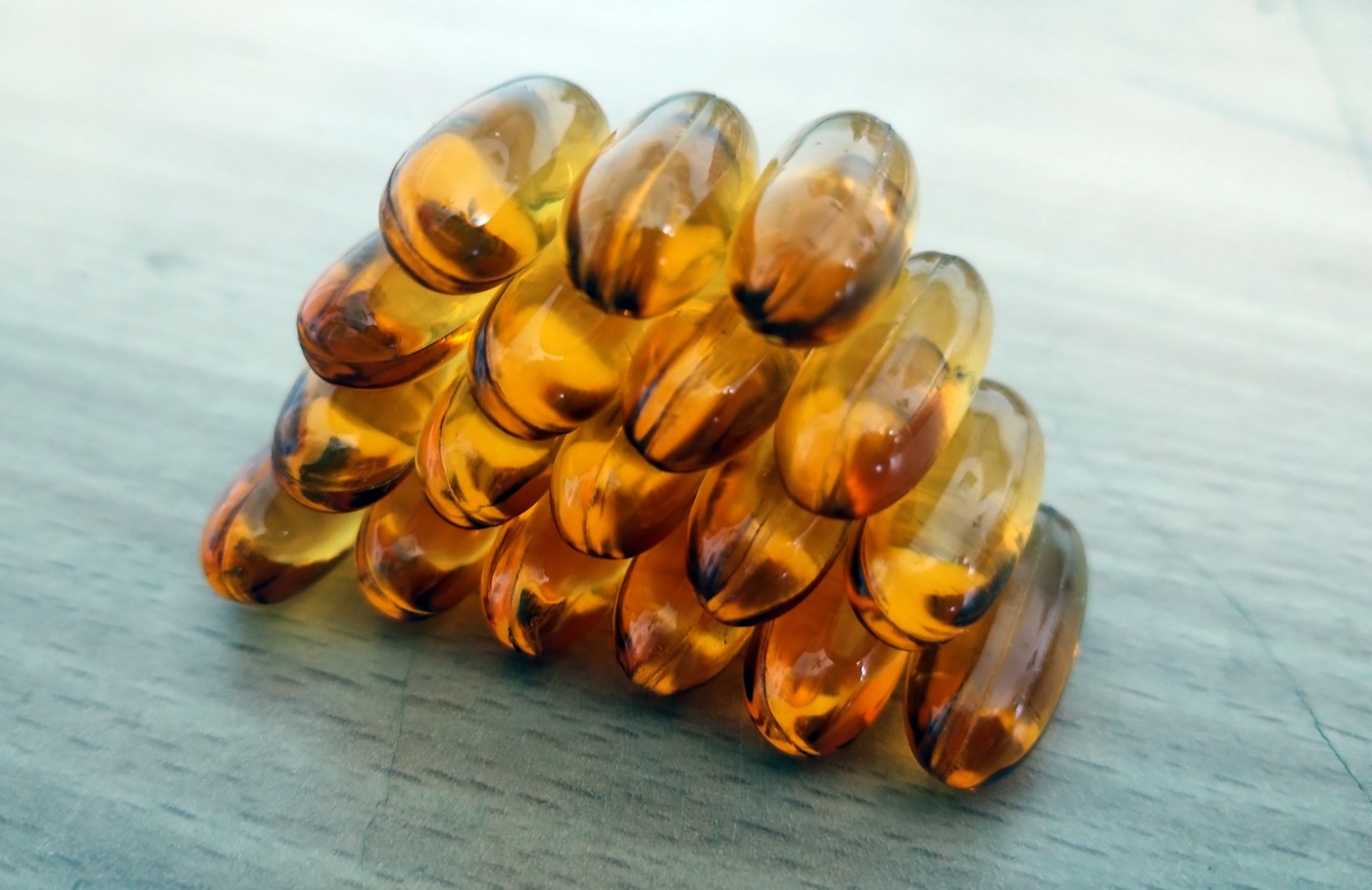
Material is supplied as bulk oil for encapsulation and formulation, or as finished softgels to buyer specification. The bulk oil is plant-derived and therefore vegan and vegetarian, with no milk, egg, soy, fish, crustacean, gluten or tree nut content and no bovine, porcine or marine input at any stage. Buyers ordering finished softgels should note that conventional shells are bovine or fish gelatin: a vegan claim on the finished pack requires an HPMC or starch shell to be specified at order. Each consignment ships with a batch certificate of analysis covering fatty acid profile by GC, acid and peroxide values, carotenoid and tocopherol content, heavy metals, pesticide residues and microbiology, alongside allergen and origin declarations, a non-GMO statement and organic transaction certificates where the batch is certified. Because plant oils and extracts are exempt from REACH registration under Annex V entry 9 of Regulation (EC) No 1907/2006, EU-bound shipments of the bulk oil carry no registration burden, though the buyer remains responsible for confirming food, supplement or cosmetic status in the destination market.
Applications
Omega-7 beauty softgelsBeauty-from-within supplementsFacial oils and serumsLip and skin balmsSun-care and after-sun basesFunctional beverage emulsionsNutritional oil blendsNatural colour-carrying food oilsCompanion animal supplement oils
Available grades
Fruit (pulp) oil, supercritical CO2 or cold-pressed, omega-7 rich at 30-35% palmitoleic acid. Seed oil, cold-pressed, linoleic and alpha-linolenic rich at near 1:1 n-6:n-3. Whole-berry oil, profile stated per batch. Organic certified to NPOP, NOP and EU equivalents. Cosmetic grade to INCI declaration. Standardised dilutions in refined sunflower or MCT oil for cost and dosing control. Finished softgels at 500 mg or 1000 mg fill, gelatin or vegan HPMC shell.
Packaging: 1 kg and 5 kg amber glass or food-grade HDPE jerricans; 25 kg and 190 kg lacquer-lined or epoxy-lined steel drums, nitrogen-flushed and sealed. Headspace purged with nitrogen on request for oxidation-sensitive grades. Store cool, dry and away from light; do not store above 25 C. Finished softgels in HDPE jars with induction seal, alu-alu blisters, or bulk in double food-grade LDPE liners inside fibreboard cartons. MOQ and mixed-grade consolidation quoted on request.