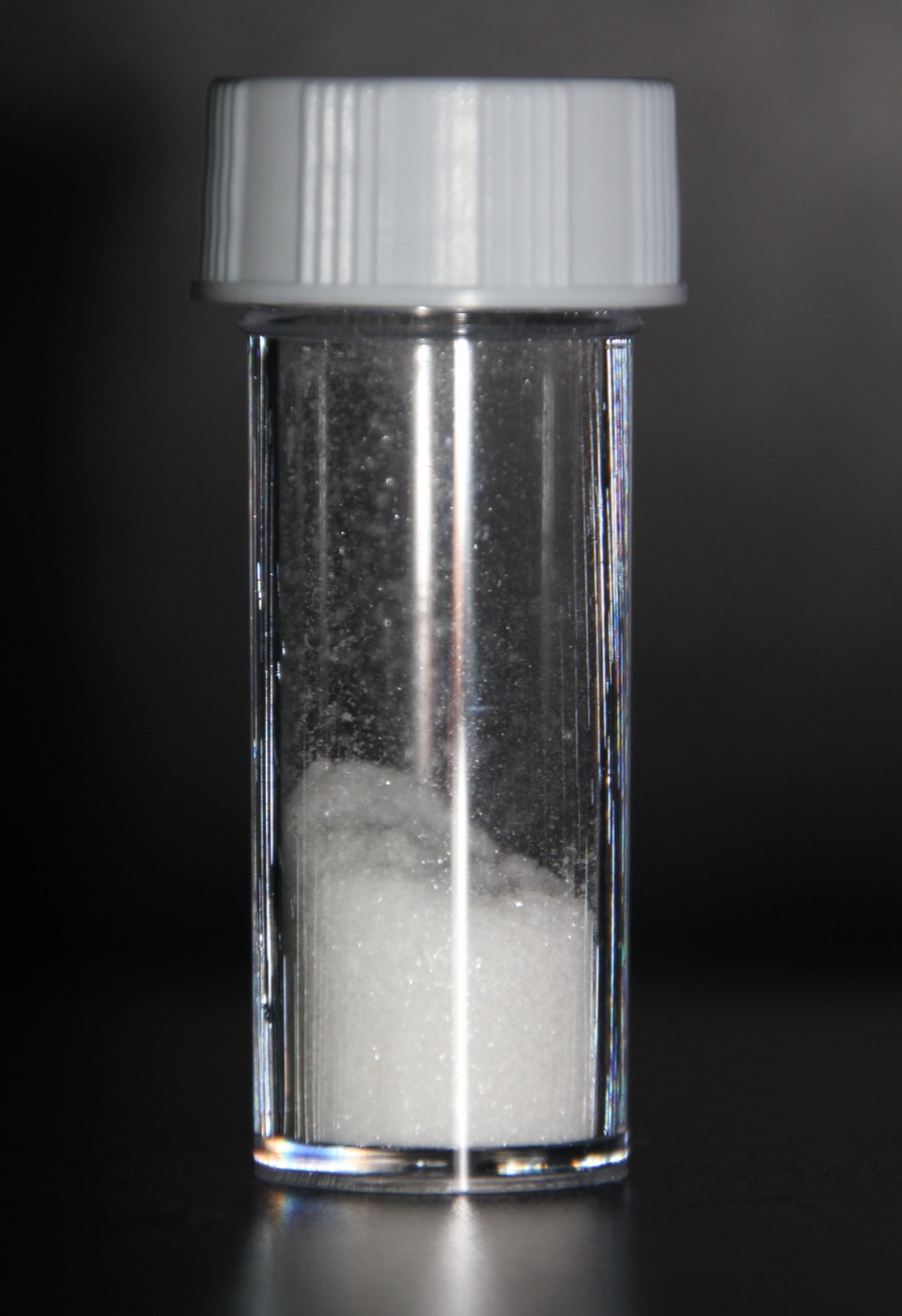
L-Glutamic Acid
Fermentation-derived L-glutamic acid powder, 98.5-101.5% on the dried basis, rotation +31.5 to +32.5 deg. Vegan, not a gluten or soy hydrolysate. USP, Ph. Eur. and FCC grades ex-India.
Specifications
| Chemical name | L-Glutamic acid; (S)-2-aminopentanedioic acid; L-2-aminoglutaric acid |
| CAS No. | 56-86-0 |
| EC / EINECS No. | 200-293-7 |
| Molecular formula / weight | C5H9NO4 / 147.13 g/mol |
| Appearance | White to almost white free-flowing crystalline powder or colourless crystals; characteristic mild savoury taste |
| Assay | 98.5-101.5% on the dried basis (USP, FCC); 98.5-100.5% (Ph. Eur./BP) |
| Specific rotation | +31.5 to +32.5 degrees on the dried basis (USP, FCC); +30.5 to +32.5 degrees (Ph. Eur./BP) |
| Loss on drying | NMT 0.1% (USP/FCC, 105 C for 3 h); NMT 0.5% (Ph. Eur./BP) |
| Residue on ignition and limit tests | Residue on ignition or sulphated ash NMT 0.1% (USP, Ph. Eur./BP), NMT 0.3% (FCC); chloride and sulphate NMT 0.02% each; ammonium NMT 200 ppm |
| Heavy metals | Iron NMT 10 ppm; lead NMT 5 mg/kg (FCC). Pb, As, Cd and Hg reported by ICP-MS on each batch |
| Solubility / thermal behaviour | 8.57 g/L in water at 25 C; freely soluble in dilute acid and alkali; decomposes at about 199 C rather than melting sharply |
| Origin and allergen status | Fermentation of carbohydrate by Corynebacterium glutamicum; non-animal, vegan; not a wheat gluten or soy protein hydrolysate; no milk, egg, fish, crustacean or nut input |
| Food additive identity | Glutamic acid, flavour enhancer INS 620 / E 620; ADI 30 mg/kg body weight/day for the E 620-625 group (EFSA) |
| HS code | 29224210 (glutamic acid and its salts: glutamic acid) |
Applications
Available grades
Food grade to FCC; pharmacopoeial grade to USP, Ph. Eur./BP and JP; non-animal-origin cell culture grade; feed grade. Kosher and Halal certification available from certified plants; GMO status of the production strain confirmed per source on request. Particle size and bulk density set to the customer's specification.
Related products
L-Lysine HCl (L-Lysine Monohydrochloride)
Bulk L-lysine monohydrochloride powder to USP/Ph. Eur. and food grade, assaying 98.5-101.5% on the dried basis and carrying approximately 80% lysine base. Fermentation-derived, non-animal origin.
L-Leucine
Fermentation-derived L-leucine powder to USP, Ph. Eur. and JP, assaying 98.5-101.5% on the dried basis. Supplied in bulk for BCAA blends, sports nutrition and clinical formulations.
L-Isoleucine
L-isoleucine powder to USP, Ph. Eur. and JP, assaying 98.5-101.5% on the dried basis with leucine and valine cross-isomers tightly controlled. Bulk export quantities for BCAA and clinical blends.