Vitamin premix overages: why the label claim is never the batch formula
Every vitamin premix is dosed above its label claim. How much above is a decision with cost, stability and compliance riding on it — and it belongs in writing before production.
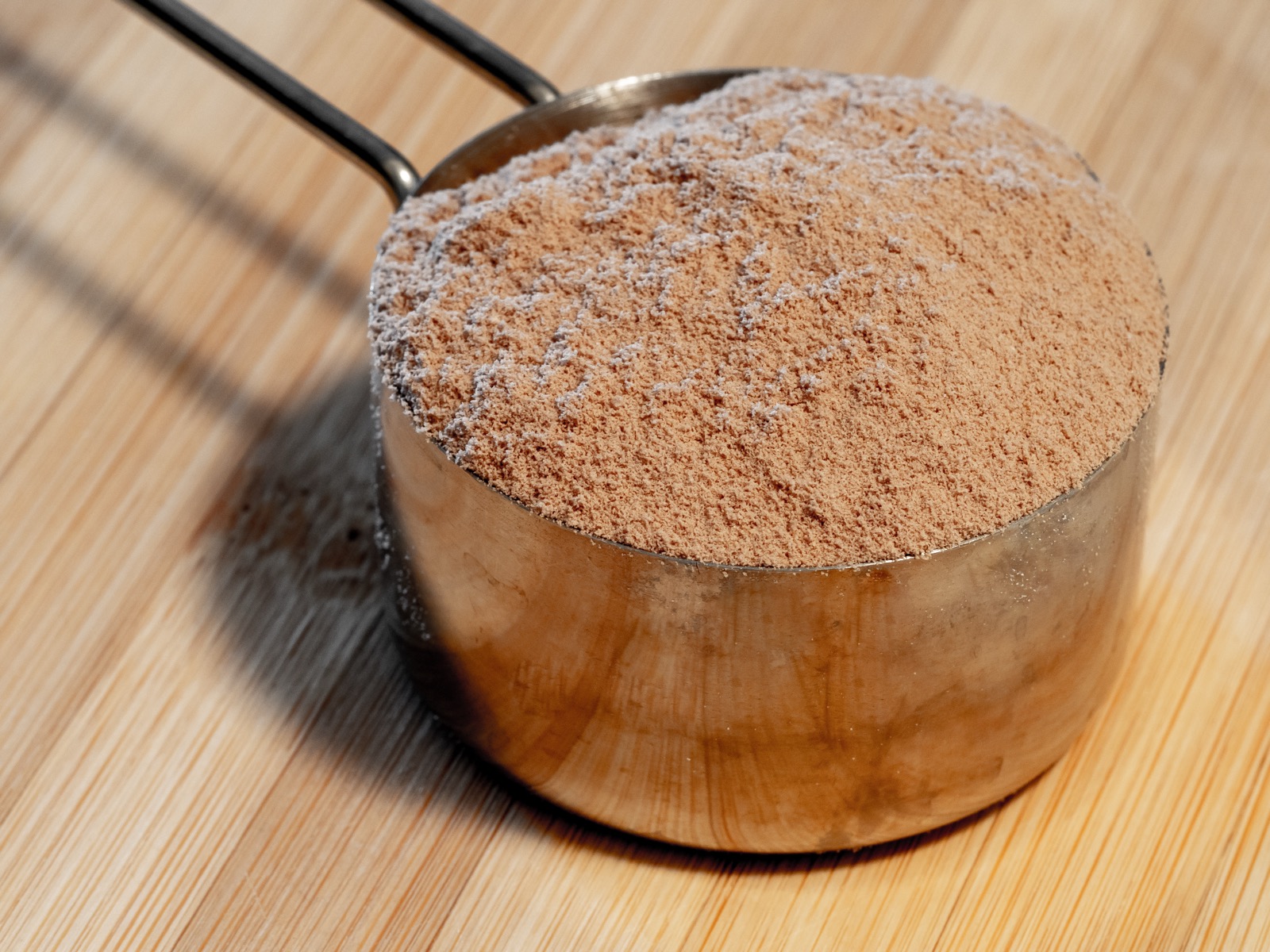
Protein content is rarely measured directly. It is inferred from nitrogen, and the arithmetic between the two is where two suppliers quoting 90% can be selling meaningfully different material.
The standard method measures total nitrogen and multiplies by a conversion factor to estimate protein. The general factor is 6.25, which assumes protein is 16% nitrogen. That assumption holds loosely across many proteins and poorly for others — which is why specific factors exist, such as 5.7 for many plant proteins and 6.38 for dairy.
The consequence is direct: the same material assayed with 6.25 instead of 5.7 reports roughly 10% higher protein. Neither number is dishonest. Only one of them is comparable to the quote sitting next to it.
"As is" and "dry basis" are different figures for the same powder. A protein at 90% on a dry basis carrying 6% moisture is about 84.6% as it ships. Specifications that state a protein figure without the basis are ambiguous by omission, and it is always worth resolving before an order rather than after.
Because the method measures nitrogen, any nitrogen-bearing adulterant inflates the result. This is the mechanism behind the melamine adulteration scandals, and it is the reason serious buyers of protein do not rely on Kjeldahl alone.
Practical defences:
Send the same three requirements to everyone you are asking: factor, basis, and an amino acid profile. Suppliers who answer all three promptly are quoting the same thing as each other, and you can compare on price. Those who cannot are not really in the comparison yet.
Every vitamin premix is dosed above its label claim. How much above is a decision with cost, stability and compliance riding on it — and it belongs in writing before production.
Magnesium oxide and magnesium bisglycinate are priced per kilo of compound but formulated per milligram of elemental mineral. Confusing the two is the most expensive arithmetic error in mineral sourcing.
The same amino acid reaches the market by three different manufacturing routes. They differ in isomer purity, allergen risk and which certifications they can carry.