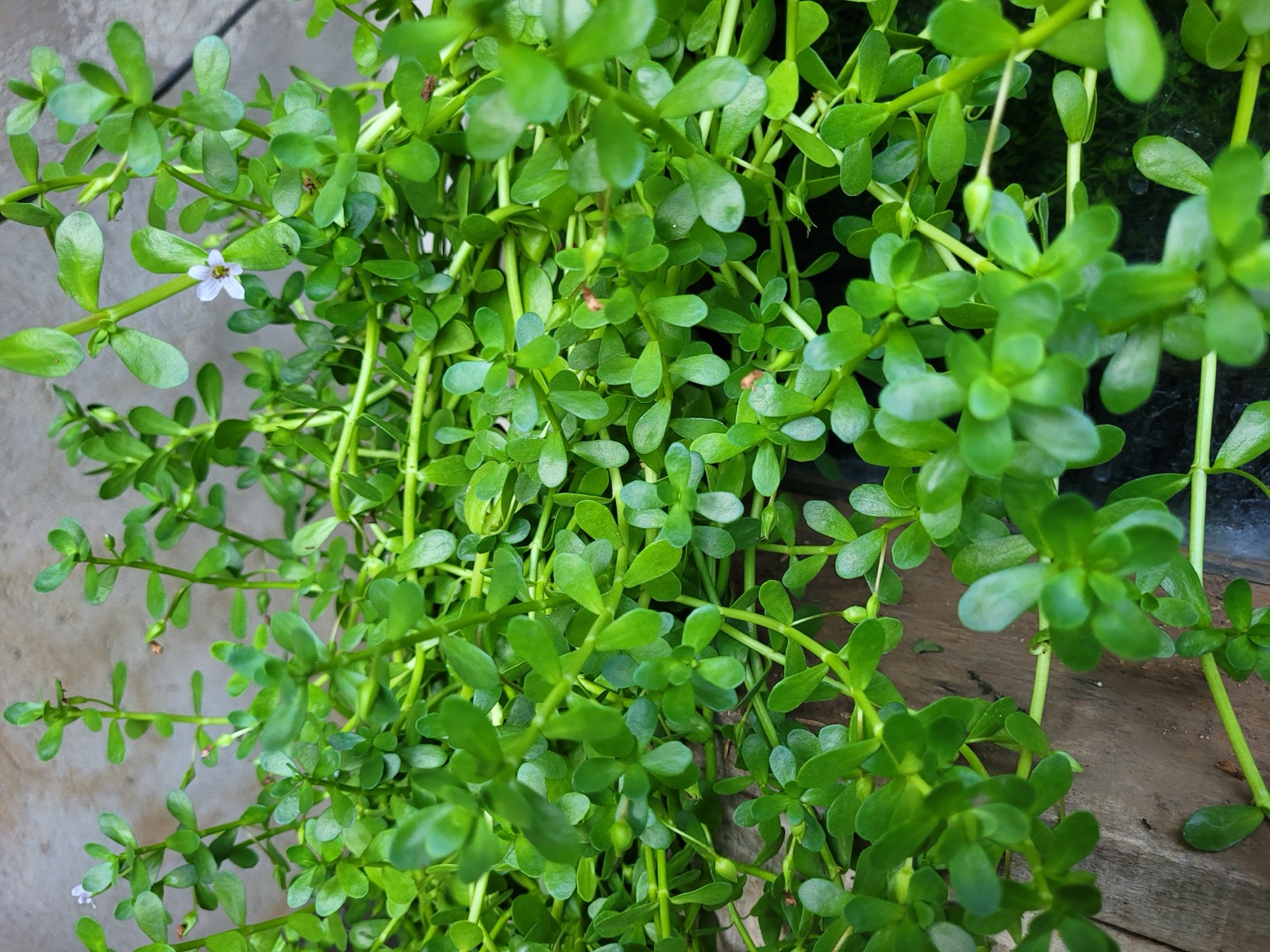
Bacopa monnieri capsules (Brahmi)
Finished hard capsule of standardised Bacopa monnieri whole-herb extract at 20-50% total bacosides by UV or USP-method HPLC. Vegan HPMC shell, allergen-free, private label from India.
Specifications
| Format | Finished hard capsule, size 0 or 00. Per-capsule extract loading is set to the buyer's label and confirmed on a pre-production sample before the run. |
| Botanical source | Bacopa monnieri (L.) Wettst. (also published as (L.) Pennell), family Plantaginaceae; older texts and the USP monograph cite Scrophulariaceae. |
| Plant part | Dried whole herb - aerial stems and leaves, as specified for Brahmi in the Ayurvedic Pharmacopoeia of India and in the USP Bacopa monograph. Root material rejected. |
| Identity and synonyms | Brahmi, jala-brahmi, neer brahmi, water hyssop, herb of grace, Indian pennywort. Synonyms Bramia monnieri, Herpestis monnieria, Gratiola monnieria. |
| Marker compounds | Bacoside A is a mixture of bacoside A3, bacopaside II, the jujubogenin isomer of bacopasaponin C, and bacopasaponin C; bacopasides I-XII reported alongside. |
| Standardisation | Total bacosides at 20%, 40% or 50% by UV, or 10%, 20% and higher by USP-method HPLC. UV and HPLC figures are not interchangeable - fix the method on the spec. |
| Assay method | USP-type reverse-phase HPLC, C18 column, UV detection at 205 nm, summing the triterpene glycosides. UV spectrophotometry offered as the legacy method. |
| Adulteration control | Centella asiatica is also sold as 'brahmi' and is a documented substitution. TLC or HPTLC fingerprint plus HPLC marker confirmation on every incoming lot. |
| Capsule shell | HPMC (hypromellose) as standard: vegan, no bovine or porcine input, halal and kosher compatible. Bovine gelatin on request, which ends the vegan claim. |
| Excipients and carrier | Carrier-free at standard assays. Where dilution is needed, corn-derived maltodextrin or rice flour, declared in writing - the two differ on clean-label acceptance. |
| Purity limits | Loss on drying NMT 5.0%; total ash NMT 5.0%; total heavy metals NMT 10 ppm; lead NMT 2 ppm; arsenic NMT 2 ppm. Pesticide residues to EU and USP limits on request. |
| Microbiology | Total plate count NMT 1,000 cfu/g; yeast and mould NMT 100 cfu/g; E. coli, Salmonella and S. aureus absent. Non-irradiated material available on request. |
| Allergen and dietary status | Plant-derived: vegan, vegetarian, non-GMO, BSE/TSE-free. No milk, egg, soy, fish, crustacean, peanut, tree nut, sesame, wheat or gluten input on the HPMC shell. |
| HS code (India ITC-HS) | 21069099 - food preparations not elsewhere specified or included: other. Final classification rests with the importing customs authority. |
Applications
Available grades
Vegan HPMC shell as standard with bovine gelatin on request; size 0 and size 00 fills; standard trade grade at 20% total bacosides by UV, USP-method HPLC grades at 10%, 20% and higher, and high-assay 40% and 50% UV grades; water-only extraction grade for clean-label ranges; organic certified (NPOP, NOP, EU) grade; low-microbial and non-irradiated variants; and combination fills with Centella asiatica, Withania somnifera root or Ginkgo biloba extract on the buyer's own formula sheet.
Related products
Melatonin Tablets and Gummies
Finished-format melatonin in compressed tablets and pectin or gelatin gummies, 0.5-10 mg per unit, assayed at 90-110% of label claim. Synthetic non-animal active, vegan builds available.
Melatonin with L-Theanine Sleep Tablets
A two-active night-time tablet pairing melatonin with L-theanine, standard build 3 mg plus 200 mg, each active assayed separately at 90-110% of label claim. Vegan build on fermentation theanine.
L-Theanine Capsules
L-theanine capsules at 100, 200 or 250 mg, not less than 98% L-form by HPLC, in vegan HPMC or bovine gelatin shells. Caffeine-free fermentation grade or tea-derived to an agreed caffeine limit.